The names make this comparison sound like two wheelbases. They are not. In the current Mercedes-Benz Cargo Van lineup, both versions use a 170-inch wheelbase; the Extended model adds body length behind it.
That distinction matters in a luxury passenger conversion. Extra rear structure can create a better luggage bay, bathroom or utility zone. It can also make the van harder to fit at home and put more of the finished build behind the rear axle. The right choice comes from the floor plan and completed weight—not the word “Extended.”
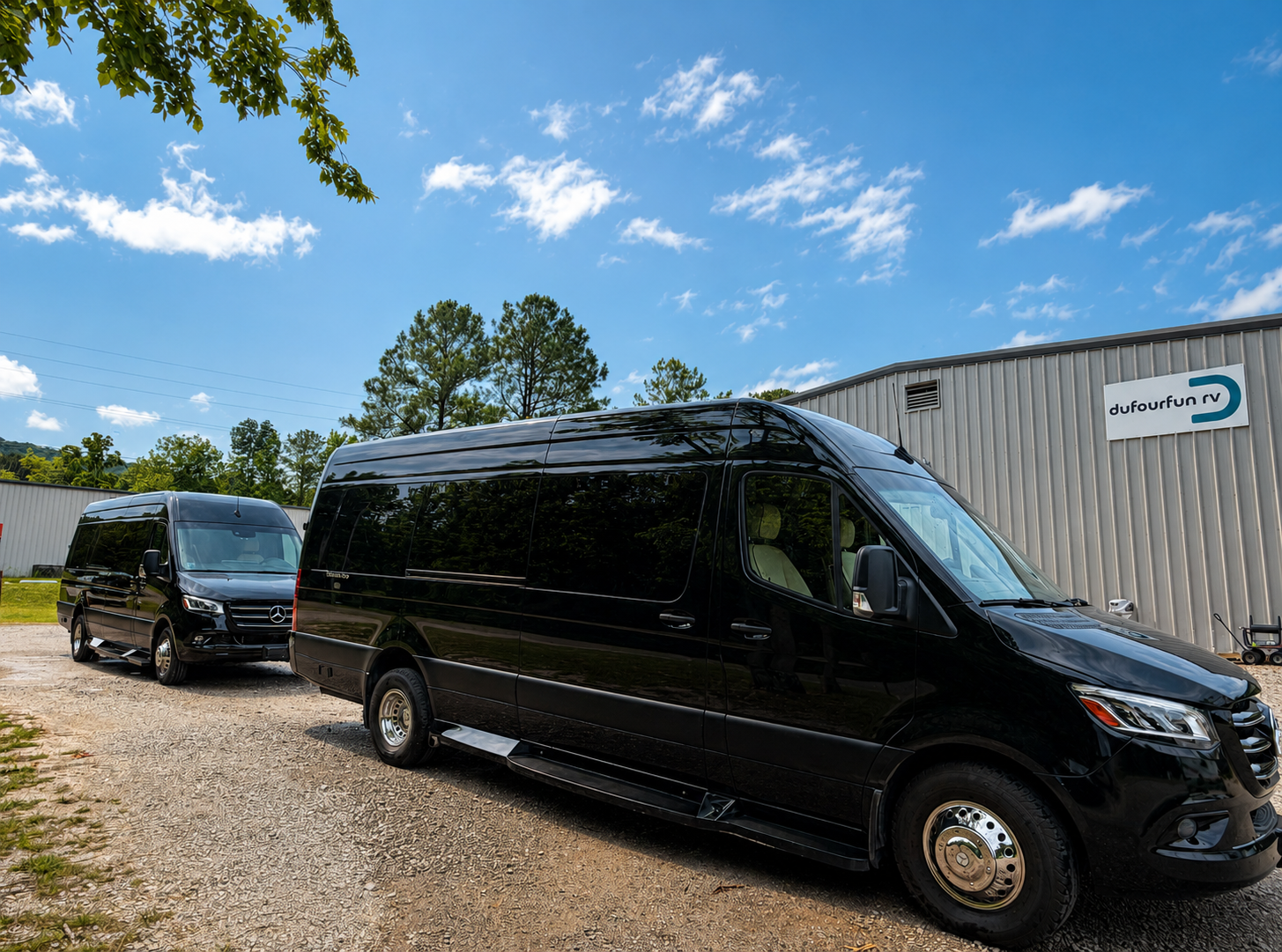
Hero photo: business-owned Dufourfun Vans listing photography of a 170 Extended luxury Sprinter, used with owner authorization. The individual photographer was not recorded. View the original image.
The factory numbers show the opportunity, not the finished result
Mercedes-Benz’s current 2026 Sprinter Cargo Van specifications list the following figures for selected high-roof configurations:
| Factory specification | 170 high roof | 170 Extended high roof | Difference |
|---|---|---|---|
| Wheelbase | 170 in | 170 in | 0 in |
| Overall length | 274 in | 290 in | 16 in |
| Cargo volume | 430 cu ft | 533 cu ft | 103 cu ft |
| Standing height | 79 in | 79 in | 0 in |
Those are factory cargo-van measurements, not guaranteed usable dimensions after walls, insulation, seating, cabinetry, HVAC, plumbing and entertainment systems are installed. Exact values also vary by chassis, roof, GVWR and drivetrain. Use the Mercedes configurator and the actual vehicle’s build data before making a purchase decision.
1. Decide what the extra rear section must accomplish
An extra 16 inches of overall length can be valuable when it solves one clear problem:
- golf bags or luggage behind the rear seating;
- a bathroom with a usable door and aisle;
- a larger refrigerator or utility cabinet;
- house batteries, inverter and water systems kept out of passenger space;
- a rear bench that does not consume the entire cargo area.
Draw the floor plan to scale and label the added zone. If the only answer is “more room,” the build is not specific enough.
2. Do not confuse wheelbase with parking footprint
Because the wheelbase remains 170 inches, the Extended model does not simply stretch the space between the axles. The body is longer. That affects garage depth, parallel spaces, ferry or valet limits and the arc the rear body sweeps during tight maneuvers.
Measure the real places the van must fit:
- garage depth with the door closed;
- driveway slope and curb transition;
- club, office or school pickup spaces;
- service-bay and wash-bay limits;
- any regular trailer or rear-carrier setup.
A turning-circle figure alone does not tell you whether the rear corner clears a wall or whether the doors open at home.
3. Treat rear weight as a design constraint
Luxury components add up quickly: powered seats, cabinets, TVs, lithium batteries, water tanks, HVAC and luggage. Placing those items far behind the rear axle can change the completed axle loading.
Mercedes-Benz’s current Body and Equipment Guidelines direct modifiers to respect technical limits and applicable rules. The detailed 2025 Sprinter BEG warns that permissible axle loads shown on the vehicle identification plate and registration documents must be observed.
Before delivery, request:
- the exact chassis VIN and option list;
- the completed-vehicle GVWR and axle ratings;
- a scale ticket with full fuel and typical equipment;
- front and rear axle weights, not only total weight;
- a realistic passenger-and-luggage calculation.
A published payload number for an empty cargo van is not the remaining payload of a finished luxury conversion.
4. Compare the same floor plan in both bodies
Ask the builder for two drawings using the same seat count and core equipment. Then compare:
| Buyer question | 170 | 170 Extended |
|---|---|---|
| Can all regular luggage fit behind passengers? | Often tighter | More design room |
| Will it fit the home garage? | Easier, but still measure | Needs 16 more inches of body length |
| Is the rear utility zone crowded? | More compromises | More separation possible |
| Is the build sensitive to rear axle weight? | Yes | Yes—placement deserves extra attention |
| Is the van easier to live with daily? | Often | Depends on parking and route |
The Extended version is not automatically more luxurious. A shorter van with better aisle width and well-placed storage can feel more useful than a longer van with crowded furniture.
5. Road-test the body length, not just the cabin
Drive both configurations if possible. Use a route with:
- a tight right turn;
- a sloped driveway;
- a standard parking lot;
- a reverse maneuver using mirrors and cameras;
- a highway section with crosswinds;
- one loading stop with rear doors open.
Have the regular driver perform the test. Then place cones at the home garage or parking boundary. The decision should reflect the person and places that will use the van every week.
The simple decision rule
Choose the 170 Extended when the extra rear body solves a documented layout or storage problem and the finished weights and parking footprint work. Choose the standard 170 when it handles the real passenger-and-luggage load with fewer daily compromises.
Compare completed vans through View Vans for Sale. For a new conversion, Build Your Custom Van and ask for both scaled floor plans, axle-weight targets and a delivery-day scale ticket.