
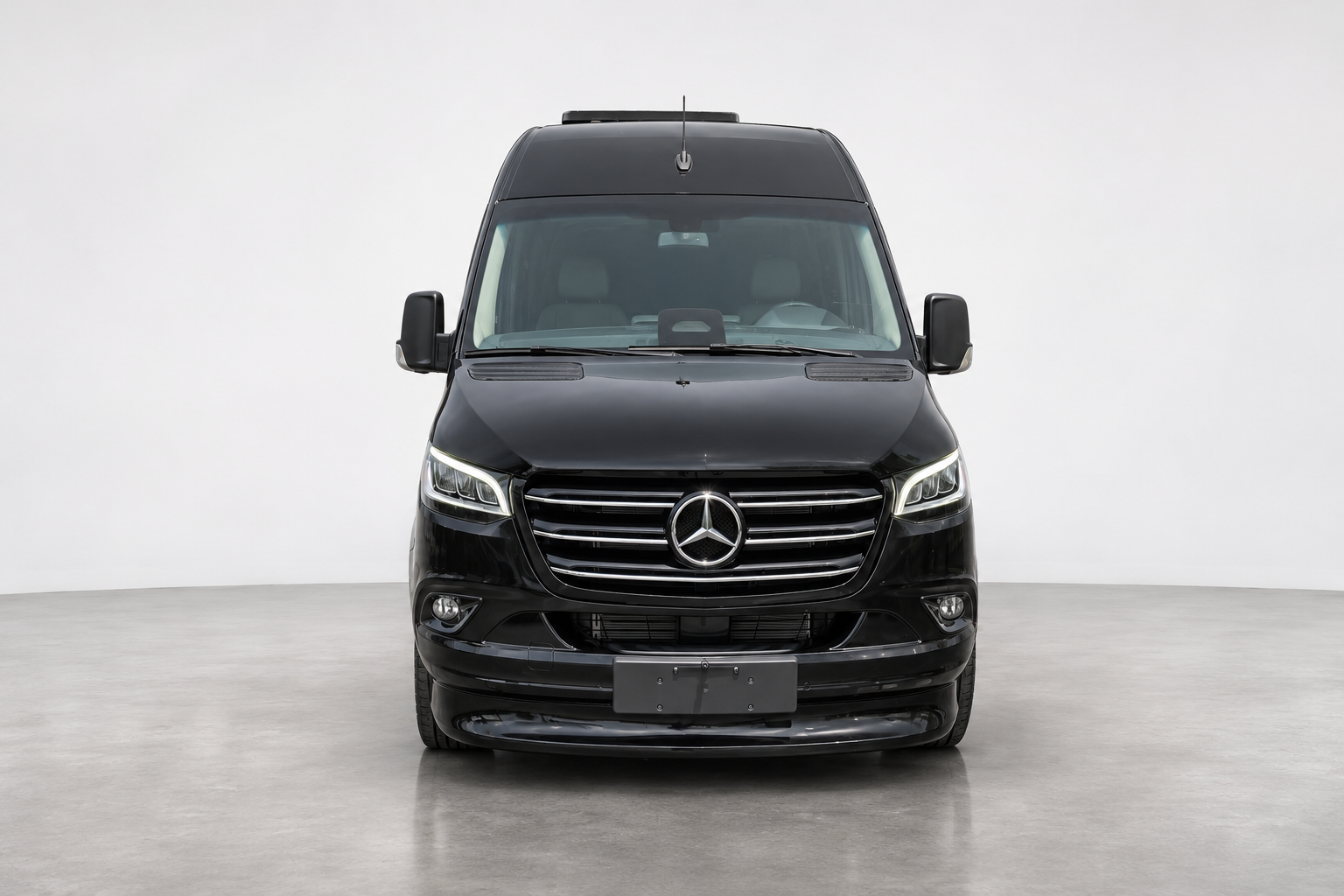
The Indianapolis 500 is a natural luxury-van trip: several people, long days, coolers and chairs, changing plans, and a finish that can leave everyone tired at the same time. But the van should solve more than one race-day ride. A buyer should test whether it improves the whole week—and the rest of the calendar.
The Indianapolis Motor Speedway’s official future schedule confirms the 111th Indianapolis 500 for Sunday, May 30, 2027. Practice begins May 18, qualifying is May 22–23, Carb Day is May 28 and Legends Day is May 29, although IMS says the detailed schedule remains subject to change.
What is confirmed—and what is not
| Planning item | Current official information | Buyer takeaway |
|---|---|---|
| Race day | Sunday, May 30, 2027 | Build the trip around a fixed date, not a guessed weekend |
| Month of May | Practice, qualifying, Carb Day and Legends Day precede the race | Ownership is more useful for a multi-day plan than one transfer |
| Tickets and parking | 2027 products are on sale, with limited inventory | Buy access separately; van ownership does not create venue privileges |
| Race-day parking | The official parking page lists lot-specific availability and says the 2027 map is still coming | Verify the exact pass and lot before planning to drive to IMS |
| Shuttle option | IMS describes paid airport and downtown shuttles | A private van can still handle hotel, airport and dinner legs even if it stays off-site |
1. Decide whether the van goes to IMS
Do not assume a luxury van can be dropped at any gate or parked near your seats. The official parking page says parking passes contain lot-specific directions, road closures affect arrival, and vehicles may be held for pedestrian traffic after the race. It also notes that outbound traffic is routed toward the nearest interstate rather than each driver’s preferred direction.
Two workable plans are to drive to IMS only with a verified parking pass, or keep the van as the group base away from the track and use an official shuttle. The IMS shuttle FAQ says shuttles depart from the airport and downtown, require advance passes, and drop passengers across from Gate 2. Guests cannot leave belongings on a bus because the return trip may use a different vehicle.
2. Pack for the actual race day
An advertised ten-seat cabin is not automatically a ten-person race-day vehicle. Load the coolers, folding chairs, rain layers and personal bags before counting the last seats. Every passenger needs a usable belted position, and nothing should block the aisle or emergency exit.
A useful pre-trip test is simple:
- Put every race-day item on the floor.
- Load the largest pieces first.
- Seat the full group with seat belts accessible.
- Open the sliding door and rear doors without moving loose cargo.
- Confirm the driver can see through mirrors and cameras.
If the bags consume the rear lounge, buy for the lower usable capacity rather than the brochure number.
3. Choose a layout for the whole week
| Use | Layout priority | Honest tradeoff |
|---|---|---|
| Airport arrivals | Rear luggage volume and easy entry | A bathroom or rear cabinet can reduce bag space |
| Client dinners | Quiet cabin, individual chairs and lighting | More lounge seating can reduce walking room |
| Race day | Secure cargo, climate control and charging | A long 170 EXT body is harder in urban parking |
| Family travel | Flexible seating and easy clean-up | Pale upholstery needs a realistic care plan |
| Driver service | Partition or clear cabin separation | A partition can reduce communication and openness |
Air suspension, refrigerators, cabin HVAC and charging can improve a long day, but they should be tested on the actual van. An option list does not prove ride quality, battery runtime or cooling performance in May heat.
4. Plan the post-race exit before arrival
IMS warns that parking-lot release can take up to an hour after the race and that pedestrian traffic controls the timing. Keep water available, allow the driver to rest, and do not promise clients an exact dinner arrival immediately after the checkered flag.
If the van remains at a hotel or shuttle lot, designate one person to carry the return wristbands and confirm the shuttle pickup point. If it is at IMS, photograph the lot row and save the QR-coded pass offline.
5. Make the ownership decision on repeat use
One Indianapolis 500 weekend rarely justifies a six-figure vehicle by itself. The stronger case is a repeating pattern: airport pickups with five or more travelers, SEC and NFL weekends, golf trips, family travel that fills two SUVs, client entertainment, and travel between homes with luggage or pets.
Track those trips for a year. Count passengers, bags, miles, hotel parking constraints and driver requirements. That record is more useful than estimating ownership from one glamorous weekend.
A practical buying brief
Write down the number of people who travel most often, the largest normal luggage load, whether a rear bathroom is worth the lost cargo volume, the maximum length you can park, who will drive and service the van, and which trips happen at least three or four times each year.
Then compare luxury vans currently for sale with those requirements. If no existing layout fits, use the custom van floorplan builder to prioritize the aisle, luggage area and seating before cosmetic options.
Editorial recommendation: treat race access, parking, tickets and transportation as separate purchases. No van purchase includes Indianapolis Motor Speedway access or an affiliation with the event.
Hero-image note: Dufourfun Vans business-owned inventory photograph from the 2026 Midwest G55 listing; original business asset. Creator name is not recorded. Used with business authorization; no third-party attribution required. The photograph is illustrative and does not imply IMS affiliation.
Find the right van for the trips you repeat
View Vans for Sale to compare current passenger layouts, or Build Your Custom Van around your real group, luggage and event calendar.