
The 2027 MLB All-Star Game gives a luxury-van buyer a useful real-world test: can one vehicle move adults, children, bags and hospitality supplies through several days without turning every transfer into a negotiation?
Major League Baseball currently lists the game for Tuesday, July 13, 2027, at Wrigley Field in Chicago. Its official event page also identifies All-Star Week favorites such as the Futures Game, workout day and Home Run Derby. Detailed access, ticket and transportation rules can still change, so build the trip around confirmed facts rather than assumed curb privileges.
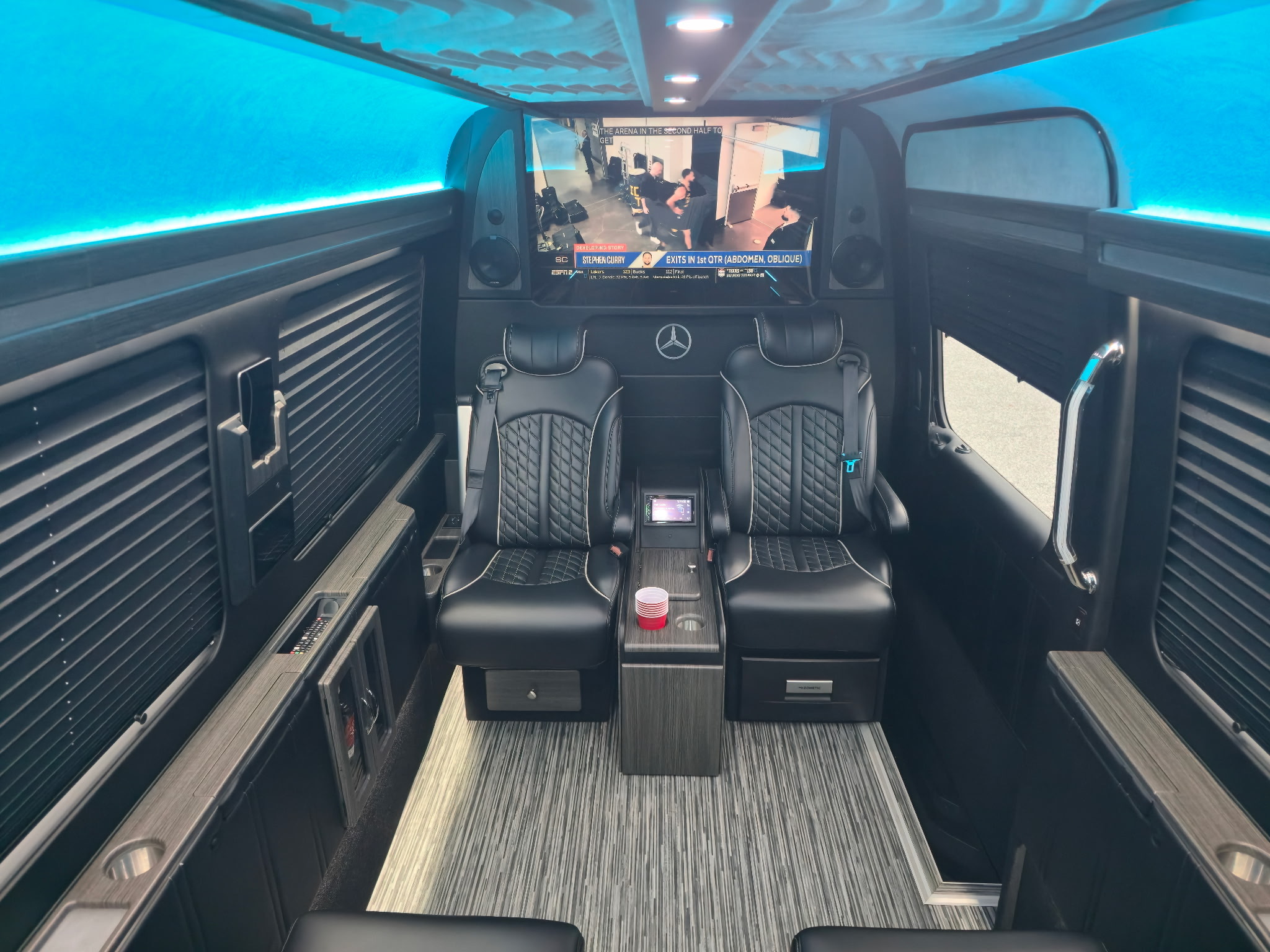
Hero photo: Dufourfun-owned sales media from the current 2020 Mercedes-Benz Sprinter 3500 listing. Creator not supplied; used with the business owner’s permission. It shows an illustrative passenger cabin, not Wrigley Field or an MLB event.
1. Treat this as a four-part trip
The most valuable van is not the one with the longest feature list. It is the one that handles the repeated movements your group will actually make.
| Trip phase | What the van must do | What to test before buying |
|---|---|---|
| Arrival day | Collect people and luggage without a second vehicle | Load every suitcase behind occupied seats and keep the aisle clear |
| Event days | Make short, frequent transfers comfortably | Check step height, door opening, climate control and seat access |
| Client or family time | Give the group a quiet place to regroup | Sit in every travel seat with the doors closed and the HVAC running |
| Departure day | Carry the same people plus purchases | Repeat the luggage test with an extra two or three bags |
This exercise often changes the seating decision. A ten-seat cabin is not automatically better than an eight-seat cabin if the last row consumes the only useful luggage space.
2. Separate the van plan from the stadium plan
Wrigley Field sits in a dense neighborhood. The Cubs’ official transportation page strongly encourages public transportation for events, and the Addison Red Line station is close to the ballpark. The Cubs also publish general parking information, but those current options and hours should not be treated as guaranteed All-Star Week rules.
A sound plan is to use the van for the work it does best:
- Move the group between the airport, hotel, meals and daytime activities.
- Choose a legal staging point away from the most congested blocks.
- Use the official event transportation instructions when they are released.
- Never assume a large van can wait at a hotel entrance, venue curb or private lot.
That may mean the van stays parked for the game itself. Ownership can still make sense because the vehicle serves the rest of the trip and many future weekends.
3. Buy for the group, not the television
A large screen is enjoyable, especially when schedules change or the group wants to follow other games. But these five items usually matter more:
- Documented, belted travel seats. Count seats by labels and restraints, not by how many people a lounge appears to hold.
- A real luggage plan. Every bag needs a defined, secured location.
- Easy entry. Test the step, grab handles and door width with the least mobile passenger in mind.
- Two-zone comfort. Run the rear climate system during a warm, fully occupied test.
- Usable visibility. The driver must have proper mirrors, cameras and unobstructed sightlines.
If the van will carry business guests, also test conversation at highway speed. A beautiful cabin that requires raised voices for two hours is not doing the job.
4. Measure the finished van
A conversion adds cabinetry, seats, electronics, batteries and sometimes water systems. Those additions reduce the payload available for people and bags. Mercedes-Benz explains in its Sprinter Body and Equipment Guidelines that payload after the upfit is based on the finished vehicle, not the empty chassis.
Before buying, ask for:
- the finished vehicle’s exact height, length and width;
- the tire-and-loading label;
- a recent weight ticket with front and rear axle weights;
- the number and type of designated travel seats; and
- the remaining payload with fuel, passengers and luggage included.
Do not use a current unconverted Sprinter brochure number as a substitute for the completed van’s label.
5. Make the weekend repeatable
One marquee event alone rarely justifies ownership. The stronger case is a calendar that repeats: season tickets, college weekends, family trips, airport runs, client entertainment and youth sports.
Build a simple annual-use model:
| Question | Your number |
|---|---|
| Group trips per year | ___ |
| Average people per trip | ___ |
| Airport or hotel transfers per trip | ___ |
| Trips that currently require two vehicles | ___ |
| Trips where luggage compromises seating | ___ |
Then compare that use with insurance, storage, maintenance, financing and depreciation. A van can improve the experience without being the cheapest transportation option. The decision is strongest when it consistently replaces friction—not when the math depends on imagined resale value or special venue access.
6. Shop the layout with a live drill
Bring the people and bags that define your use case. Load the cabin, buckle everyone in, close the door and take a real test drive. Check turning space, parking-camera views, wind noise, rear temperature and how quickly passengers can exit.
Start with current vans for sale, then compare the exact layouts rather than brand names alone. If none fits the luggage-and-seating drill, build a custom van around the measured requirement.
Dufourfun Vans is not affiliated with MLB, the Chicago Cubs or Wrigley Field. Event details and transportation policies should be confirmed with the official organizers before travel.