A luxury passenger van can consolidate a regional team, samples, luggage, and the day’s stops. It can also become an expensive compromise if the purchase is based on showroom seats instead of a loaded route. Ask whether this exact van can safely carry your people and equipment, then support useful parked work.
1. Build the passenger-and-cargo manifest
Mercedes-Benz publishes up to 12 seats, 70 cubic feet of cargo, 234-inch length, 103-inch height, 9,050-pound GVWR, and up to 3,307 pounds of payload for the current Sprinter Passenger Van. These are factory-model figures, not promises for a conversion. Seats, cabinetry, batteries, partitions, water, and accessories consume payload.
Bring the real team, luggage, samples, and display cases. Verify the completed vehicle’s certification label, axle ratings, seating labels, and a current weight ticket. Leave margin.
2. Separate travel seats from parked workstations
Every moving occupant should use a certified belted position. A desk, sofa, swivel chair, or conference arrangement is not automatically a legal travel seat. NHTSA discusses conversion seating and restraint standards in its conversion-van interpretation. Our editorial recommendation is to reserve laptop-intensive work, video meetings, and demonstrations for parked use.
3. Audit power
List laptops, monitors, routers, printers, screens, refrigerators, and specialty devices. Record watts, startup surge, duration, and AC or USB-C needs. Ask the upfitter to document usable battery capacity, inverter output, charging sources, ventilation, low-voltage protection, and engine-off behavior. Climate control can dominate consumption; a battery label does not promise a workday.
4. Expect connectivity gaps
A booster cannot create service where no usable carrier signal exists. FCC rules require compliant consumer boosters and provider consent; review 47 CFR §20.21. Satellite performance depends on current hardware, plan eligibility, obstruction, power, and provider rules. Do not promise in-motion Starlink. Carry offline files and a fallback location.
5. Test privacy against visibility
A partition can improve acoustic privacy but may change communication, climate flow, rear visibility, weight, and certification details. Curtains, glass, and headphones carry different tradeoffs. Decide who needs confidentiality and whether that work happens while parked.
6. Protect the driver
A quiet cabin does not eliminate fatigue. NHTSA’s drowsy-driving guidance stresses sleep and warns coffee alone may not be enough. Schedule breaks, avoid work demands on the driver, rotate qualified insured drivers, and price an overnight stay when needed.
7. Measure and insure the exact build
Measure the completed van with roof equipment against home, office, hotel, convention-center, and garage limits. Ask your insurer in writing about business use, employee drivers, client passengers, equipment, interstate travel, and exclusions. Ask an accountant about tax treatment. This guide promises no deduction, insurance result, safety outcome, productivity gain, or ROI.
The recurring-trip test
Compare ownership with rentals, flights, reimbursement, and hired transport over a real year. Include financing, depreciation, insurance, maintenance, tires, storage, cleaning, downtime, and driver cost. Ownership is more defensible when routes, team size, cargo, and brand experience repeat and the van serves other company needs.
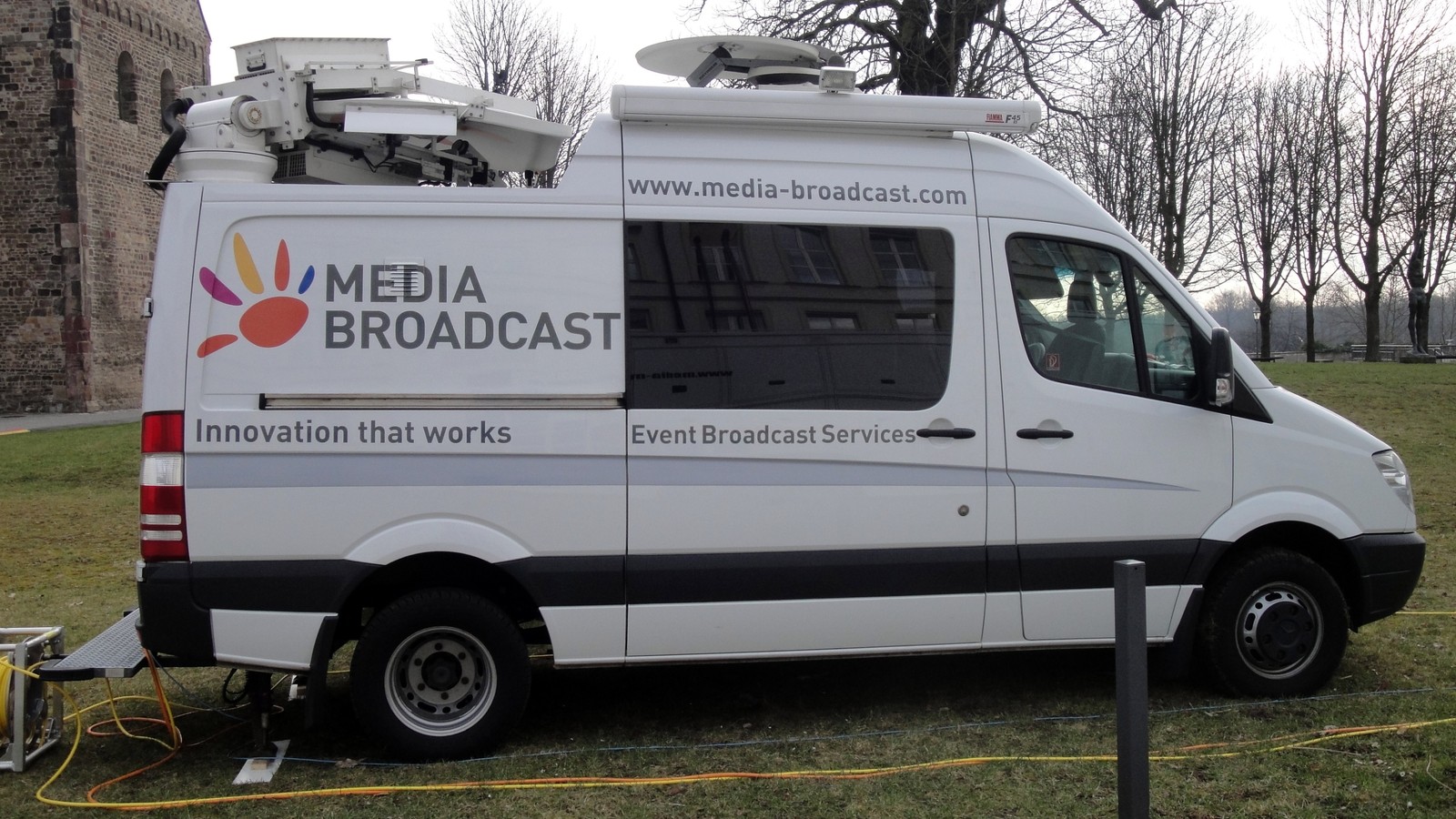
Illustrative photo: Sprinter media vehicle; not a promised Dufourfun configuration. Reise Reise, Wikimedia Commons, CC BY-SA 4.0; cropped to 1600×900.