
Cycling weekends expose a mismatch that ordinary test drives miss: the people fit, but the bikes do not. A luxury passenger van can solve that problem beautifully, yet only when the buyer treats bikes, racks, tools, water and luggage as part of the vehicle—not as an afterthought.
This guide is for repeated ownership use: club rides, charity events, trail weekends and family cycling trips. It does not assume that a sofa, rear door or hitch is rated for a particular load. The exact completed van, rack and installation control the answer.
Start with three honest transport choices
| Bike location | Best reason to choose it | Main tradeoff to inspect |
|---|---|---|
| Inside the cabin or rear compartment | Weather and theft protection | Bikes can consume aisle, seating or luggage space |
| Hitch-mounted rack | Fast loading and no interior dirt | Rack, bikes and adapters add tongue weight and rear length |
| Small trailer | Separates dirty gear and can carry more equipment | Requires verified towing ratings, wiring, storage and driving skill |
None is automatically best. Expensive road bikes may justify protected interior storage. Heavy e-bikes may make a lift-friendly rack attractive, but the combined rack-and-bike weight must fit the hitch and completed vehicle ratings. A trailer may preserve the cabin for riders, yet it changes parking and backing.
Run this six-step buying test
1. Bring the actual bikes
Do not substitute dimensions from a product page. Bring the largest frame, widest handlebars and heaviest bike you expect to carry. Add any child bikes, e-bikes, repair stands and wheel bags.
If the dealer cannot accommodate a physical test, make a taped floor template and record handlebar, wheelbase and total bike height. Editorially, a buyer should treat “it should fit” as unresolved until the van is measured.
2. Load every rider into a designated seat
A parked sofa is not automatically a travel seat. Confirm the designated, belted positions for the exact van. With everyone seated, walk the entry and exit path. A bike or bag should not become an obstacle during a hard stop or emergency exit.
3. Read the completed vehicle’s label
The base chassis brochure is not the payload of a finished luxury conversion. Cabinets, batteries, seats, bathrooms, entertainment systems and accessories all use capacity. The relevant number is on the completed vehicle’s placard or certification information.
The federal wording is intentionally plain: the combined weight of occupants and cargo should not exceed the listed limit. Mercedes-Benz keeps model-year Sprinter owner manuals online; use the correct manual and the exact van’s labels together.
A practical worksheet is:
available capacity − riders − luggage − bikes − rack or trailer tongue weight − food and tools = remaining margin
Do not fill the margin to zero in a showroom estimate. Actual people and equipment vary.
4. Inspect the attachment path
For a hitch rack, verify the hitch label, receiver class, rack limit, adapter limits and the van manufacturer or upfitter documentation. The lowest rating in the chain is the limit. Check whether the loaded rack blocks rear doors, lamps, camera views or the license plate.
For interior bikes, identify fixed tie-down points and a travel-safe restraint plan. The NHTSA secure-load guidance tells drivers to secure cargo at the back, sides and top, avoid excessive loads and recheck the load. A blanket over a bike protects upholstery; it does not restrain the bike.
5. Rehearse the wet return
After a ride, the clean showroom cabin will meet wet shoes, chain lube and muddy tires. Ask:
- Can dirty gear be separated from light upholstery?
- Is there a washable floor or removable liner?
- Where do helmets dry without becoming projectiles?
- Can the rear HVAC run while the group changes shoes?
- Are battery chargers used only in a location and manner approved by their manufacturers?
- Can every loose item be secured before moving?
This is where durable finishes can be more luxurious than delicate ones.
6. Drive with the rear loaded
Ask for a test drive that represents the intended load when practical and permitted. Check rear visibility, camera view, braking feel, crosswind response and the sound of secured gear. AWD may help the van move on a low-traction surface, but it does not increase the completed vehicle’s payload or shorten braking distance.
Compare layouts by routine, not brand
Ultimate Toys, Midwest Automotive Designs, Grech, Battisti, LA West, Becker, OGV and regional custom builders all offer different combinations of sofas, captain’s chairs, partitions and rear amenities. For cyclists, the decisive differences often sit behind the last row.
An open cabin can make long bikes easier to maneuver but may expose more upholstery. A partition can create a quieter passenger compartment but narrows the path between cab and lounge. A rear bathroom is useful during long event days but competes directly with bike and luggage volume.
Ask each seller for the exact floorplan, the completed vehicle’s weight information and written details for the hitch and any added storage system. Manufacturer family names are not substitutes for those documents.
What ownership changes after the first trip
Frequent cyclists benefit from a repeatable kit:
- One labeled bin for pumps, tools and spare tubes.
- A washable mat sized to the exact cargo area.
- A written load order so handlebars and pedals do not damage seating.
- A pre-departure check for straps, rack pins, lights, camera view and tire pressures.
- A post-trip routine for cleaning, drying and charging equipment.
- A storage plan for the rack when the van is used for non-cycling trips.
The van earns its price when that routine also works for airport bags, golf clubs, family weekends and client travel.
A current van worth load-testing
The 2025 OGV AWD Family Van is a useful example, not an automatic cycling recommendation. Its current listing describes ten seats, four premium captain’s chairs, a partition and a rear bathroom. Those features create comfort, but they also make the bike-and-bag test essential. Bring the bikes and verify the actual remaining space and ratings.
Use View Vans for Sale to compare completed cabins. If none protects the bikes without compromising travel seats, Build Your Custom Van with the storage system designed first.
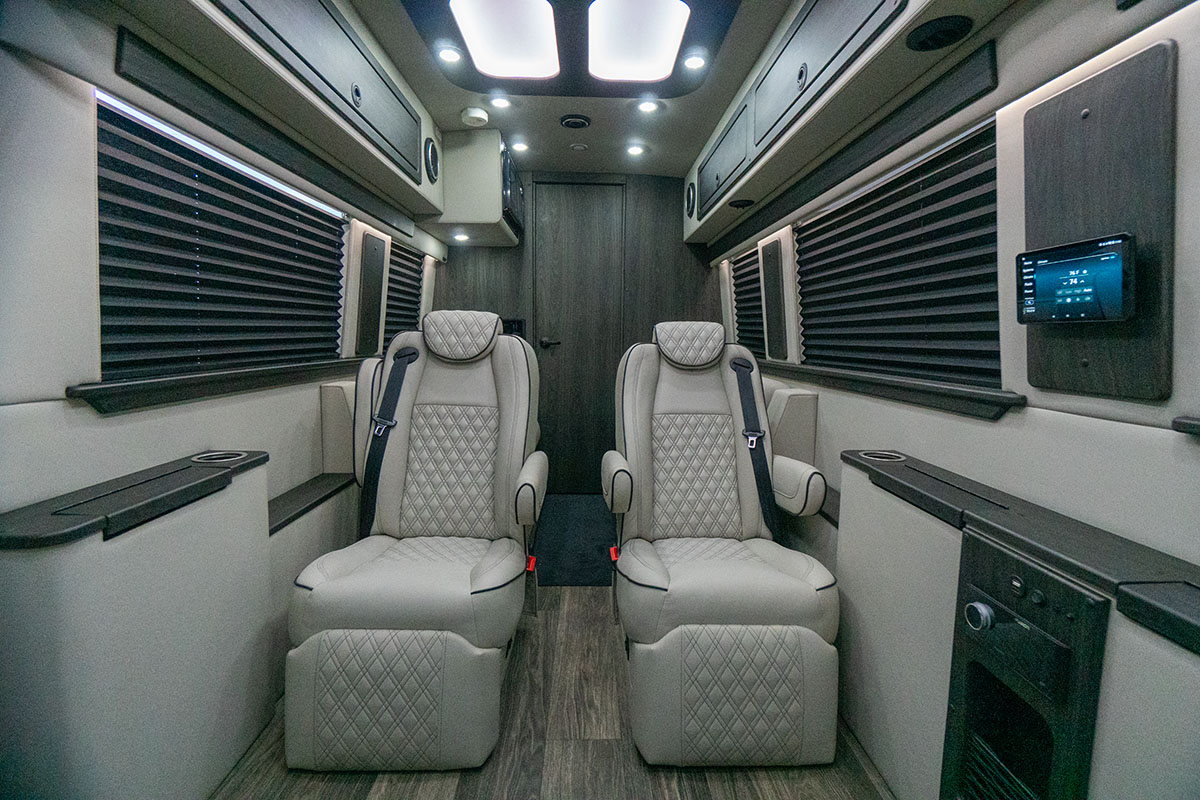
Hero photo source and usage: Dufourfun Vans 2025 OGV AWD Family Van inventory, stored in the business’s public inventory bucket. Creator is not recorded. Usage basis is a business-owned marketing asset. The photo shows the exact silver van, not a bicycle rack or a promise of bike-carrying capacity.