
A luxury passenger van can make a small production day calmer: the crew arrives together, batteries charge between locations, and clients have a clean place to sit. It can also become an expensive compromise if camera cases block the aisle or the electrical system was never sized for the job.
The best buying process starts with a call sheet and a load plan, not an upholstery sample.
Start with one honest production day
| Load | Questions to answer before shopping |
|---|---|
| Crew | How many people need a designated belted travel seat? |
| Camera | Where will bodies, lenses and media cases be restrained? |
| Lighting | Do stands and modifiers fit outside the passenger aisle? |
| Power | Which chargers, laptops and monitors run together? |
| Wardrobe/props | Can long or fragile items be separated from people? |
| Client comfort | Is there a quiet, climate-controlled seat that remains clear? |
A van that works for a two-person interview team may not work for six crew members, three rolling cases and stands. Buy for the repeated load, then rent specialized cargo capacity for exceptional shoots.
1. Count travel seats, not lounge positions
Confirm which positions are intended and documented for travel. A sofa that looks comfortable in a showroom is not automatically the right place for a belted passenger. Ask for the seating plan, belt locations and labels on the exact finished van.
Then test the aisle with every regular traveler seated. If someone must step over a case to reach the side door, the layout is already too full.
2. Give hard cases a restraint plan
NHTSA’s cargo guidance says loads should be secured against movement and checked before travel. Camera bodies, lenses, batteries, stands and coolers can become dangerous in a sudden stop.
Look for rated attachment points or a professionally engineered cargo solution. Ask the upfitter what each anchor is designed to hold. Cabinet doors and decorative shelves are organization tools, not proof of crash restraint.
3. Audit power in watts and hours
List each device’s input wattage and expected hours without shore power. Include simultaneous charging, a client monitor, laptops, cellular equipment and any rear climate load on the house system.
Ask for usable battery capacity, inverter rating, charging sources and low-voltage protection. A large inverter does not say how long the system will run. Request a demonstration with a realistic combined load and keep a path to shore power where permitted.
4. Protect climate without promising silence
People, computers, chargers and glass create heat. Verify whether rear air conditioning runs with the engine, from the house electrical system, or both. Ask what happens when parked.
Diesel heaters, fans, refrigerators and inverters may be audible during an interview. Test them with the microphones you use. “Luxury” does not mean acoustically silent.
5. Compare passenger and cargo-first solutions
| Layout direction | Strongest use | Main tradeoff |
|---|---|---|
| Open passenger cabin | Client transport and small crews | Less separated gear space |
| Front partition | Quiet passenger area | Less communication and floor flexibility |
| Rear cargo bay | Repeated case-and-stand load | Fewer seating choices |
| Two vehicles | Large or changing equipment package | More drivers and coordination |
Do not force one vehicle to be a people mover, equipment truck, dressing room and sound stage at the same time.
6. Check payload on the finished van
The chassis payload is not the finished conversion’s payload. Seats, batteries, water, cabinetry and accessories all consume capacity. Read the labels on the exact van, then account for people and equipment. For a custom build, request a completed weight ticket and axle weights before final acceptance.
Mercedes-Benz publishes current Sprinter Body and Equipment Guidelines for modifiers. Those guidelines say upfitters remain responsible for regulatory compliance; they do not replace documentation for your finished vehicle.
7. Design the service plan before the first shoot
List who services the chassis, conversion electrical system, rear HVAC, seating, windows and appliances. Ask whether repairs can be performed near your operating area or require returning to the converter. Keep wiring diagrams, manuals and warranty contacts in a shared production file.
A van earns its place when it reduces setup friction across dozens of ordinary days. If it only looks good parked, it is not production equipment.
View Vans for Sale to compare current passenger and storage layouts. If the repeated load needs different seating, power or partitions, Build Your Custom Van from a written crew-and-gear specification.
Hero photo and source note
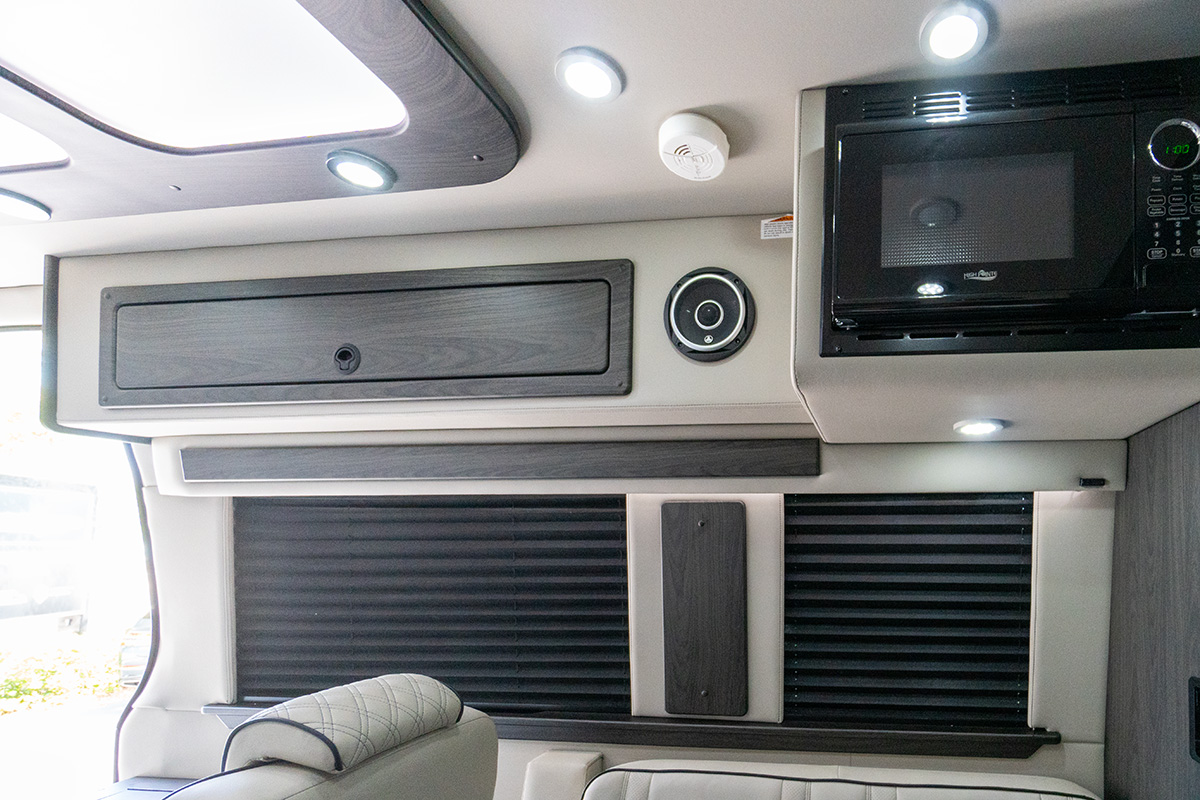
The hero is a business-owned Dufourfun photograph from the current OGV AWD Family Van listing. It shows general storage and cabin equipment; it does not show a production installation or imply that loose camera gear can be safely stored there. Original filename: 15-ogv-silver-dsc01731.jpg. Creator credit was not supplied in the listing record; usage basis is Dufourfun-owned sales media.