
A custom luxury-van proposal can be visually precise and contractually vague. The risk is not only a late delivery. It is discovering that the chassis, travel seats, electrical equipment or warranty process differs from what you thought you bought.
Before paying a deposit, turn the sales conversation into a written scope. This is a buyer checklist, not legal advice; have a qualified attorney review important terms.
Why the warranty split matters
Mercedes-Benz’s 2026 Sprinter warranty booklet says third-party equipment and items added or changed through customization, upfitting or conversion are covered by separate warranties from their makers, not the Sprinter Basic Limited Warranty. Midwest Automotive Designs also tells buyers on its official warranty page that coverage can vary by model year, use, components and the specific documents delivered with the vehicle.
That does not make a conversion risky by definition. It means “factory warranty” is not one answer.
The 12 questions to put in writing
1. What exact chassis am I buying?
List model year, make, model, wheelbase, roof height, drivetrain, engine, gross vehicle weight rating and factory options. Add the VIN when assigned. State what happens if the builder substitutes a different chassis or model year.
2. Which drawing controls the build?
Attach a dated floorplan and equipment schedule. Mark every travel seat, belt, table, partition, appliance, cabinet and storage area. Require a signed change order for material changes.
3. Which positions are approved for travel?
Ask the builder to identify intended travel seats and provide applicable labels and documentation at delivery. Do not rely on a rendering, parked lounge configuration or verbal maximum-seat count.
4. What will the finished van weigh?
Require a completed weight ticket and axle weights with the build substantially complete. State how the buyer will be notified if remaining payload is below the agreed target.
5. Which brands and part numbers are included?
“Lithium system,” “premium audio” and “rear air” are not specifications. List the battery, inverter, charger, solar controller, HVAC, refrigerator, displays, router and seating hardware by maker and model—or define approval for substitutions.
6. Who warrants each layer?
| Layer | Written answer needed |
|---|---|
| Chassis | Start date, remaining term and authorized service route |
| Conversion workmanship | Provider, term, exclusions and claim process |
| Seats and restraints | Provider and service contact |
| Electrical/HVAC | Converter coverage versus component coverage |
| Appliances/electronics | Registration duties and repair route |
| Paint/body changes | Provider and exclusions |
Ask for warranty documents before the deposit becomes nonrefundable, not on delivery day.
7. Where can service be performed?
A long warranty is less useful if the only approved shop is far away. Define whether local diagnosis is allowed, who authorizes work, who pays transportation, and when the builder may require the vehicle to return.
8. What does the deposit commit each party to?
Write the amount, due date, refundability, cancellation triggers and treatment of chassis or material-price changes. Do not assume a credit-card receipt contains the deal.
9. How do change orders work?
Every change should state price, schedule impact and refundability. Set a rule for builder-requested substitutions as well as buyer-requested upgrades.
10. What are the milestones?
Use observable milestones—chassis assigned, floorplan released, rough electrical, cabinetry, systems test and final inspection—rather than an unsupported “about 12 weeks.” Decide how often progress reports arrive.
11. What happens at acceptance?
Give the buyer time to inspect and road-test the van, operate major systems, review warning lights and confirm the punch list. Define which issues block delivery, which can be repaired later, and when final payment is due.
12. Which documents arrive with the keys?
Require purchase and title documents, weight ticket, chassis and conversion warranties, component manuals, wiring diagrams, keys, remotes, maintenance instructions and service contacts.
Compare programs without assuming identical contracts
Ultimate Toys publishes several model families on its official lineup, while Midwest lists multiple executive-van series and tells owners to rely on the warranty documents for their specific vehicle. Grech, Battisti, LA West and Becker also sell distinct products and commissioned layouts. Brand reputation does not replace the exact contract for the van being built.
Mercedes-Benz’s current Body and Equipment Guidelines describe technical limitations for companies modifying Sprinters and state that upfitters remain responsible for legal and regulatory compliance. Ask which current guidelines apply to your chassis and how compliance is documented; do not treat a marketing badge as a substitute for finished-vehicle paperwork.
A clean decision rule
Do not compare two proposals by total price until their scopes match. Normalize the chassis, seats, power system, HVAC, finishes, warranties, delivery assumptions and acceptance terms. A lower quote may simply leave more decisions—and more cost—outside the contract.
View Vans for Sale if a completed van lets you inspect the product before committing. For a layout built around your passengers and use, Build Your Custom Van and bring this checklist to the specification call.
Hero photo and source note
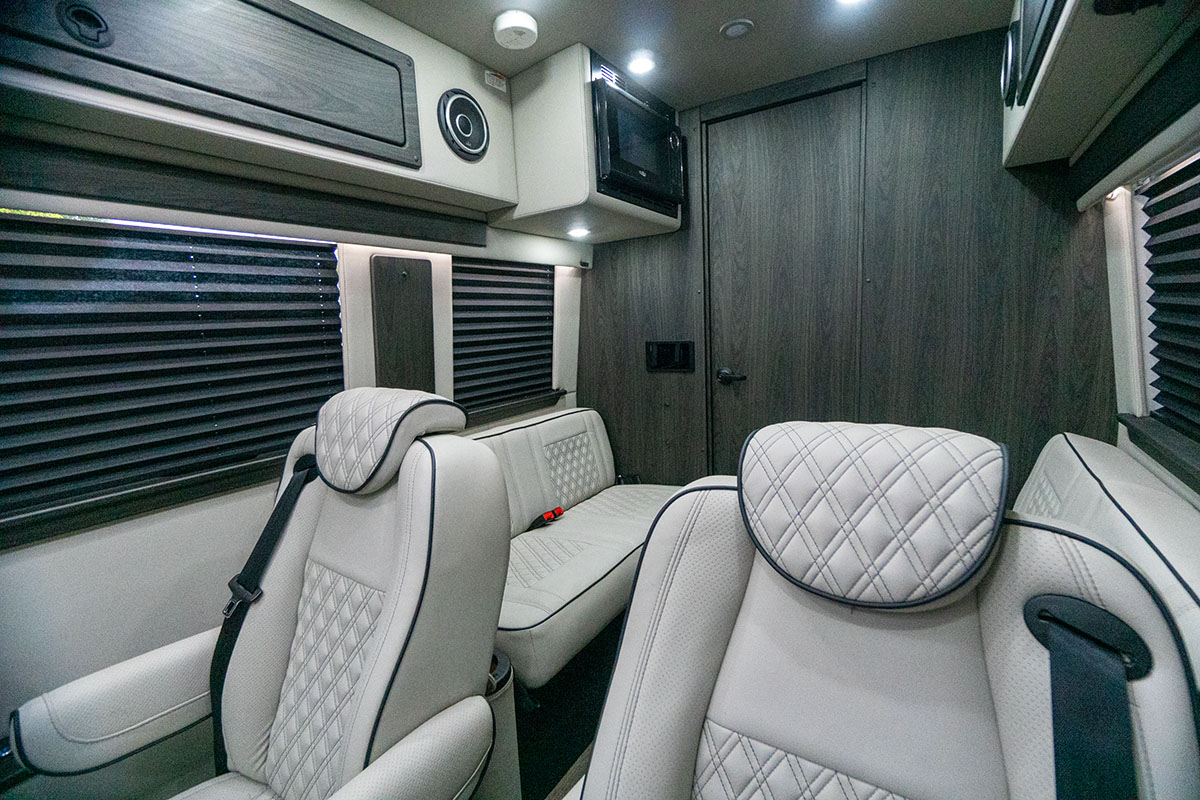
The hero is a business-owned Dufourfun photograph from the current OGV AWD Family Van listing. It illustrates how seats, belts, cabinetry and rear space must be defined together; it is not a photo of a particular commissioned custom build. Original filename: 04-ogv-silver-dsc01715.jpg. Creator credit was not supplied in the listing record; usage basis is Dufourfun-owned sales media.