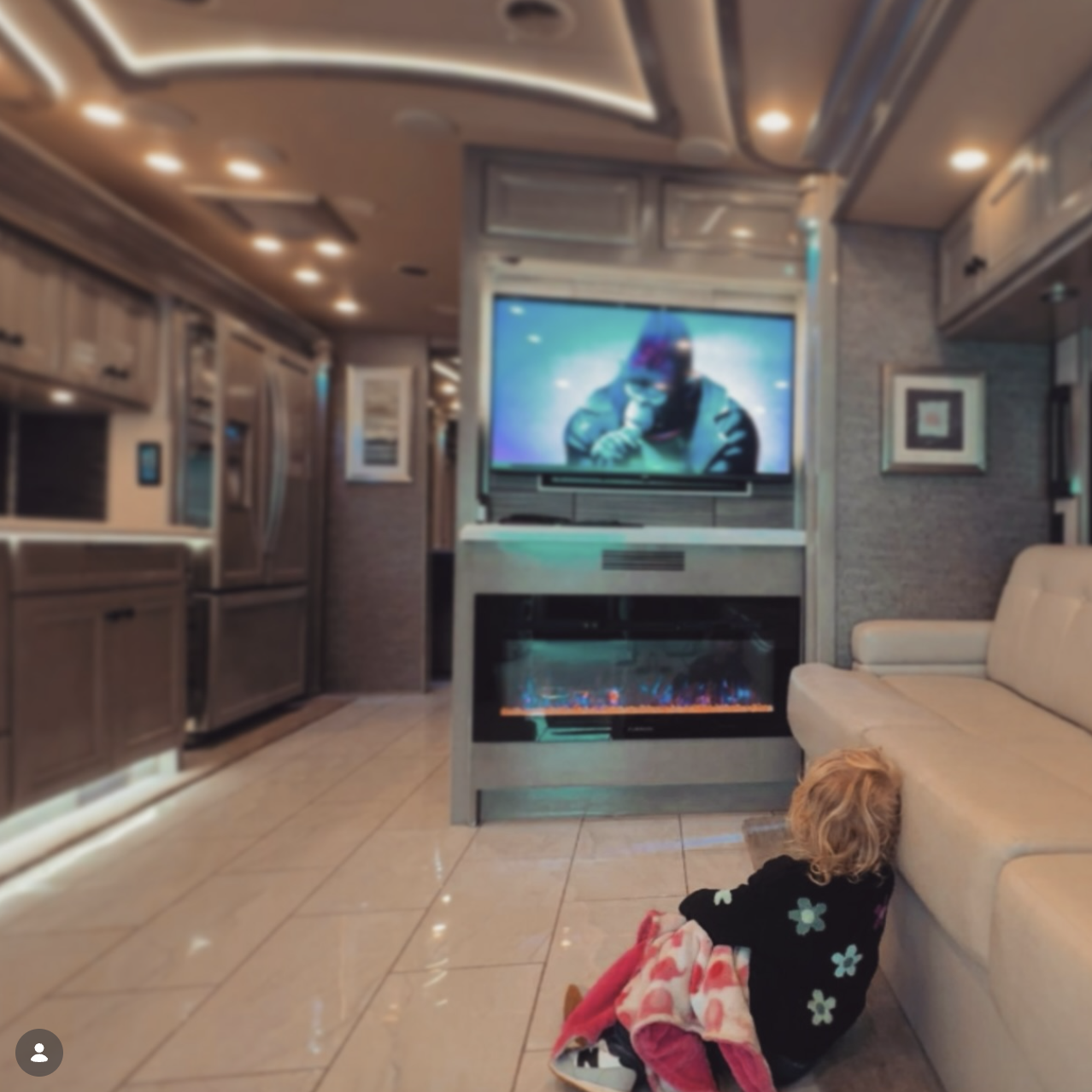
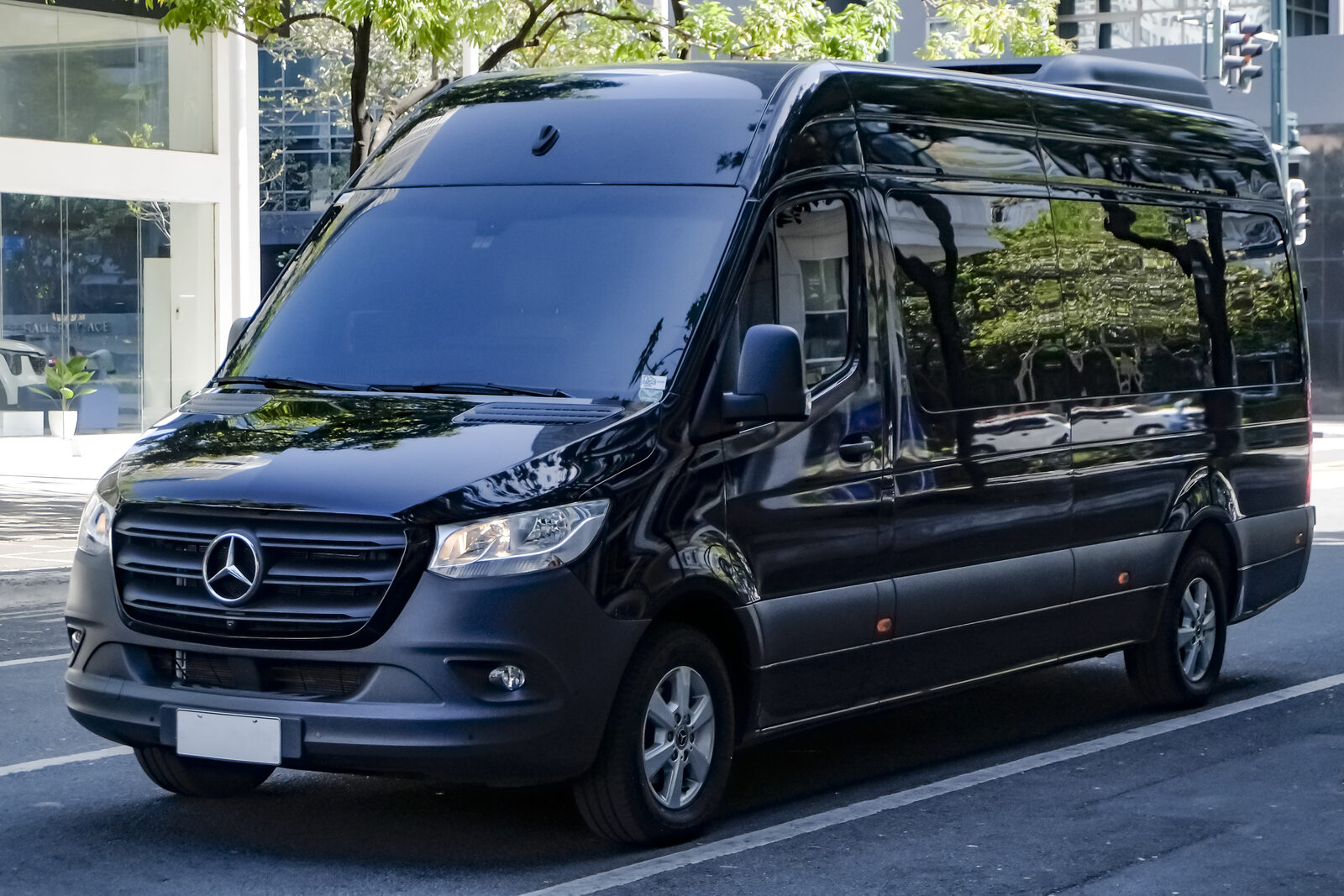
Hero photo: Mercedes-Benz Sprinter VS30 317 CDI Black 01 by Ethan Llamas, CC BY-SA 4.0. Illustrative exterior photograph; it does not show a Midwest or Ultimate Toys conversion. Resized and JPEG-compressed from the original; display may crop the photograph to fit the page. The adapted photograph remains licensed CC BY-SA 4.0.
A front partition can turn a passenger cabin into a more separate space. An open cabin can make the driver feel more connected to the people traveling behind. Neither choice is automatically more luxurious. The better arrangement depends on how you plan to use the van.
Before comparing screens, finishes or trim packages, answer one question: will you usually drive, or will you usually ride in the rear?
1. Start with the driver’s place in the trip
For an owner who drives family and friends, an open relationship between the cab and rear seats may be a priority. At a viewing, check sightlines and how easily people can communicate while seated. Do this during a road demonstration, not only while parked with the doors open.
For an owner arranging a separate driver, a partition may be more attractive. It creates a defined boundary between driving and passenger spaces. But a physical boundary does not establish soundproofing or confidentiality. Ask how communication with the driver works and test it.
Our recommendation is to write down the normal trip before choosing the configuration. A vehicle bought primarily for family weekends should not be specified solely around an occasional executive meeting.
2. Understand what the manufacturer is actually offering
Midwest Automotive Designs describes its Business Class with front and rear partitions. That is a concrete example to inspect if separation is central to your brief. Request the exact floorplan and build sheet; do not extend that description to every Midwest product.
Ultimate Toys’ Ultimate Coach page discusses open cabin space and presents both a standard configuration seating up to ten and an eight-passenger Coach VIII. The VIII relocates the kitchenette into the main cabin and changes the rear layout. Those differences show why a model name alone is not enough to compare two listings.
Manufacturer pages reviewed September 16, 2026. Verify the specific vehicle’s configuration and model year before relying on a feature list.
3. Compare the daily tradeoffs
The following are buying considerations, not measured performance claims about either brand.
| Decision | Partitioned cabin | Open cabin |
|---|---|---|
| Driver and passengers | More physical separation | More direct connection to the cab |
| Conversation | Test the communication system and audibility | Test speech levels over road noise |
| Sense of space | Sit in the first rear row and judge the boundary | Check whether the sightline feels useful |
| Screen placement | Inspect what the partition installation occupies | Inspect the actual screen location and view |
| Shared family use | Rehearse normal interaction with the driver | Check access and belongings around the cab |
A large screen should not decide the whole layout. Sit through a realistic stretch of driving with the entertainment off, then on. Make sure the cabin works when no one wants to watch anything.
4. Check what the partition changes around it
Ask the converter to explain access, ventilation, controls and service access in that exact installation. Look for practical details: can you reach the cabin controls from the intended seats, and where are the switches or components a technician may need to access?
If a partition is powered, request a demonstration of normal operation and the manufacturer’s procedure if power is unavailable. If the seller cannot demonstrate a feature, treat it as an unanswered question rather than an included benefit.
A partition should also be considered alongside the rest of the floorplan. Bring luggage, examine the rear storage and verify the seating positions intended for travel. A well-finished wall does not compensate for a layout that misses your everyday needs.
5. Make a clear custom-build brief
Instead of requesting “an executive interior,” describe the use: who drives, the usual passenger count, the need for conversation or separation, and the bags carried on a normal trip. Then ask which layout meets that brief and what you give up to obtain it.
For existing vehicles, View Vans for Sale and request floorplans before arranging comparisons. If the right arrangement is not apparent, Build Your Custom Van to start with your own priorities.