
For frequent flyers, the hardest part of the trip may happen before the airport: gathering the group, fitting every suitcase, reaching the curb on time and doing it again after a delayed return flight.
A luxury passenger van can make that routine calmer, but only if its layout works with your real luggage and your real passengers at the same time. The correct purchase test begins with bags—not the television.
Why airport use is a different ownership test
Airport travel creates short, intense loading cycles. Doors open in a driveway, at a hotel, at a commercial terminal and sometimes at an FBO. Passengers may be wearing business clothes, carrying laptops or helping children and older relatives. The van needs to load quickly without putting suitcases in the aisle.
The question is not “How many seats does it have?” It is “How many people and bags can it carry in the configuration I will use?”
1. Make a real trip manifest
List a typical trip before you shop:
| Traveler type | Bring to the test |
|---|---|
| Couple on a long trip | Two full-size checked bags, two carry-ons, personal items |
| Family of six | Actual suitcases, stroller, car seats and backpacks |
| Executive group | Roller bags, laptop bags and garment bags |
| Golf or ski group | Sports cases plus normal luggage |
| Private aviation transfer | Soft bags and hard cases in the mix you normally fly |
Airline rules provide a useful measuring reference even when your trip uses a private aircraft. Delta’s current baggage overview defines a standard checked bag as no more than 62 total linear inches and 50 pounds for the listed domestic main-cabin example. Your airline, fare and route can differ, so use your actual bags rather than treating one airline’s rule as universal.
2. Load the bags before judging the seats
Put every travel seat in its normal position. Then load the full trip manifest. You are checking five things:
- The rear doors close without compressing luggage.
- Hard bags cannot slide into passengers.
- The aisle stays clear from the side door to every occupied seat.
- Frequently needed items remain reachable.
- The driver still has an unobstructed view.
Do the same test with the rear restroom or storage compartment configured exactly as you intend to use it. A brochure may show the maximum passenger count in one setup and the best cargo volume in another.
3. Treat factory specifications as a baseline only
The 2026 Mercedes-Benz Sprinter Passenger Van specifications list a 144-inch-wheelbase, standard-roof configuration with 12 seats, 70 cubic feet of cargo volume and 3,307 pounds of payload. Those numbers describe that factory configuration—not a finished luxury conversion.
Captain’s chairs, partitions, cabinetry, batteries, a restroom, entertainment systems and aftermarket suspension all add weight or consume space. Ask for the completed vehicle’s door label, seating documentation and scale weight. Calculate remaining payload with fuel, passengers, bags and accessories included.
A useful stock number can start the conversation, but the converted van in front of you is the one that must pass the test.
4. Check every airport touchpoint
Curb and FBO access
Open the side door on a slight curb slope. Have passengers enter while another person retrieves bags. Confirm that deployable steps, doors and luggage do not compete for the same space.
Parking height
Measure the van at its highest fixed point, including roof air conditioning, antennas, satellite hardware or racks. Compare that number with every garage you plan to use. Do not rely on the chassis height or an online listing alone.
Driver waiting
If a driver will wait in the vehicle, verify the parked climate and electrical systems. Ask which systems operate with the engine off, how long they can run and what protects the starting battery.
Night returns
Test entry lighting, step visibility, rear-door lighting and phone charging. A feature that feels minor in daylight becomes important after a late arrival.
5. Keep comfort compatible with safety
A reclining seat is still a travel seat, not a bed while the vehicle is moving. NHTSA says all riders should buckle up every trip and gives detailed guidance for proper lap-and-shoulder belt fit on its seat-belt safety page.
During a test ride, put every regular traveler in a real seat. Check that:
- The belt crosses the chest and hips correctly.
- The seat locks positively in its travel position.
- Footrests and tables stow without blocking exits.
- Children can use the correct restraint for their age and size.
- Bags are secured rather than stacked beside riders.
Comfort should reduce trip friction without weakening basic travel discipline.
6. Buy for your repeated pattern
Count how often the airport routine occurs:
| Annual pattern | What to validate |
|---|---|
| 6–12 group trips | Is ownership justified by other family or event use? |
| 12–24 business trips | Can passengers work, talk and arrive composed? |
| 24–40 mixed trips | Are finishes, doors and storage durable enough for frequent loading? |
| 40+ transfers | Is service access and downtime planning as strong as the cabin? |
This is not a savings calculator. It is a utilization check. A luxury van creates the most value when it serves several real routines—airport runs, client hosting, games, golf and family travel—without being compromised for all of them.
The best showroom test takes luggage
Bring the bags. Bring the people. Drive over uneven pavement. Load at the side and rear doors. Measure the height yourself. Then repeat the process with the seats reclined and returned to travel position.
A beautiful cabin can impress in five minutes. A good airport van still works on the fiftieth rushed departure.
View Vans for Sale and compare current layouts, or Build Your Custom Van around your passenger count, luggage mix and airport routine.
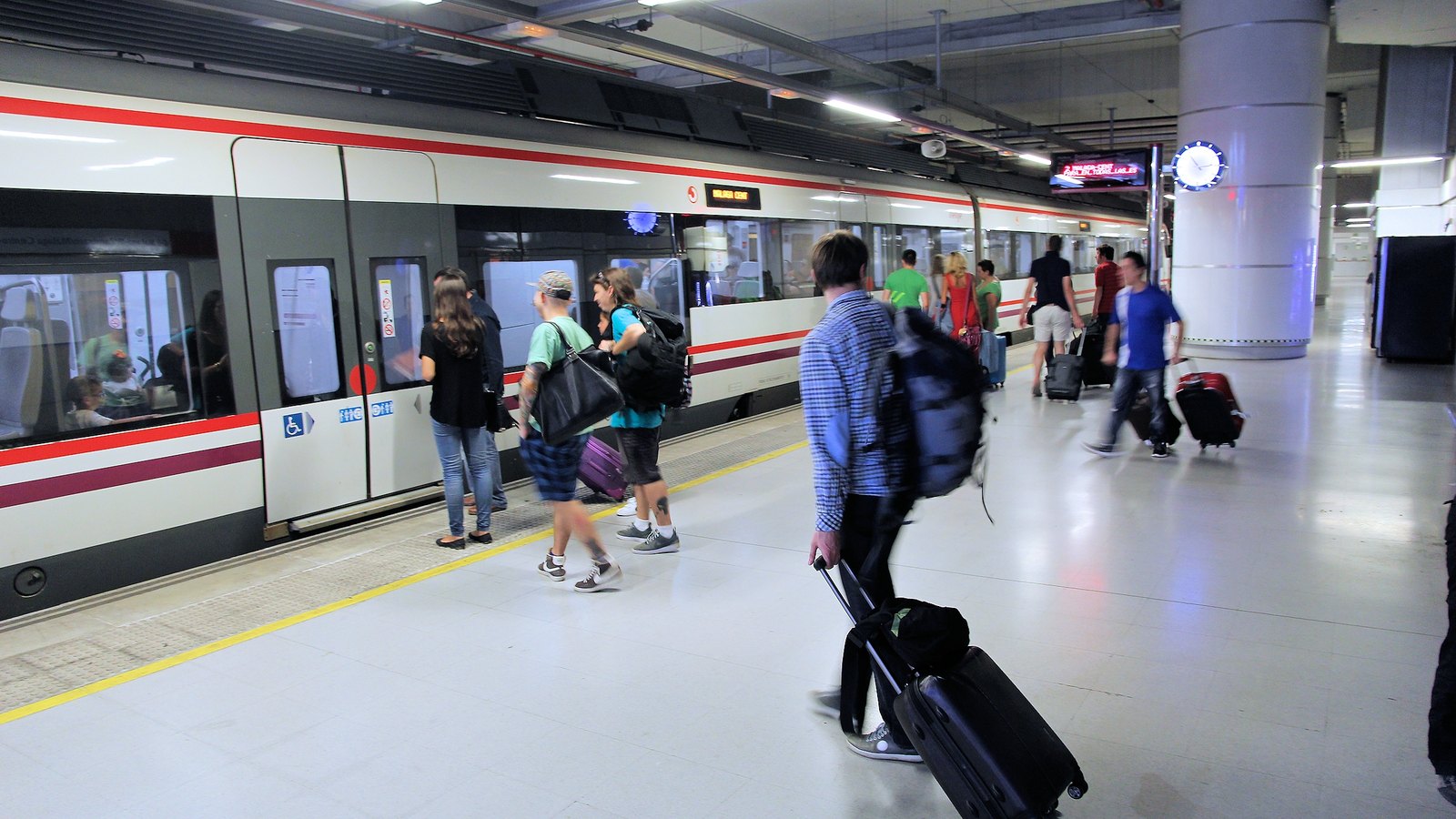
Hero photo: passengers with luggage at Málaga Airport train station; a generic airport-transfer scene, not an FBO or U.S. airport. Photo by Marek Ślusarczyk (Tupungato), via Wikimedia Commons, licensed CC BY 3.0. Cropped to 16:9, resized and compressed for web use.