A luxury van can look perfect on a sunny afternoon and still be hard to use after dark. Late arrivals, early airport runs and the drive home from dinner are when you find out whether you can see the step, read a menu without blinding the driver, and dim the cabin without asking someone to reach for a switch.
Lighting in a converted Sprinter usually comes from two places. Knowing which is which helps you ask the right questions.
Chassis lighting vs. converter lighting
| Source | What it usually covers | Where to confirm |
|---|---|---|
| Mercedes-Benz chassis | Headlamps, cab and dome lighting, and the controls built into the original vehicle | The Mercedes-Benz Vans owner's manuals for the model year |
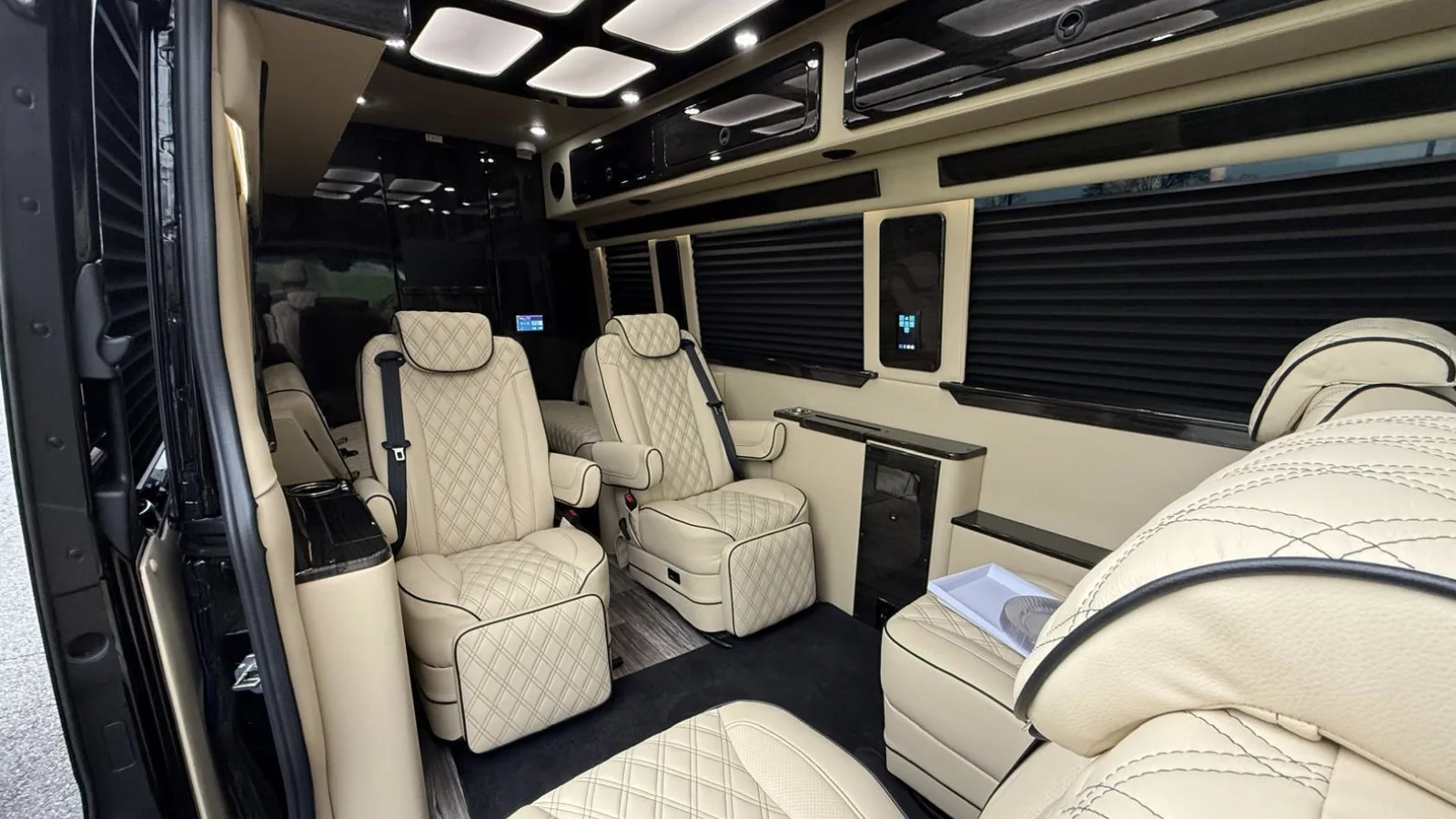
| Converter (upfitter) | Rear-cabin ceiling, accent, step and reading lights, and any touch-panel controls | The converter's build sheet and owner documents |
Mercedes publishes the Sprinter Body and Equipment Guideline for converters who modify the vehicle, including its electrical system. It's a guide for builders. It doesn't describe the lights in any particular finished van. Features vary by converter, model and build, so check the actual van, not a brochure.
Converters also style lighting as part of a model's design. For example, Midwest Automotive Designs describes the Heritage RV with ambient halo lighting built into its cabinetry. That's one model family. It doesn't mean every Midwest passenger van has the same feature.
Five things that make a cabin easy at night
- Boarding light. Can passengers see the step and the floor when the door opens, without someone looking for a switch?
- Task light that stays put. Reading or table lights should light up a lap or a tabletop without lighting up the whole cabin.
- Low-glare ambient light. You want a soft background level that lets people move around without washing out the windows or bothering the driver.
- Controls from more than one seat. Check who can reach the light controls: the driver, the front-row passengers, the back row? Shared touch panels are convenient only if they're easy to read in the dark.
- Shades and reflections. Lit cabins can turn dark windows and glossy trim into mirrors. Shades and the finish of the trim affect comfort as much as the lights themselves.
Do one night test before you buy
You don't need instruments. If you can, look at the van once at dusk or after dark. Open the door as a passenger would. Sit in the last row. Turn on a reading light, dim the cabin, and close the shades. Notice whether anything reflects toward the driver, and whether the controls make sense without a lesson. Ask the seller which lights came with the Mercedes chassis and which the converter installed. That tells you where to go for parts and service.
Tradeoffs to weigh
More lighting zones mean more flexibility, but also more controls to learn and more parts that could need service. Bright accent lighting looks great in photos, but it can feel too much on a long drive. The best setup is the one your regular passengers can use without thinking about it.
Browse current Dufourfun inventory to compare cabins, or describe your ideal evening setup in the van builder.
Next step
View Vans for Sale to compare current listings and confirm their status. If you would rather start from your own seating and storage needs, Build Your Custom Van.