
College visits are not one trip. They are a season: two schools in a weekend in the spring, a return visit in the fall, move-in day, parents' weekend, a sick-kid rescue run in February, then graduation. Families who buy a luxury passenger van for this usually do the math after the third or fourth trip, not the first.
This guide is about the purchase decision — what to test, what to measure, and which specs actually change the experience. All sources were checked on September 21, 2026.
Count the trips before you count the seats
A single campus tour weekend sounds like a road trip. Four years of them is a pattern: a teenager, two parents, sometimes a grandparent, sometimes a younger sibling who cannot be left behind, and luggage that grows every semester. That pattern rewards individual seating and easy access far more than raw passenger count.
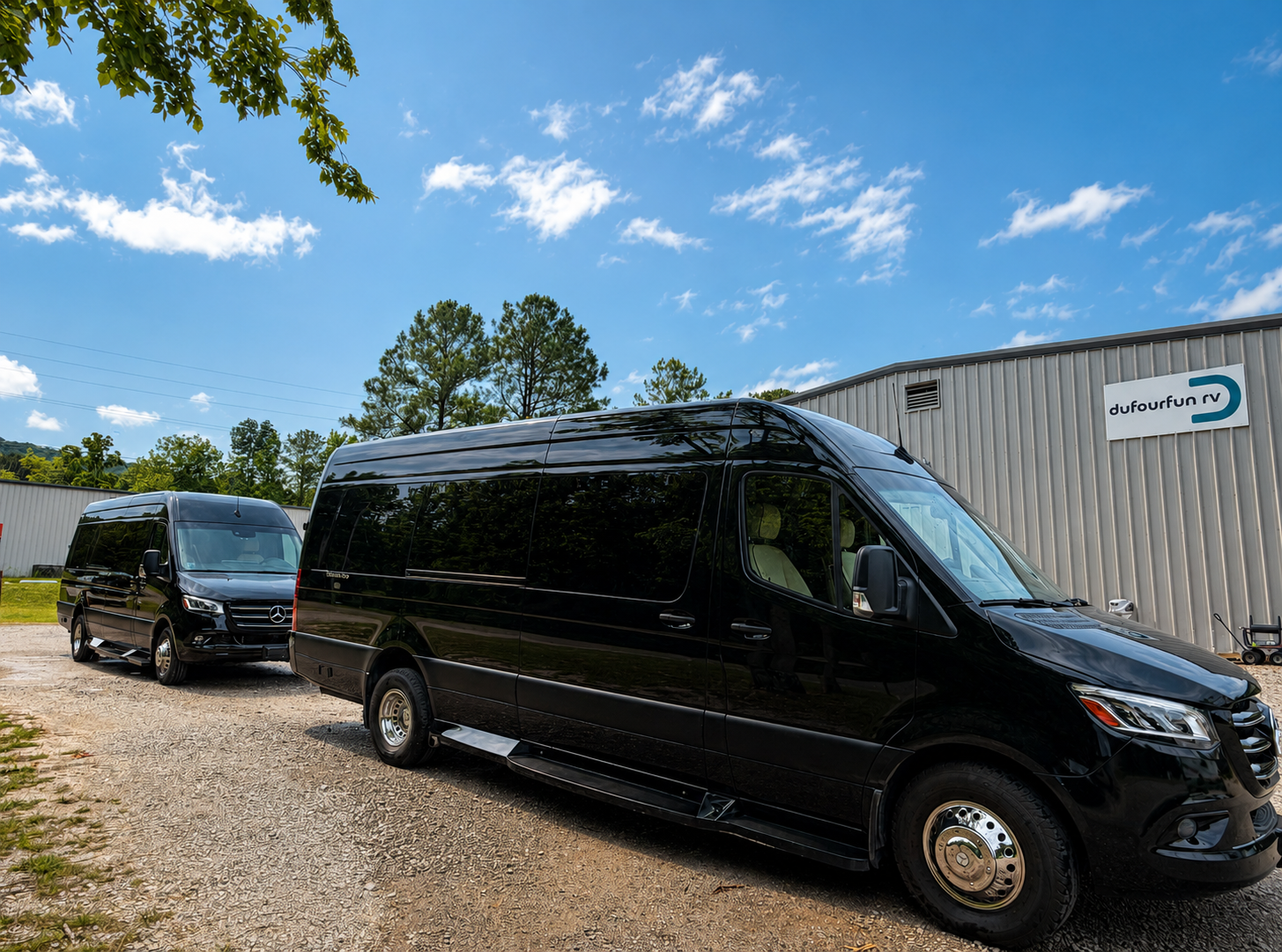
Mercedes-Benz's own Sprinter passenger van page lists configurations up to 12-passenger seating with a 144-inch wheelbase and published payload and GVWR figures; the Select trim page lists an overall height around 103 inches. Converted luxury builds trade some of those seats for lounge seating, a galley or a restroom — which is usually the right trade for a family, and exactly the wrong trade if you genuinely need to move a dozen people.
Measure your garages, not just the van
This is the mistake that costs people the most. Campus parking structures are low, and universities publish their limits.
- Stanford's official garage height restrictions table lists entry limits as tight as 8 feet 0 inches with interior ramp limits of 7 feet 0 inches.
- Saint Louis University's visitor parking page lists garage clearances of 7 feet 6 inches and 8 feet 2 inches, with jointed gate-arm clearance lower still — and it also explains how admissions visitors obtain a permit for designated visitor spaces.
- The University of Virginia's visitor parking map lists Central Grounds Garage at 6 feet 8 inches.
- UW-Madison publishes a full lot clearance list with entrances as low as 5 feet 11 inches on some levels.
- Duke's visitor parking page lists a 9-foot garage clearance and states plainly that parking for recreational vehicles is not offered on the University or Medical Center campuses, directing visitor buses to a separate field lot.
A high-roof Sprinter conversion will not enter most of those structures. That is not a dealbreaker — it is a routing decision. It means surface lots, hotel outdoor parking and a habit of checking clearance before you commit to a ramp. Write your van's measured height, with roof equipment installed, on a card in the door pocket.
Nine things to test on the actual van
- Load the real luggage. Two large suitcases, a duffel, a mini-fridge and a laundry basket. Not sample bags — the ones you will actually use on move-in day.
- Get the grandparent in and out. Step height, grab handle, door width. Do it three times.
- Sit in the third row for twenty minutes. Seat comfort claims collapse under that test.
- Check every belt. A three-point belt at every seated position is what you want; NHTSA's seat belt page reports a 91.3% national use rate in 2025, and federal rules now extend rear seat belt reminder requirements under a 2025 NHTSA final rule.
- Read the tire and loading label. Federal standard 49 CFR 571.110 requires vehicles at or below 10,000 pounds GVWR to carry the placard listing tire sizes, pressures, cargo capacity and seating capacity. Run the loaded math before graduation weekend, not during it.
- Work from the second row. If a parent takes calls on the drive, the seat, table and power layout matter more than the sound system.
- Test the restroom claim. Many builds have one. Some are usable by an adult. Check.
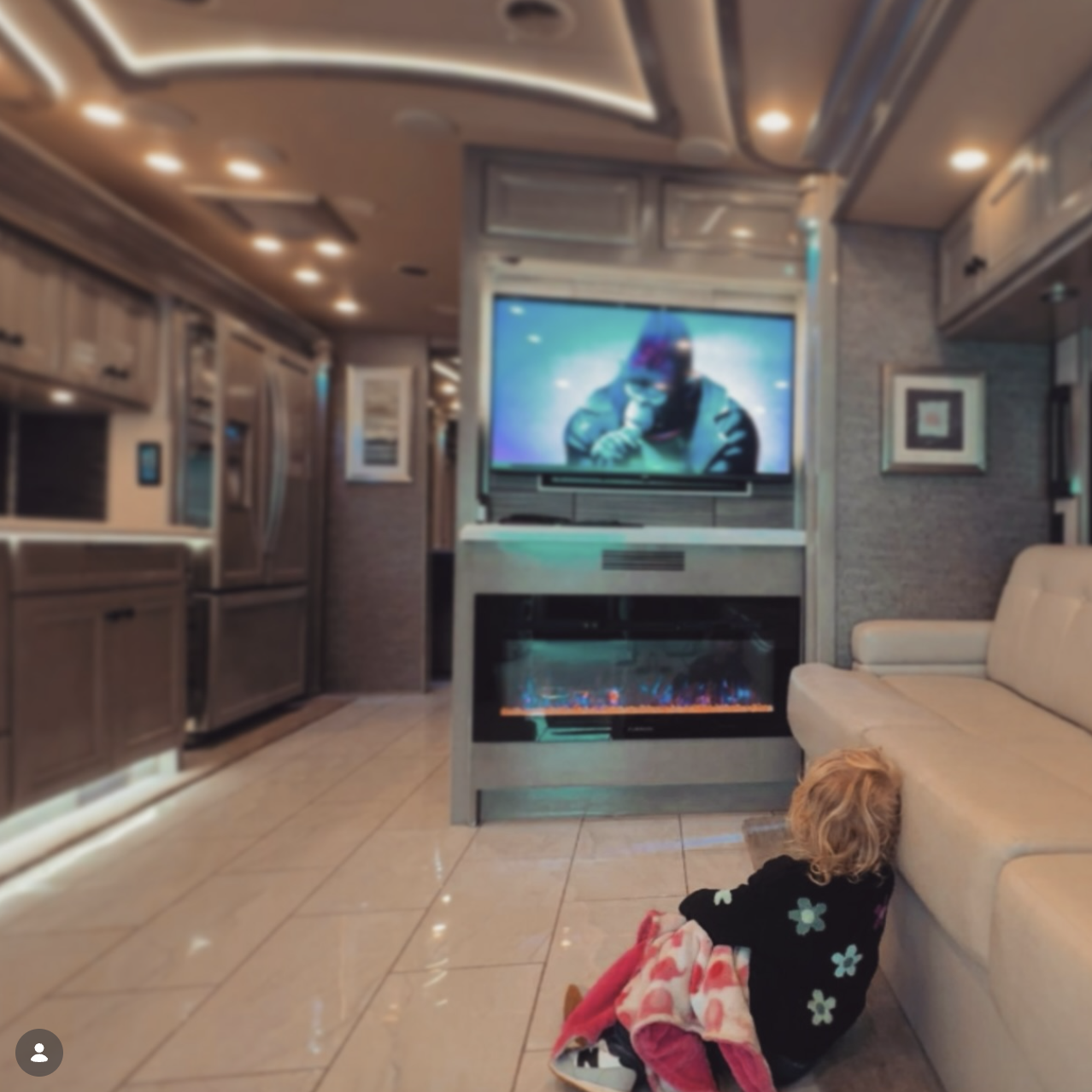
- Look at the floor. Wet shoes, spilled coffee and dorm boxes want a hard surface.
- Drive it into a real parking space. Not the dealer lot. A grocery store, with a mirror-check for the height bar.
Seats versus space: the table families argue about
| Priority | 10-12 passenger layout | Lounge conversion |
|---|---|---|
| People per trip | Most | Fewer, more comfortably |
| Luggage for move-in | Tight unless seats fold | Usually better |
| Mobile work | Poor | Good |
| Onboard restroom | Rare | Common |
| Third-row comfort | Bench-like | Individual seats |
| Campus garage access | Depends on roof | Often restricted |
If you are choosing purely by seat count, be careful. NHTSA's 15-passenger van page is blunt about the large-van safety picture: it reports that 69% of 15-passenger van occupants killed in crashes from 2010 through 2019 were known to not be wearing a seat belt, and 57% of those killed in rollover crashes were ejected. Its recommendations are practical — insist on belts for every occupant, check tire pressure weekly against the manufacturer's levels, and put no loads on the roof. Those apply to any big van, including a luxury one.
For most families, fewer and better seats is the right answer.
Campus rules you should assume, not discover
Every school is different, but the pattern repeats: visitor parking is permitted and paid, oversized vehicles are handled separately, and overnight rules are enforced. Boston College's visitor parking page, for instance, requires a paid or validated ticket to exit its garages and requires vehicles off the Chestnut Hill campus by 11 p.m. the night before home football games, with towing at the owner's expense. The University of Cincinnati's visitor page tells visitors to check garage descriptions for height clearances.
So: call the visitor center, say the words "extended high-roof van, about nine feet tall," and ask where it goes. That one phone call prevents the most common bad afternoon.
If a commercial operator ever enters the picture — a hired driver, a shared cost arrangement — the rules change category entirely. FMCSA's passenger van safety resources define a van as a vehicle designed to transport 9 to 15 passengers including the driver, with applicability keyed to for-hire interstate operation. A privately owned family vehicle is a different situation, but it is worth knowing where the line sits.
Buy for the fourth year, not the first visit
The families who are happiest with these vans bought for the whole arc: campus tours, move-in, parents' weekend, away-game weekends and the drive home at the end. They picked a roof height their garages tolerate, individual seats with proper belts, a floor they can clean, and enough power to work from the middle row.
Browse current inventory to see what those choices look like in finished vehicles, or specify seating, storage and roof height yourself with a custom build.
Photo credit and adaptation: Hero: File:The Rotunda and Lawn University of Virginia Charlottesville VA March 2011.jpg by Phil Roeder, via Wikimedia Commons (https://commons.wikimedia.org/wiki/File:The_Rotunda_and_Lawn_University_of_Virginia_Charlottesville_VA_March_2011.jpg), licensed CC BY 2.0 (https://creativecommons.org/licenses/by/2.0). Original 4200x2400; adapted by centre-cropping to 16:9, resizing to 1600x900, normalising orientation, stripping metadata and re-encoding as JPEG q86. No retouching. Illustrative campus photograph; not affiliated with the University of Virginia.
Sources in this article were accessed and checked on September 21, 2026. Rules, prices, mileage and availability change — verify current details directly with the linked source or with us.