
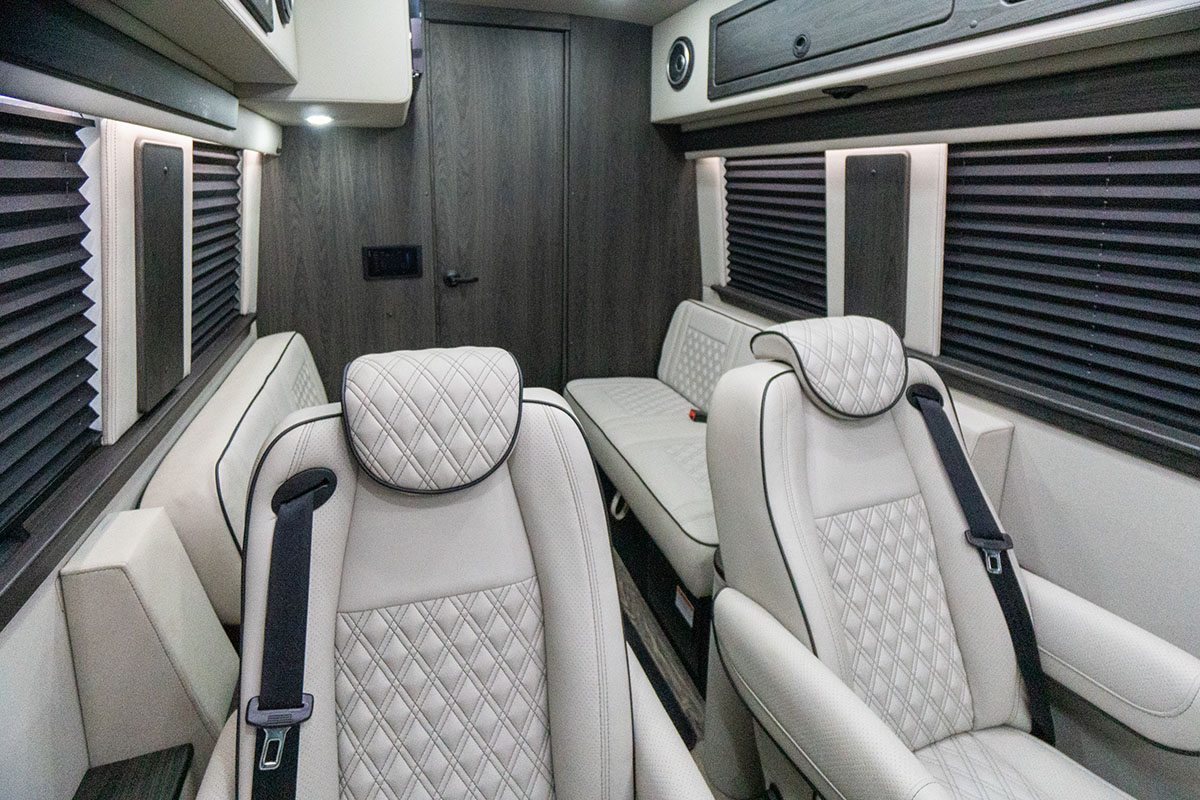
A college visit can begin before sunrise, include two campuses, end after dinner and still leave a family with another long drive the next day. Then come admitted-student events, move-in, parent weekends, games and graduation. That repeat pattern—not one polished tour—is the better reason to evaluate a luxury passenger van.
The travel question is practical: can everyone ride in a proper seat, keep bags secured, charge devices, work between stops and arrive with a rested driver? The admissions question remains separate. The U.S. Department of Education recommends using College Scorecard to compare costs, graduation rates, debt and earnings. A comfortable trip should create time for better decisions, not replace them.
Map the full college-travel cycle
| Trip | Typical load | Van priority |
|---|---|---|
| First campus tours | Family, day bags, laptops | Conversation, charging and easy entry |
| Admitted-student weekend | Extra luggage and longer days | Rear climate, rest space and storage |
| Move-in | People plus bulky bins | Flexible cargo plan without blocking belts or exits |
| Parent or football weekend | Family or guests | Adult seating comfort and city coordination |
| Graduation | Multiple generations and formal clothing | Step access, circulation and protected luggage |
This table is a planning tool, not a claim that every van can safely carry every load. Use the exact completed-vehicle labels and upfitter documentation to confirm occupant and cargo limits.
1. Count usable seats, not advertised seats
A seat is useful only when it has an appropriate belt, adequate legroom and safe access. Sit in every row. Buckle every belt. Ask whether any sofa, jump seat or removable position is certified for travel, rather than assuming a lounge seat is a passenger seat.
For a family of four, a six-seat van can preserve generous circulation. An eight-seat layout can add flexibility for siblings or grandparents. A ten-seat layout may serve larger groups, but it can reduce aisle and luggage space.
| Layout question | Six-seat bias | Eight-seat bias | Ten-seat bias |
|---|---|---|---|
| Personal space | Strong | Balanced | Lower when full |
| Guest flexibility | Moderate | Strong | Highest |
| Luggage with all seats occupied | Usually easier | Requires planning | Must be verified carefully |
| Best fit | Core family, work calls | Family plus guests | Larger recurring group |
These are buying tendencies, not specifications. Converters arrange seats differently, and the exact van controls.
2. Run a luggage rehearsal before purchase
Bring the type of bags you actually use. For move-in, add representative bins rather than imagining them. Confirm that nothing must sit loose in an aisle or interfere with doors, belts or emergency exit paths.
A rear cargo shelf can make vertical space more useful, but it must be designed and secured for the load. Removable seats can help only if removal is practical, the remaining seating still fits the party and the buyer has a safe place to store the seats.
The goal is not maximum volume. It is a repeatable loading plan that keeps people, luggage and exits separate.
3. Evaluate the van while parked
Campus days include waiting. One person may tour while another joins a call; a sibling may need quiet time; the family may need to regroup before the next appointment. Test rear climate, shades, reading lights, device charging and table placement with the van stationary.
Then check whether the same furniture remains safe while moving. A table that makes a good mobile office may need to be stowed. Ask the upfitter for written operating instructions instead of relying on a showroom explanation.
4. Build a fatigue plan into the itinerary
The National Highway Traffic Safety Administration’s drowsy-driving page warns that long family trips can create fatigue risk and recommends adequate sleep. Its road-trip guidance also recommends checking tires and planning stops or driver changes.
A purchase cannot remove that risk. Use the van to make a safer schedule possible:
- arrive the evening before the first tour when distance warrants it;
- keep a qualified second driver available on long runs;
- avoid using driver-assistance systems as a reason to extend the day;
- stop before the driver becomes impaired, not after;
- put navigation and group messages in a passenger’s hands.
NHTSA’s distracted-driving guidance is a useful reminder that devices and destination changes must not pull the driver’s attention from the road.
5. Verify campus access one school at a time
Do not assume a high-roof van will fit a visitor garage, a campus shuttle lane or a residence-hall loading zone. Each school sets its own visitor and move-in rules. Check the official campus parking page before every trip, record the van’s measured height and length, and identify a legal alternative if the preferred garage is too low.
That limitation is not a reason to reject a van. It is a reason to buy with open eyes. A longer, taller van may be ideal on the highway and inconvenient in a constrained garage. A shorter layout may give up storage but improve maneuverability.
6. Price ownership across the whole year
College travel can make a van feel obviously useful, but the budget should include insurance, registration, financing, tires, chassis service, conversion service and storage. Ask how the chassis warranty and upfitter warranty interact, and where each system can be serviced.
Then list non-college use: airport transfers, family road trips, client outings, medical travel or tournaments. A van that serves only two move-in days is difficult to justify. A van that solves the family’s recurring transportation pattern may be easier to value.
A simple showroom test
Give each candidate van 30 minutes:
- load four representative bags and one bulky bin;
- seat the normal party and buckle every belt;
- walk from front to rear without stepping over luggage;
- test charging with multiple devices;
- run rear climate control;
- measure step height, overall height and cargo opening;
- ask for the chassis VIN, completed-vehicle labels, equipment list and warranty documents.
The Federal Student Aid college-preparation checklists can organize the academic and financial side. Pair that discipline with an equally concrete van checklist.
Bottom line
The best college-visit van is not a rolling dorm room. It is a safe, comfortable way to make repeated decisions and long travel days less chaotic. Buy around the real people, real bags and real campuses you expect to visit—then confirm that the layout also works after graduation.
View Vans for Sale for current layouts, or Build Your Custom Van around your family’s usual seats, cargo and trip calendar.
Hero image note: The pictured luxury passenger-van cabin is illustrative and is not shown on a college campus. Source: Dufourfun Vans listing. Creator: Dufourfun Vans or its commissioned listing photographer. Usage basis: business-owned listing media. Required attribution: none.