A luxury-van headline can describe a 2025 conversion built on a 2024 Sprinter chassis without those dates automatically contradicting each other. They may describe different stages of the vehicle's story. The purchase question is whether the VIN, title and conversion documents tell a coherent story—not which year looks newer in an advertisement.
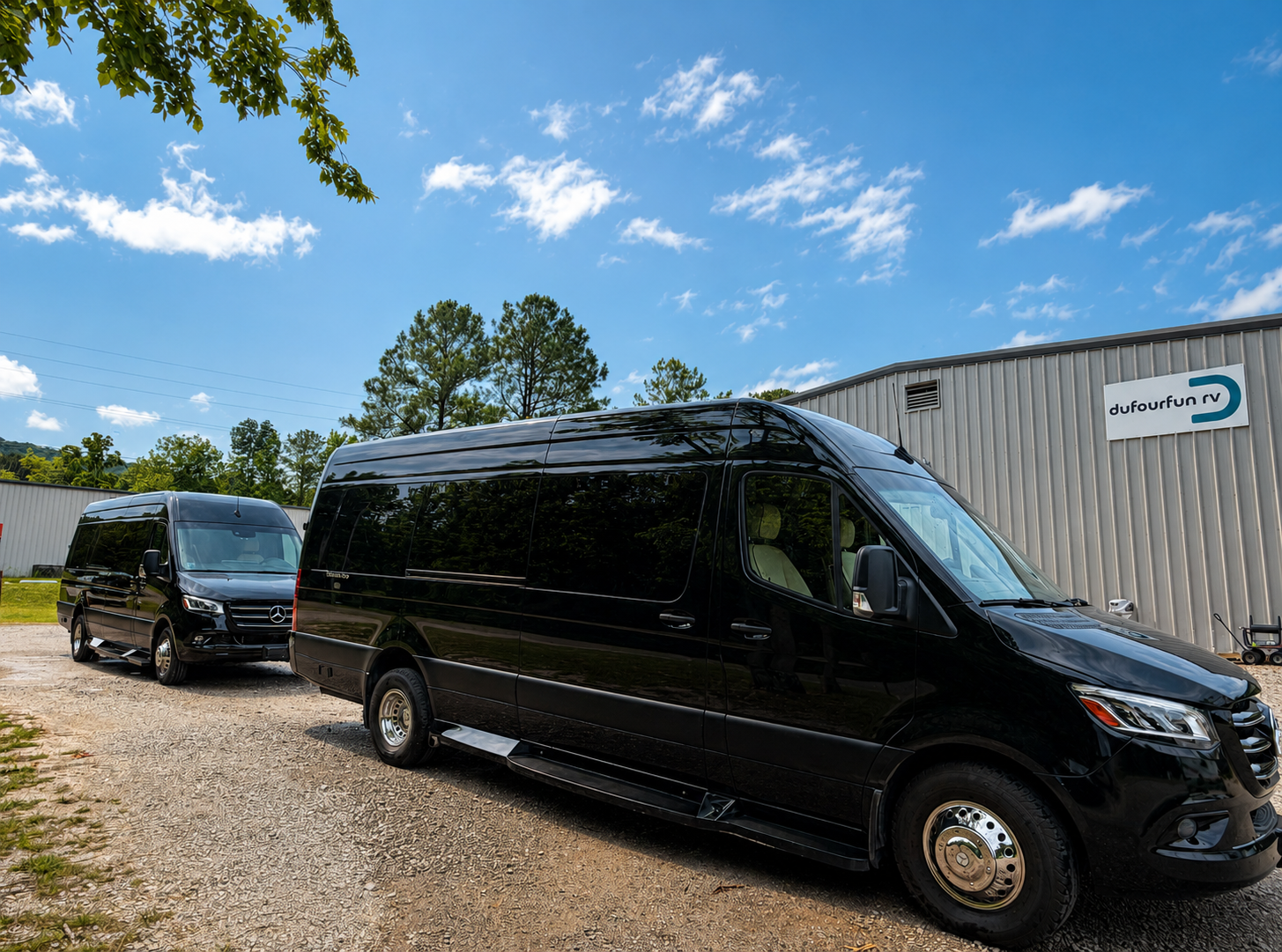
A transparent Dufourfun example is “NEW ARRIVAL - 2025 Midwest Automotive Designs / Maybach & Air-Ride Upgrade.” The listing shows $149,900 and 15,900 miles, and its description states, “Midwest manufactured as a 2025, chassis is a 2024.” As checked on October 22, 2026, its status is pending. It is an example here, not an available-to-buy offer or a deposit invitation. Visit Dufourfun's vans-for-sale page and confirm current status.
Two dates can refer to two stages
A chassis begins with the underlying vehicle manufacturer; a conversion manufacturer then creates the finished passenger environment. Federal multi-stage manufacturing can involve an incomplete vehicle manufacturer and a final-stage manufacturer. Those terms concern manufacturing and certification roles, rather than deciding what a state's title must say.
NHTSA's manufacturer information handbook resource is a starting point for that subject; its current official manufacturer handbook discusses vehicles built in stages and certification labeling. The older resource currently leads to the vPIC resource area rather than the original handbook. NHTSA's final-stage certification explanation in the Colman interpretation describes a party completing an incomplete vehicle and certifying the completed vehicle under the circumstances discussed there.
That explanation does not establish the certification history of this particular van. For an individual purchase, the actual labels and manufacturer records are what connect the general concept to the vehicle in front of you.
Reconcile the story, not just the headline
The useful documents do different jobs. Together, they should explain the vehicle's identity, the conversion, the ownership record and the applicable warranty timing.
| Record | What it helps you understand |
|---|---|
| VIN and chassis information | The underlying vehicle identity and manufacturer-reported data |
| Title and certification labels | Recorded identity and the manufacturers associated with the completed vehicle |
| Build sheet and invoices | The conversion configuration and documented work or delivery history |
| Warranty in-service data | When relevant coverage started and which manufacturer should answer a coverage question |
Use NHTSA's vPIC VIN decoder to look up manufacturer-reported vehicle information. It is useful for understanding the chassis, but it is not a substitute for a conversion build sheet, title review or warranty confirmation. A VIN result alone should not be treated as a complete account of every later interior upgrade.
A newer conversion year does not answer every warranty question
A conversion date, sale date and warranty in-service date may answer different questions. Ask for the records that identify the chassis coverage and any conversion coverage, including the relevant start dates and responsible company. Do not assume the year in a marketing headline resets coverage or guarantees a remaining warranty term.
For the pending Midwest example, the description supplies the two-year distinction. It does not, by itself, prove the title year, the VIN decoding result or any warranty balance. Those points need the vehicle's documents rather than an inference from the listing.
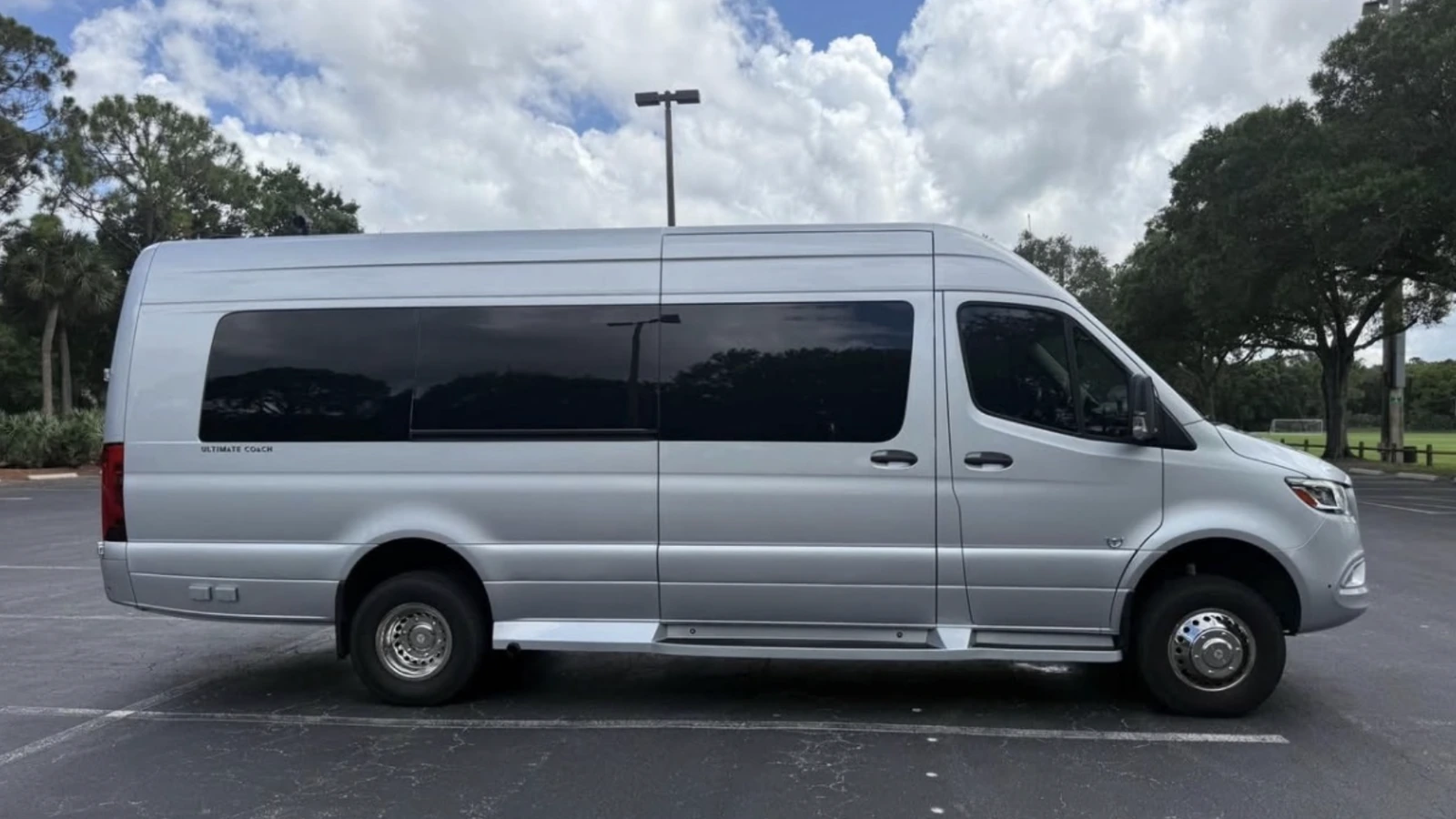
The photograph above is an illustrative silver Sprinter from a different Dufourfun-owned listing. It does not depict or document the pending Midwest example.
Keep history checks in their proper place
NMVTIS consumer information explains how consumers can obtain vehicle-history reports through approved providers. A history report can complement the documents you receive; it should not replace them. The FTC's guidance on buying a used car from a dealer also recommends a vehicle-history report and an independent inspection.
For a luxury conversion, that leaves room for an enjoyable buying process: choose the seating and cabin you like, then have the identity and paperwork reconciled while you consider the purchase. You need clear answers, not a stack of unexplained dates.
Resolve differences before funds move
If the headline, VIN information, labels or title appear inconsistent, ask the seller and relevant manufacturers to explain them with supporting documents. Reconcile the records with your state titling agency, lender and insurer before funds move. This is practical buyer guidance, not legal advice, and it does not prescribe which model year a DMV must use.
A custom build deserves the same clarity: understand which chassis is being used, what the finished build documents will identify and how warranty timing will be recorded. A well-explained two-year story is more useful than simply choosing the larger number.
Choose the van for the trips you actually take
View Vans for Sale to compare current listings and confirm their status. For a layout built around your own passengers and travel habits, Build Your Custom Van.