The jacket should arrive ready to wear, not folded beneath someone’s weekend bag. If weddings, galas, business dinners and race weekends fill your calendar, a luxury van’s most useful detail may be a simple, dedicated place for formal clothing.
This is not about turning the cabin into a dressing room or packing more luggage. It is about buying a layout that lets people travel comfortably, keeps clothing separate from refreshments and avoids using occupied seats as storage. No storage arrangement guarantees wrinkle-free fabric, but a thoughtful one gives your clothes a better journey.
1. Decide whether your clothing really needs to hang
A structured jacket, long dress and soft garment bag need different treatment. Start with the clothing you actually wear to your recurring occasions. If it needs to hang, ask to see the finished van’s hanging provision—not just an attractive cabinet in a photograph.
A true wardrobe can offer separation from the rest of the cabin. Hooks can be convenient for a jacket but may leave clothing brushing a seat or window. A removable garment bar can suit occasional formal trips, provided it is compatible with the exact vehicle and installed as its maker directs. Rear storage may work for protected garment bags carried flat, but piling cases on them defeats the point.
| Strategy | Why it may suit formalwear | Honest tradeoff |
|---|---|---|
| Dedicated wardrobe | A distinct place for hanging clothing | Uses space that could serve seating or other amenities |
| Garment hooks | Quick access to a jacket | Clothing may remain exposed to contact and nearby drinks |
| Rear luggage zone | Separates bags from occupied seats | Does not automatically provide hanging space or crush protection |
| Compatible removable bar | Flexibility between ordinary and formal trips | Needs appropriate mounting and must not block seats or access |
2. Look at the finished layout, not the chassis headline
The Mercedes-Benz Sprinter Passenger Van page describes current factory passenger-van configurations. That is chassis and factory-vehicle context, not a guarantee of seating, storage or capacity in a luxury conversion. Cabinets, equipment and interior changes alter how the finished space works.
For a model-specific example, Midwest’s Heritage MD4 page describes storage and cabinetry within that particular RV layout. It is useful for seeing how a manufacturer organizes space—not evidence that every Midwest van has a wardrobe, or that an RV layout is right for your passenger group. Likewise, Ultimate Toys’ model-family information is a starting point for comparing builds, not proof of equipment in a particular used van.
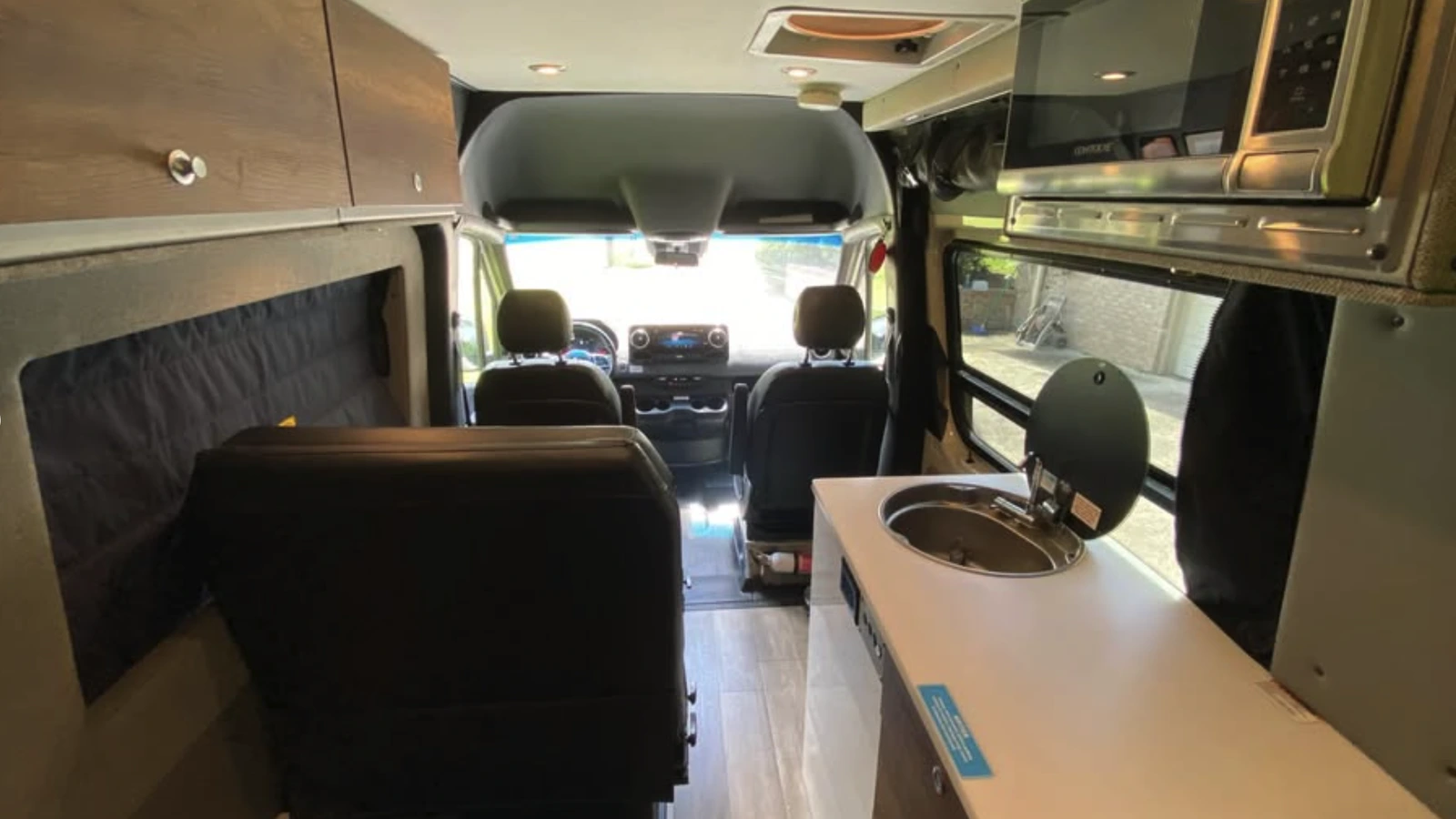
The illustrative hero shows overhead cabinetry, a galley and an aisle in a Dufourfun-owned van. It does not show a verified garment wardrobe. A closed cabinet should not be described as hanging storage until its actual purpose is demonstrated.
3. Preserve the comfortable seats and the clear aisle
A garment solution should fit around the people, not replace their usable seating on the day everyone is dressed up. Clothing hung across a walkway, over a seat belt or in front of a door is not a successful layout—even if it looks convenient while the van is empty.
On a viewing, bring one representative garment bag and ask where it belongs with your normal group aboard. This is a quick, practical comparison, not an elaborate packing rehearsal. You want an obvious answer that does not depend on shifting someone’s coat at every stop.
Keep shoes, small bags and overnight cases in suitable storage too. NHTSA’s secure-your-load guidance is the appropriate general starting point for securing cargo. Use the finished vehicle’s and accessory maker’s instructions for the actual restraint arrangement; a garment hook is not a substitute for securing heavy luggage.
4. Keep the refreshment zone away from the clothing zone
An onboard drink area can be pleasant, but a jacket should not share its working space. Separate garment bags from food, open drinks and surfaces used to serve them. A cabinet beside a sink may be useful storage without being the best home for your formalwear.
Climate comfort matters as well: passengers should be comfortable without draping coats across vents or stacking bags around controls. Demonstrate the installed climate equipment rather than assuming every conversion cools the same way while driving or parked. No particular temperature, battery endurance or fabric protection is promised by a luxury label.
Choose the detail you will appreciate at the door
Another screen is easy to notice in a listing. A reliable place for a suit jacket is easier to appreciate when you step out for dinner. If formal occasions are frequent, compare the small layout decisions that protect the experience: suitable garment storage, accessible bags, clear aisles and comfortable occupied seats.
You may decide a spacious passenger cabin with modest hanging provision is better than an elaborate wardrobe that takes away a needed seat. Or dedicated garment storage may be central to your custom build. The right answer follows the way you arrive at your occasions—not the number of cabinets in the photograph.