
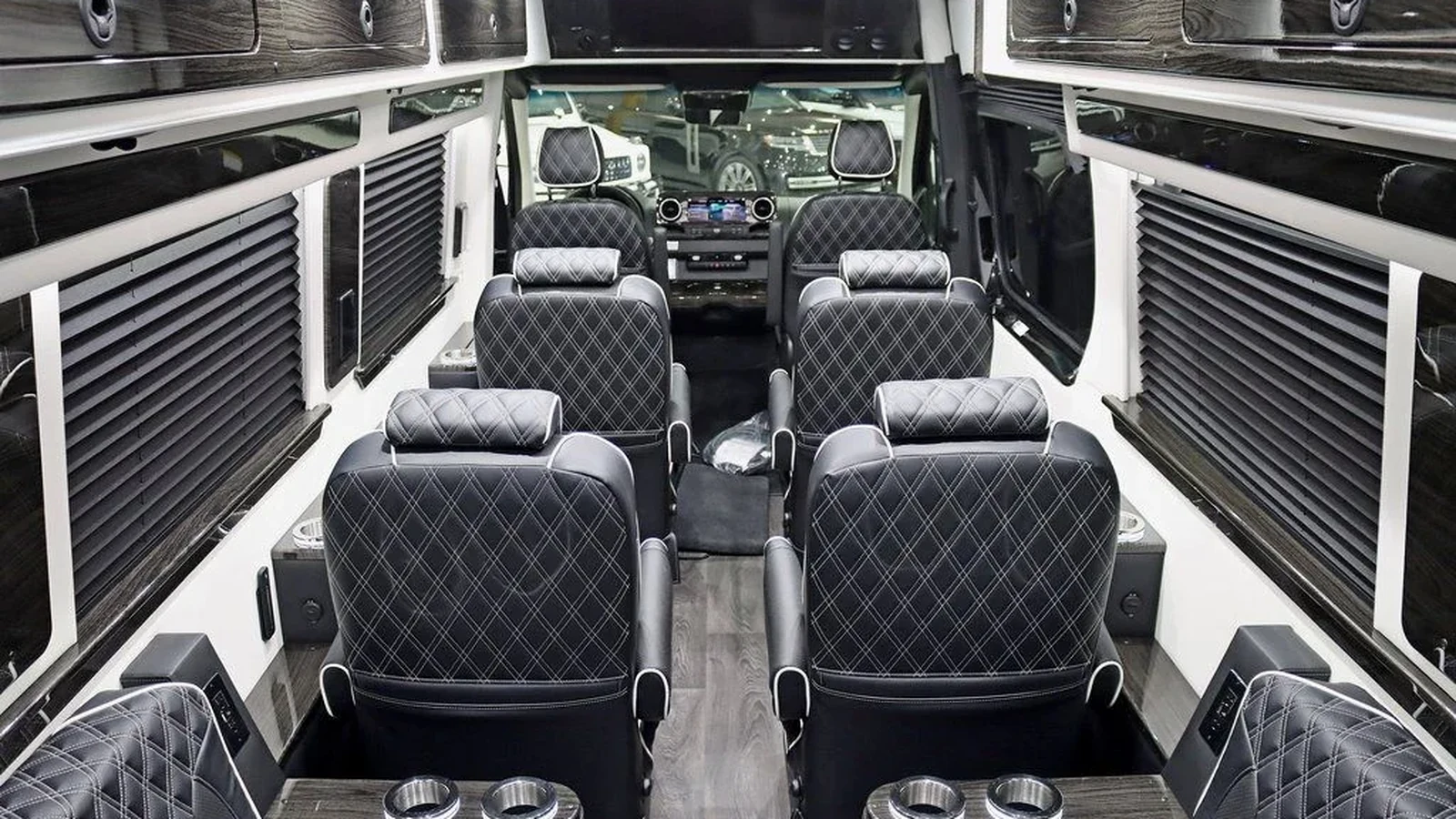
Photo: Dufourfun Vans inventory photography of a center-aisle cabin, shown as an example. Layouts and clearances differ from van to van.
A luxury van can look spacious in photos and still feel tight once you are carrying a bag, helping a parent or turning toward a rear seat. The only reliable way to know is to walk it. This test takes about ten minutes and tells you more about daily ownership than a brochure can.
Why factory numbers are only a starting point
The Mercedes-Benz 2026 Sprinter Passenger Van page lists figures for the factory passenger configuration it displays, including 64 inches of interior height, 21 inches from the ground to the first side step, a 51-inch side door opening, a 70-inch maximum floor width and 12-seat capacity. Those numbers describe the factory van, not the usable space inside a luxury conversion.
Converters add flooring, headliners, cabinetry, seats, partitions and amenities. Each one can change standing room and aisle width. Mercedes also states in its Upfitter Body and Equipment Guidelines portal that modifiers and upfitters must follow its technical specifications and limitations. That governs how a van is built, but it does not tell you how a finished cabin feels to walk through. If a measurement matters to you, measure the exact van you are considering.
The walking test, step by step
Bring the shortest and the tallest people who will ride regularly. Their experience covers most of your group.
- Enter through the sliding door. Notice step height and whether there is a grab point where your hand naturally reaches. Some configurations add one; for example, the Mercedes and Driverge Smartliner page describes a stainless grab bar at the slider and side steps on that specific model. Do not assume every van has them.
- Stand up inside. Check posture at several points, not just the center. Headliner shapes and lighting often lower clearance near the sides.
- Walk the full aisle. Go front to back at a normal pace. Note any spot where shoulders brush seats or knees touch trim.
- Turn between seats. Sit in each row, then stand and turn to exit. This is where tight layouts show up.
- Reach the storage. Open overhead and side cabinets while standing in the aisle.
- Repeat with a bag. Carry a roller or a weekend bag and walk the route again.
- Practice helping someone. If you travel with older relatives or young children, rehearse guiding them in and to a seat.
- Walk to the rear bathroom, if fitted. Test the route and the door swing with the van parked.
What to record
| Check | Short passenger | Tall passenger |
|---|---|---|
| Step and entry | ||
| Standing posture | ||
| Aisle walk | ||
| Turning between seats | ||
| Storage reach | ||
| Route to rear |
Write notes immediately. Two vans viewed on the same day blur together fast.
Honest tradeoffs
More seats usually mean a narrower aisle. Wide captain's chairs feel generous once you sit but can slow movement through the cabin. A rear bathroom adds convenience while shortening seating space. None of these choices is wrong; they simply suit different owners.
This test is a comfort check only. It does not establish accessibility or compliance with any accessibility standard, and it does not replace measuring or inspecting the van.
For related reading, see our blog library on seating and buyer checks, then compare real cabins in current listings.
Find the van that fits your plans
View Vans for Sale to compare current inventory. Want a layout shaped around your own passengers and routines? Build Your Custom Van.