A luxury van can look wonderfully calm while parked and feel very different once it joins highway traffic. Before buying, listen from the passenger seats: road noise, the air system and small trim sounds are part of the cabin you will live with, not just details in a feature list.
You do not need a laboratory test or a long inspection ritual. A normal highway drive with the HVAC operating the way your passengers use it—including a few minutes in the last row—can make the choice much clearer.
Listen for the conversation you want to have
For a family, highway quiet may mean hearing a question from the rear without repeatedly asking someone to speak up. For a business owner, it may mean conversation that feels natural rather than competing with the road and fans. The useful comparison is your own conversation effort in the actual vehicle, under ordinary driving conditions.
There is no universal number that makes every luxury van quiet. Speed, road surface, tires, passenger position and HVAC settings can change what you hear. Nor does a quiet-sounding drive prove a reduction in fatigue. Treat your impressions as a practical comparison, not a medical benefit or an unverified decibel claim.
Several sounds share the cabin
Tire and road noise may be most noticeable on one surface, while air-system noise stands out on another. Cabinet doors, fittings and trim can add intermittent rattles that are easy to miss at a standstill. A cabin can also feel quiet in the front and louder near the rear.
| Sound you notice | Why it matters to an owner |
|---|---|
| Tire and road noise | It accompanies many ordinary highway miles |
| HVAC fans and airflow | Passengers will use them during real trips, not only during a showroom visit |
| Cabinetry or trim rattles | Intermittent sounds may appear only when the vehicle is moving |
| Raised conversation effort | It shows how the whole cabin sounds together from your seat |
The point is not to eliminate every sound. It is to understand whether the cabin suits the trips you repeat and whether anything noticeable needs explanation before you buy.
What manufacturer guidance actually supports
The Mercedes-Benz current Upfitter Portal provides body and equipment guidelines for vehicle modifiers. In the September 2024 Sprinter Body and Equipment Guideline, section 6.4.4, Mercedes explains considerations for reducing interior noise involving the floor, roof and side walls, and sealing openings toward the cabin. It also specifies material and installation constraints, including nonflammable soundproofing material and preserving drainage.
That is manufacturer guidance about conversion work—not proof that any particular finished van uses a specific treatment or achieves a measured acoustic result. It also does not mean buyers should modify insulation or seals themselves. If a sound raises a question, ask the seller or conversion manufacturer about the actual build.
Feature wording is not a sound test
OGV's V-Cruise feature page lists an interior sound-dampening mat, while its V-Drive feature page describes a sound-dampening package; the pages also list thermal-barrier insulation. The wording and treatment vary by build, so confirm the actual VIN and build sheet instead of assuming every luxury conversion has the same materials.
Midwest Automotive Designs' construction overview describes its conversion and in-house manufacturing approach. That construction overview is useful background, not a decibel test for an individual listing. Similarly, a seller's description of insulation is a listing claim until it is reconciled with that vehicle's documentation.
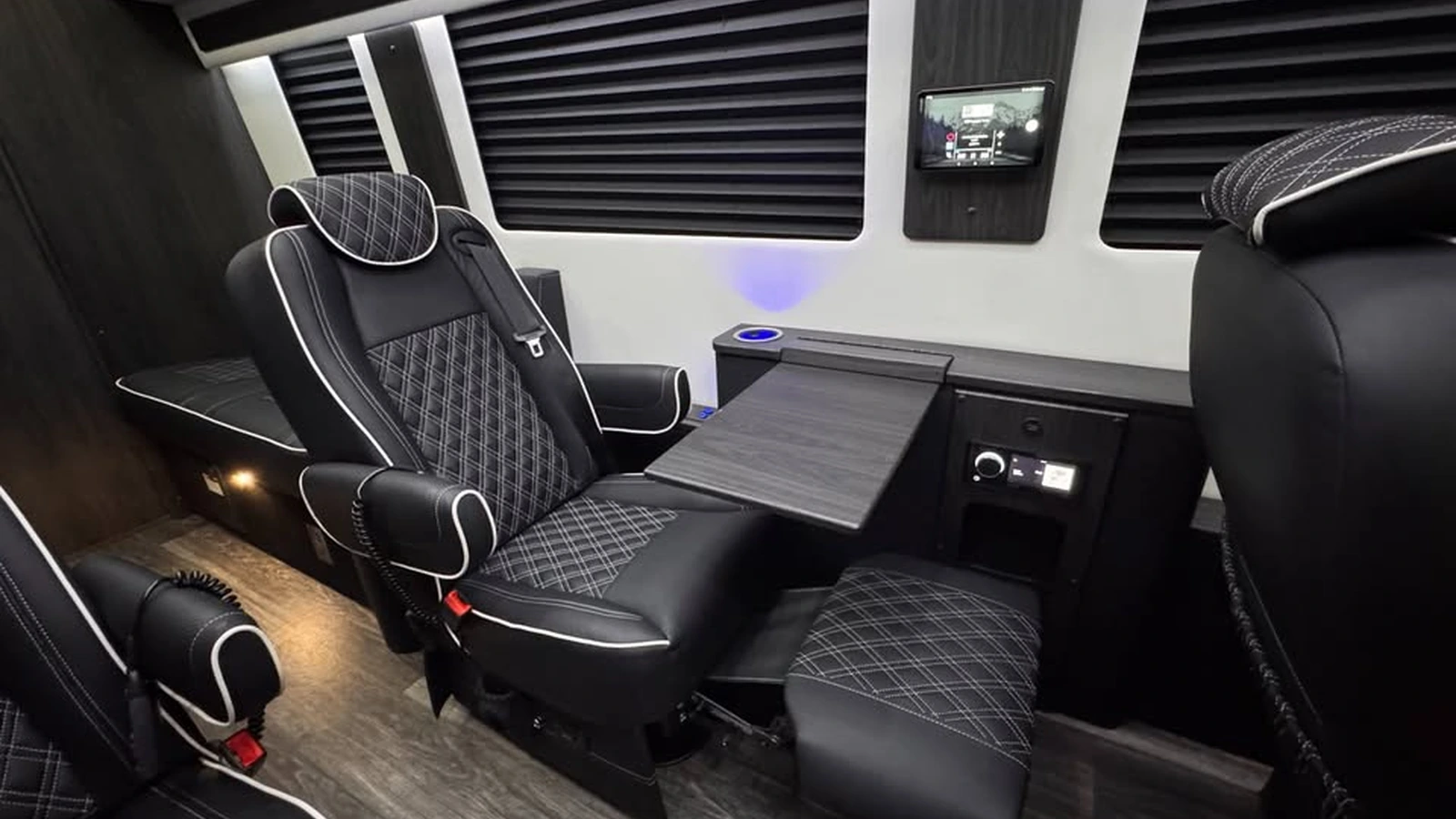
The photo above is an illustrative Dufourfun-owned passenger-cabin image, not evidence of sound-dampening materials or the result of a highway noise test.
Take the short drive that tells you something
Our editorial recommendation is simple: drive a normal stretch of highway, use the HVAC at realistic passenger settings, and sit in the last row for part of the trip. Have an ordinary conversation rather than turning off everything to create an artificial impression of quiet. If possible, compare vans on a similar road and at a similar speed.
Listen for whether the sounds are steady or intermittent, and whether conversation changes when you move seats. If a cabinet or trim piece rattles, ask whether it can be addressed and confirm the answer before purchase. A feature list should inform the drive, not replace it.
Bring the same preferences to a custom van conversation: who normally rides with you, where they sit and which sounds bothered you in vehicles you have tried. Ask what treatment is proposed for that build and how you can assess the finished cabin. Quiet is most valuable when it fits the way you actually travel.
Choose the van for the trips you actually take
View Vans for Sale to compare current listings and confirm their status. For a layout built around your own passengers and travel habits, Build Your Custom Van.