
On a day with a hotel, a lunch stop and a family visit, the small frustration is often not driving. It is deciding which bag goes where, moving three things to reach one and rebuilding the arrangement at every departure. A thoughtfully chosen luxury van can make that routine easier: the cabin stays familiar while the day changes around it.
That is a practical ownership benefit, not a promise that belongings can remain loose or unattended. The goal is fewer unnecessary rearrangements, with a clear place for what travels and a deliberate reset when you get home.
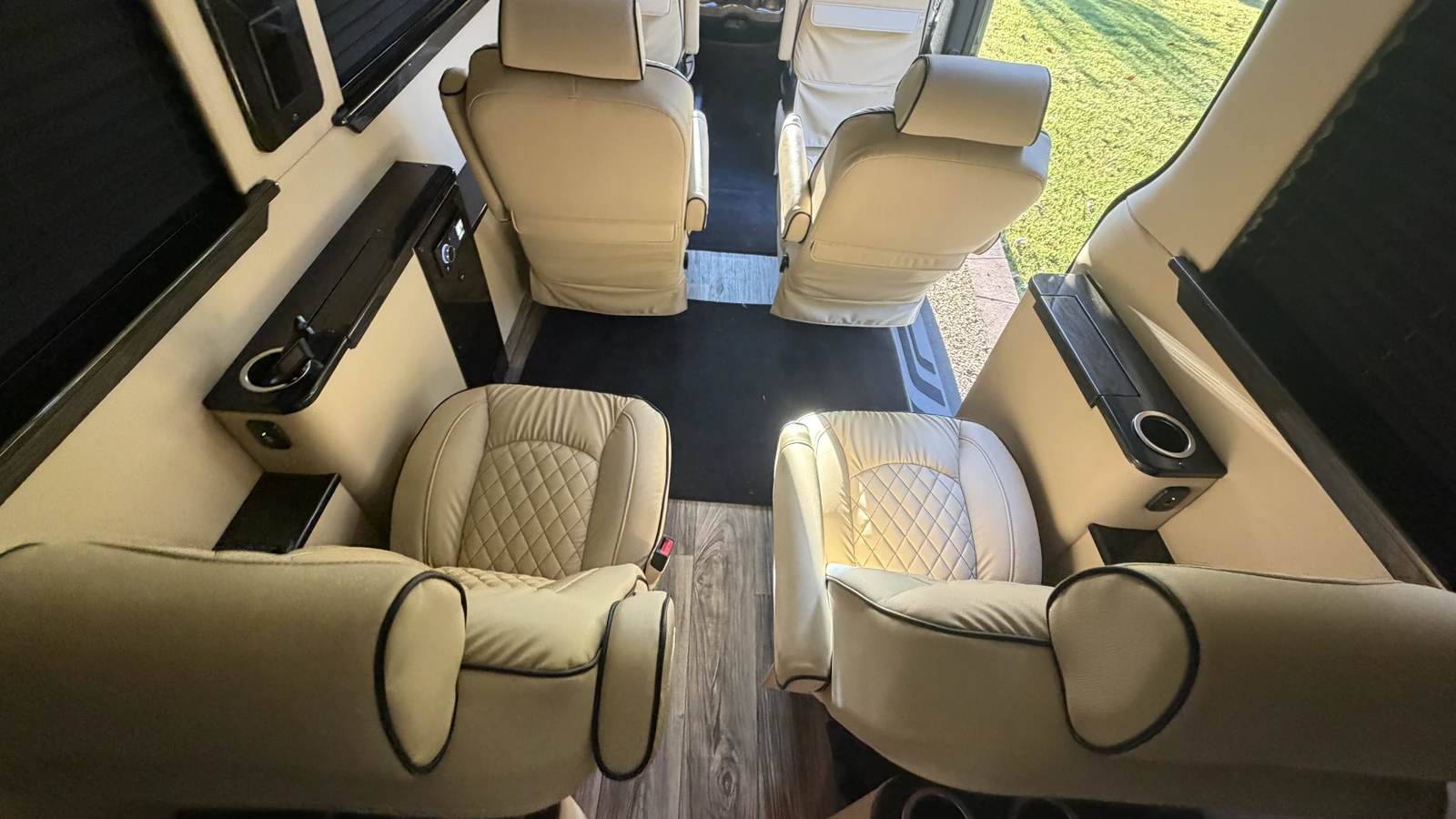
Photo: Dufourfun-owned public listing interior, shown as an illustrative cabin. Storage arrangements and equipment vary by finished vehicle.
The difference between unloading and starting over
You will still carry luggage into a hotel and take valuables with you. Not repacking at every stop means you do not need to dismantle the entire travel arrangement to do either.
Consider this editorial example: a family checks into a hotel before a youth sports weekend. The overnight bags go upstairs, the items needed for the next outing stay in their intended secured locations, and everyone knows where the day bag belongs when they return. The next departure starts with a familiar arrangement rather than a fresh puzzle.
Or picture a business day with client visits followed by dinner. Presentation materials and personal items have distinct places, so collecting one does not mean searching through everything else. These are examples of a useful routine, not customer testimonials or a claim that a particular van includes those storage spaces.
1. Give the day’s belongings simple roles
Think in three groups: things you need at this stop, things that travel to the next one, and things that belong at the overnight destination. A small bag that follows you into dinner serves a different purpose from the suitcase you leave at the hotel.
Soft bags can be easier to arrange in an appropriate storage area than several bulky cases, depending on the layout. But the right choice is the one that can be stored and secured properly—not the bag that can be squeezed into a walkway. Leave aisles and access paths clear rather than treating every open patch of floor as capacity.
A simple routine should be easy for the whole group to understand. If only one person knows where everything belongs, the arrangement becomes another job for that person. A familiar place for each category makes returning to the van less disruptive.
2. Separate useful zones from unnecessary clutter
Fixed zones are an editorial recommendation, not a universal floorplan requirement. One suitable secured area might be for travel bags; another might hold the items you use on a short outing. The value is consistency, provided the completed van has appropriate storage and restraint provisions.
The attractive interior photograph is only part of a buying decision. Ask to see how luggage works with the seats occupied and how your normal day’s belongings would be secured. Do not assume a beautifully furnished cabin has a storage solution for everything you carry.
For the particular chassis, consult the Mercedes-Benz Vans model-year manuals and service documents, along with the conversion and component instructions. The finished vehicle’s arrangement matters; a base-vehicle manual alone cannot describe every added cabinet or accessory.
3. Make the reset small, not optional
A familiar cabin still needs attention. Remove food, rubbish and items that no longer belong to the next outing. Return the travel bags to their proper places. Check the load before driving, even if the previous trip felt perfectly organized.
NHTSA’s secure-your-load guidance emphasizes securing cargo safely and double-checking loads. Apply that principle to the routine: a bag that was fine at departure may have moved during unloading, and a new purchase or sports bag needs a proper place before the next leg.
The honest tradeoff is that a larger cabin can invite more possessions. Owning the van helps only if the routine stays manageable. Filling every aisle defeats the point of an easy, pleasant travel space.
4. Keep convenience separate from leaving valuables behind
A cabin that preserves your travel routine is not a secure vault. Take valuables with you when practical and do not leave them visible in a parked vehicle. Avoid making a display of luggage, electronics or business materials while the group is away.
The useful habit is to take the right bag at each stop, not to leave everything aboard because unloading feels inconvenient. Hotels, dinner stops and client visits each deserve a sensible decision about what accompanies you.
Buy for the transitions you repeat
This ownership argument is different from simply being ready to leave home. It is about what happens between destinations: returning after lunch, adding the next day’s sports gear, or collecting relatives before dinner without starting from scratch.
There is also a real cost side. You are responsible for maintenance, insurance, parking and keeping the interior in order. Occasional use may not justify that responsibility; a recurring multi-stop routine can make the convenience more meaningful. No fixed number of outings guarantees that buying is the right financial choice.
Read how the 30-minute gaps between commitments can matter for a related perspective. Then focus your van search on the actual people, bags and transitions in your week—not a hypothetical maximum load.
Choose a cabin that makes your routine easier
A finished van may already offer an arrangement that suits your family or business. A custom build may be more appropriate when your regular mix of passengers and belongings calls for a different approach. Neither path eliminates the need to secure cargo or reset the cabin; the right layout makes those habits easier to keep.
View Vans for Sale to compare current interiors. For a layout designed around your recurring stops, Build Your Custom Van.