
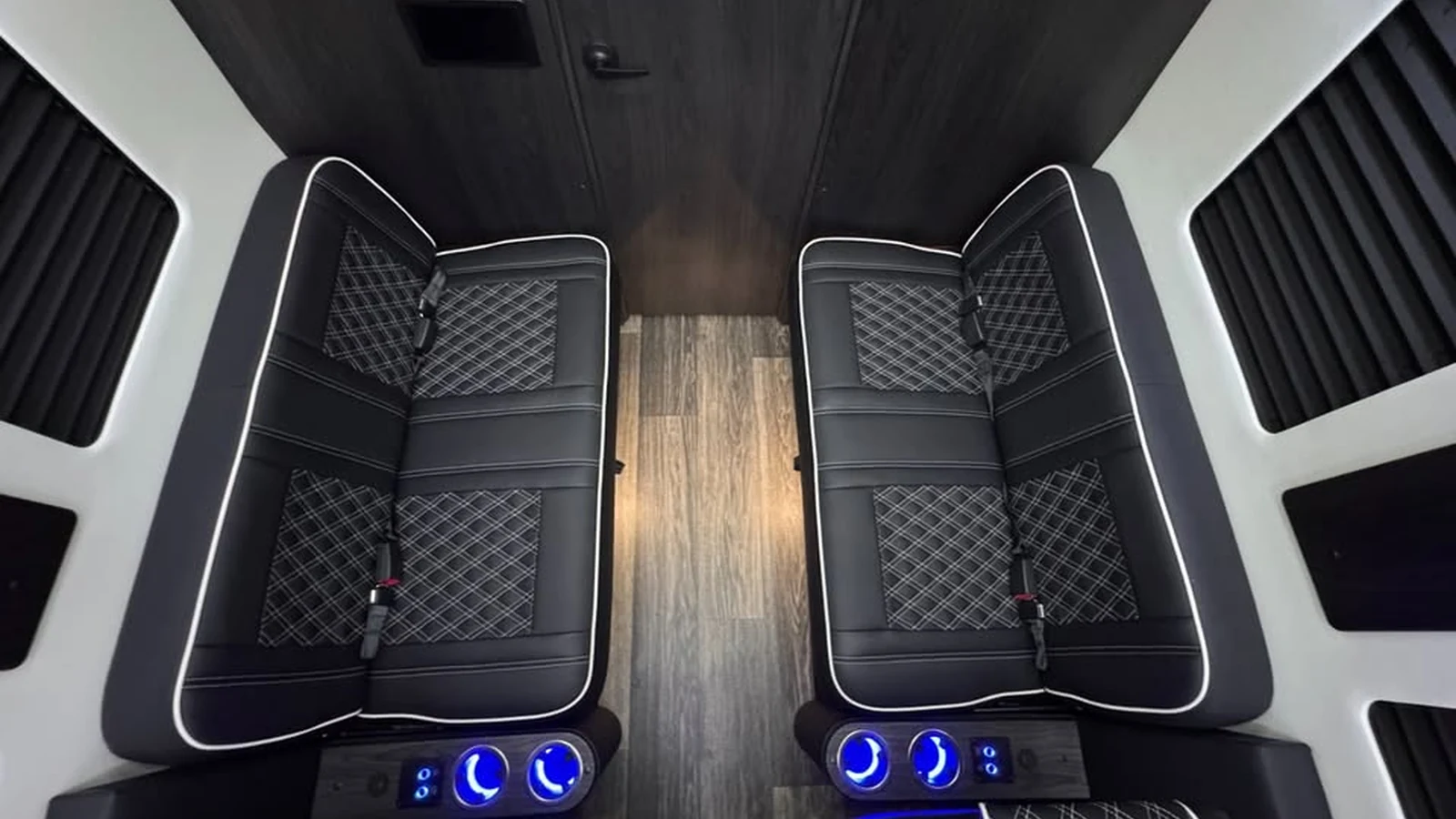
Photo: Dufourfun Vans passenger-cabin photography. An interior photograph cannot establish sound insulation, road-noise levels or the condition of a particular van.
A luxury van can look wonderful with the door open and the engine off. The more useful question is how it feels with your group aboard at the speed you actually travel. Can you have a relaxed conversation? Is the sound a steady background, or does a particular buzz keep pulling your attention away?
Before buying, ask for a 10–15-minute highway demonstration on a safe route. This is an editorial buying protocol, not a manufacturer noise certification or a promise that a conversion will meet a particular decibel level. Its purpose is to make comparisons practical and repeatable.
First, set up a fair comparison
Choose a legal highway stretch with both smoother and rougher pavement if readily available. A rested driver should concentrate on driving; a passenger can make the observations. Do not ask the driver to handle a phone, take notes or chase a particular reading.
Agree on a comfortable, lawful cruising speed for conditions. Start with music and television off, loose belongings secured, doors and windows closed, and cabin ventilation at a sensible everyday setting. Keep everyone seated and belted throughout the moving test. If you want to compare another seating position, do so on a separate pass after stopping safely.
For two vans, use as nearly the same route, speed and ventilation setting as practical. Different tires, road surfaces, weather, loading and vehicle condition can change the result. A brief drive in one van on smooth pavement and another beside heavy traffic is not a useful head-to-head judgment.
Minutes 1–3: listen to the overall background
During the first steady highway segment, listen for the broad mix of tire sound, wind and powertrain noise. You do not need to identify every component immediately. Notice whether the cabin feels settled or whether the sound makes ordinary conversation uncomfortable.
A taller passenger van has different proportions and surfaces from a sedan. An attractive conversion can improve the passenger setting without making the underlying vehicle silent. The right standard is comfort for your trips, not an expectation that all road sound will disappear.
Minutes 4–7: try a normal conversation
Have a passenger in an approved rear travel seat speak naturally to someone nearby. Try the sort of conversation your group enjoys on a weekend drive, without shouting or whispering to force a result. Notice whether words remain easy to follow and whether anyone is leaning forward just to hear.
This matters more than a dramatic showroom audio demonstration. A powerful sound system can cover background noise; it cannot tell you what the cabin is like when the group wants to talk or rest.
Minutes 8–10: notice changes in the road surface
If the route includes a safe transition to coarser pavement, compare how the cabin responds. A constant hum is different from a localized rattle that appears on every seam. Ask the observing passenger to note where a sound seems to originate and what conditions bring it on.
Do not open cabinets, move around the aisle or investigate trim while moving. Once safely parked, the seller can check loose contents and demonstrate fittings. A noise that disappears when an unsecured object is removed is a different issue from a persistent sound requiring professional diagnosis.
Minutes 11–15: repeat what mattered most
Use the remaining time to revisit the ordinary cruising condition that best represents your travel. Try a realistic fan setting if climate comfort is important, then listen again without entertainment. Ask yourself whether this is a cabin you would enjoy for a longer journey with the same passengers.
Record a few plain observations: conversation easy or strained, broad road hum, intermittent rattle, and the circumstances that changed it. A phone app may help keep your own observations consistent, but treat it as an informal comparison—not a calibrated test, a safety finding or proof of a universal improvement.
What the construction claims do—and do not—tell you
Mercedes-Benz's Sprinter Body and Equipment Guideline, Edition 2026-9 discusses reducing interior noise in section 6.4.4, page 155. It describes soundproofing approaches for floors, roofs, side walls and seals, alongside constraints on materials, moisture drainage and airbag areas. It does not certify the acoustic performance of a van merely because it has been converted.
Midwest Automotive Designs’ construction overview says its soft-touch walls, headliners and coordinated interior panels help create a quieter, more refined cabin environment. That is a manufacturer construction claim, not a measured noise result for a specific listing. The page does not establish a universal decibel reduction or the condition of the van you are considering.
Ask the seller what is actually installed and let the drive inform your judgment. Do not treat adding material behind trim as a casual solution: the Mercedes guidance includes requirements protecting drainage and safety systems. Have proposed work evaluated by qualified professionals for that vehicle.
Decide what is comfortable for your group
One buyer may enjoy a steady road background while another prioritizes quiet conversation or sleeping children. There is no need to pretend the preference is identical for everyone. Repeat the test when a result seems inconsistent, and ask for a diagnosis of a persistent unexpected sound before treating it as normal.
Pair the drive with the group-trip cabin-access guide. Together, they help you choose a van that works when passengers and belongings are aboard—not just when the interior is photographed.
Choose the van for your everyday adventures
View Vans for Sale to explore current inventory. Prefer a cabin designed around your own travel rhythm? Build Your Custom Van.