
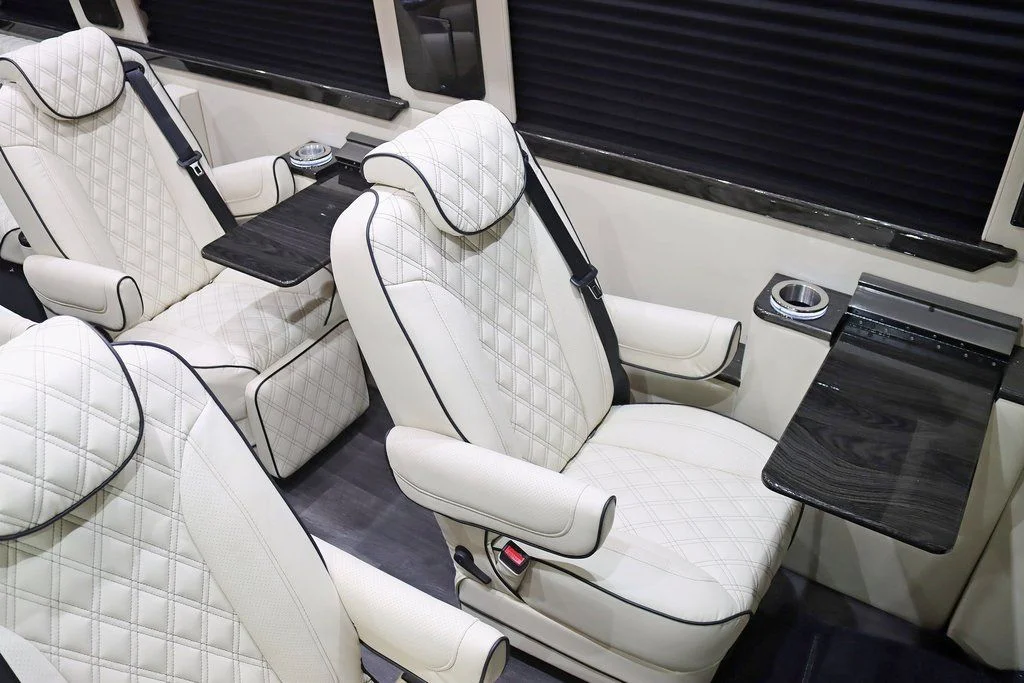
A second home creates a predictable travel pattern: the same people, the same road and a surprisingly different load every weekend. Groceries replace airport bags. Golf clubs, pet gear, coolers, coats and household supplies accumulate. That makes second-home travel one of the best real-world tests for a luxury passenger van.
Do not begin with the television count. Begin with one representative weekend and the completed vehicle’s weight label.
The payload number that matters
The vehicle placard states that the combined weight of occupants and cargo should not exceed a specified amount. A NHTSA interpretation of the federal labeling rule explains the capacity statement and driver-side B-pillar location, and notes that added equipment can affect whether a new placard is needed.
That matters in a conversion. Cabinetry, seats, batteries, appliances, tanks and entertainment equipment add comfort, but they also consume part of the completed van’s carrying capacity. A brochure for the base Sprinter is not a substitute for the label on the exact converted vehicle.
NHTSA’s prescribed method is simple: start with the placard’s occupant-and-cargo limit, subtract the actual people, and use the remainder for luggage and cargo. The agency’s load-limit steps also note that trailer load transferred to the vehicle reduces available capacity.
1. Build a one-weekend load list
Choose a weekend that is normal, not minimal. Include every traveler and everything that enters the van.
| Category | Items buyers often overlook |
|---|---|
| People | Driver, occasional guests, child seats |
| Pets | Crates, food, water, ramps |
| Clothing | Garment bags, boots, winter coats |
| Recreation | Golf bags, bikes, beach gear |
| Household | Groceries, bottled drinks, paper goods |
| Work | Laptops, samples, charging equipment |
| Seasonal | Gifts, plants, coolers, extra bedding |
Estimate or weigh each category. The goal is to reveal whether your normal routine is comfortably below the exact van’s limit or already depends on wishful thinking.
2. Load the cabin as you would at home
At the dealership, use empty suitcases or boxes matching your real gear. Put every traveler in an intended belted seat. Load the cargo area. Then ask:
- Can every person reach and use a seat belt without moving cargo?
- Is the aisle clear from the sliding door to occupied seats and exits?
- Are heavy items restrained and kept out of passenger space?
If groceries must ride unsecured beside passengers, or a pet crate blocks the aisle, the layout does not fit the routine. A larger-looking cabin can still have less useful cargo space once seats, a rear lounge or a bathroom consume the floor.
3. Compare open floorplans with divided cabins
A partitioned executive van can create privacy and a quiet passenger room. It can also reduce flexibility for long or bulky items. An open plan may make family conversation, pet supervision and bag movement easier, but provide less separation for a hired driver.
Test the decision against the recurring pattern:
- Family plus pets: prioritize a clear aisle, secure crate location and distributed climate control.
- Clients plus luggage: prioritize quiet seating, charging and cargo space that does not spill into the cabin.
- Golf or outdoor weekends: measure the longest equipment, not just suitcase volume.
- Aging relatives: prioritize entry height, grab points and an unobstructed path to a suitable seat.
There is no universally superior configuration—only a better match to the recurring load.
4. Test the systems during a realistic stop
Second-home routes often include a grocery stop, a meal or a traffic delay. Ask how rear heat, air conditioning, refrigerator, outlets and entertainment systems operate with the engine off. Identify which battery powers each system, how it recharges and what low-voltage protection exists.
Plug in several devices at once. Run rear climate. Open the refrigerator. Listen for rattles while driving over an imperfect road. A long options list is less useful than a system you understand and can service.
5. Inspect the completed vehicle, not a similar one
Photograph the VIN, certification label, tire-and-loading placard and upfitter identification. Match the VIN to the title, service records and sales documents. Ask for:
- Exact seating capacity and belt locations
- Completed-van curb or as-built weight documentation, if available
- Axle and gross vehicle weight ratings
- Chassis warranty start date
- Separate upfitter and component warranty terms
- Instructions for batteries, climate controls, plumbing and appliances
- Contacts for chassis repairs and conversion repairs
If payload is close, an actual loaded axle-weight check is stronger evidence than adding catalog estimates. Stay within the placard and both axle ratings.
6. Run the “Friday night” drill
Imagine arriving after dark in rain. One adult opens the house while another unloads groceries, pets and luggage. Can passengers exit without stepping around loose bags? Is interior lighting useful without dazzling the driver? Are the most-needed items reachable first?
Reverse the process for Sunday departure. The right van should make the repeated transition easier, not turn every trip into a packing puzzle.
Comfort is a workflow
Luxury for a second-home owner is not only upholstery. It is a seat that remains accessible when the cargo area is full, a climate system that reaches the rear row, charging that works, and storage that keeps heavy objects away from passengers.
Use the placard as the hard boundary and the weekend drill as the practical boundary. If the van passes both, the purchase is tied to a repeatable use case instead of a showroom impression.
Start with View Vans for Sale. If the available seating and cargo arrangements do not pass your test, move to Build Your Custom Van.
Hero image note: Dufourfun Vans business-owned inventory photography showing cream captain’s chairs, folding lap tables and an open aisle. The image illustrates layout evaluation and is not a promise that every van has these features. Original stored image: b23aad8d-1932-4bf8-a0c4-224ae108ddfd.png. Creator credit was not recorded in the inventory system; commercial use is based on the business-owned listing asset.