
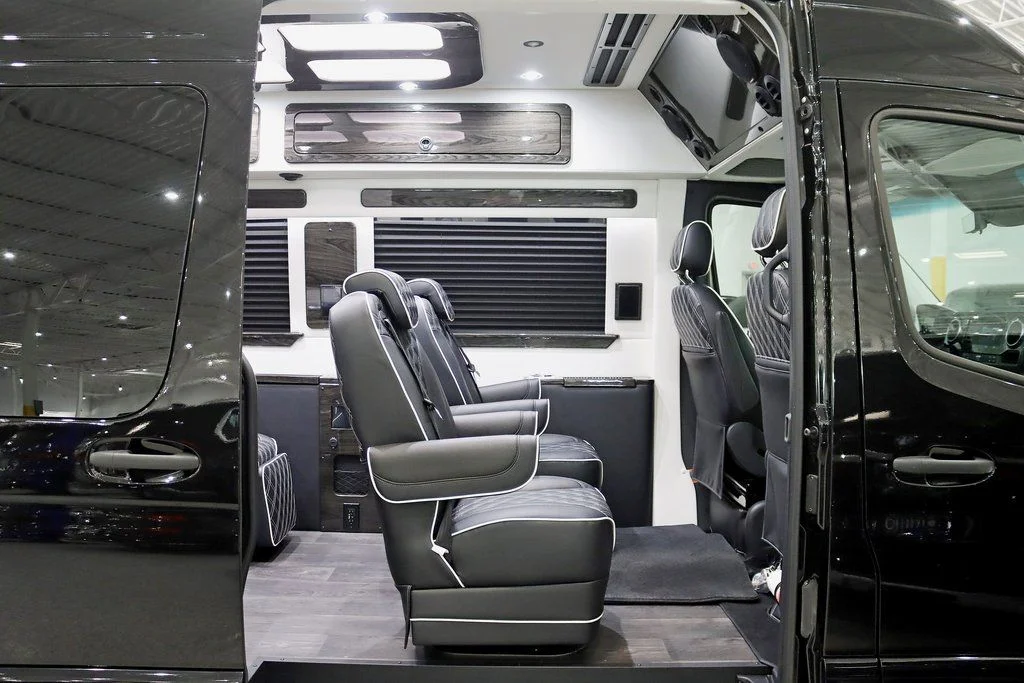
Swim-meet travel is an unusually honest test of a passenger van. Families leave before sunrise, carry bulky damp gear, make repeated hotel-to-pool loops and return with tired athletes who still need a properly belted seat.
That routine is also why a luxury van can become a repeat-use purchase rather than a one-trip indulgence. The USA Swimming events calendar shows national-level meets rotating across cities and dates; local and regional calendars add many more weekends. The ownership question is not whether a van looks comfortable in a showroom. It is whether it makes the same demanding weekend easier ten or twenty times a year.
Start with people, then add gear
Write down the largest group you will actually carry: athletes, siblings, parents, coaches or grandparents. Count only designated belted seating positions, not sofas, ottomans or floor space.
The National Highway Traffic Safety Administration says everyone should buckle up on every trip and in every seating position. A lounge that converts to a bed while parked is not permission to sleep unrestrained while the van is moving.
Then stage the real load:
- one swim bag per athlete;
- a dry clothing bag;
- cooler and water;
- folding chairs if the meet permits them;
- towels and parkas;
- parent work bags;
- chargers and small electronics;
- hotel luggage for the full group.
The correct capacity is the number of people you can seat and the amount of gear you can secure at the same time.
Build a wet side and a dry side
Damp towels and suits should not share the same storage plan as laptops, clean clothes and bedding. Create two zones before buying.
A practical wet zone can be a washable bin or vented bag placed low and secured against movement. The dry zone should keep electronics and overnight bags away from dripping gear. Removable mats are easier to clean than deep carpet after a long season.
NHTSA’s secure-your-load guidance makes the safety point plainly: cargo must be secured for the entire trip. In a passenger cabin, that means a hard cooler, full water jug or loose folding chair needs more than a convenient corner.
Match the layout to the meet loop
The best layout depends on the trip pattern, not the builder’s logo.
| Meet routine | Layout priority | Tradeoff to inspect |
|---|---|---|
| Two adults and two athletes | Four genuinely comfortable belted seats plus easy bag access | A larger van may add cost and parking effort without adding utility |
| Two families traveling together | Six to eight usable belted seats and divided storage | Every added seat reduces some aisle or cargo flexibility |
| Team or client hosting | Paired captain’s chairs, conversation space and charging | Premium seats can consume room needed for wet gear |
| Long multi-day meets | Refrigerator, privacy, reliable house power and rear storage | More systems mean more maintenance and a second warranty to understand |
Ultimate Toys, Midwest Automotive Designs, Grech, Battisti, LA West and Becker all approach luxury passenger space differently. Compare the exact floorplan, seat certification, service access and upfit warranty—not a brand reputation in isolation.
Four showroom tests that mimic a swim weekend
1. The 5:15 a.m. loading test
Open the van in low light, load every bag and buckle each passenger without rearranging the whole cabin. Check step lighting, door clearance and whether the aisle remains open.
2. The wet-return test
Ask where four damp bags, towels and sandals would go after finals. If the answer is “on the seats,” the storage plan is incomplete.
3. The hotel-loop test
Simulate three quick stops. Can a rear passenger exit without moving luggage? Can the driver see curbside traffic? Do automatic steps and doors operate predictably?
4. The tired-passenger test
Sit in every travel seat for at least 30 minutes. Verify shoulder-belt fit, head support and legroom with the seat ahead occupied. If young children will ride, follow both the restraint maker’s instructions and NHTSA’s car-seat installation guidance. Confirm the exact seating position and anchor arrangement in the vehicle manual.
Power and climate matter between sessions
A meet day often has long gaps. Buyers may want refrigeration, device charging and a quiet place to rest or work. Ask the seller to demonstrate those systems with the engine off and explain how long the planned load can run.
Record:
- house-battery type and rated capacity;
- inverter rating;
- shore-power connection;
- alternator or solar charging;
- which climate equipment requires the engine;
- where electrical components can be serviced.
Do not assume “wireless internet equipment” includes an active service plan, or that a television works without a source. Separate installed hardware from subscriptions and coverage.
Safety questions deserve specific answers
Ask for the finished vehicle’s weight labels, seating positions, tire specifications and manuals. NHTSA’s 15-passenger-van safety guidance is written for that vehicle class, but several habits transfer to any loaded passenger van: use an experienced driver, buckle every occupant, inspect tires and understand how passengers and cargo affect handling.
For child restraints, verify compatibility seat by seat. For adult athletes, make sure belts fit without routing behind the back or under the arm. Keep the center aisle and exits clear.
Decide whether ownership is justified
Do not use a simple monthly-payment comparison. Estimate a full year:
| Ownership cost | Include |
|---|---|
| Capital | Down payment, financing interest and expected depreciation |
| Fixed | Insurance, registration and storage |
| Operating | Fuel, scheduled service, tires and cleaning |
| Upfit | Appliance, electrical, HVAC and interior repairs |
| Opportunity | The value of money tied up in the van |
Then list likely swim weekends plus family trips, airport runs, vacations and client travel. Ownership is easier to justify when the same layout solves several recurring travel patterns. It is harder to justify when the van would sit between two meets.
To compare real seating and storage arrangements, View Vans for Sale. If the wet/dry plan or child-seat map requires a different configuration, Build Your Custom Van.
Hero image note
Hero source: Dufourfun Vans’ black 2026 Midwest Automotive Luxe Cruiser listing. Creator: Dufourfun Vans or its commissioned listing photographer. Usage basis: business-owned listing media. Required attribution: none.