
Travel hockey makes a sharp luxury-van buying test. The calendar repeats, the departures are early, and the cargo is awkward: long sticks, bulky bags, coats, boots, snacks and sometimes overnight luggage. A cabin can look like a private jet and still fail before the first tournament if the gear blocks the aisle.
USA Hockey’s players and parents resource points families to equipment, fitting, rules and parent guidance. The buyer’s job is to turn that equipment reality into a safe, repeatable vehicle routine.
Start with the real load
Do not shop from a passenger-count headline. Shop from a complete departure.
For each player, count:
- one hockey bag;
- sticks, including backups;
- skates and helmet inside the bag;
- outerwear and winter boots;
- an overnight suitcase when required;
- food, water and chargers.
Then add the non-player travelers. A ten-seat van does not necessarily have ten-seat luggage capacity, especially after a conversion adds cabinetry, a bathroom, batteries and entertainment equipment.
Bring representative gear to the inspection. If that is impractical, bring the exact bag and stick measurements and use painter’s tape to mark their footprint. Photographs are poor substitutes for a physical load test.
Use a two-zone storage plan
The most workable routine separates clean passenger space from wet equipment.
| Zone | Good uses | What to avoid |
|---|---|---|
| Rear luggage area | Hockey bags, suitcases, boot tray | Bags piled above seatbacks without restraint |
| Long-item channel | Sticks in a secured rack or sleeve | Sticks loose in the aisle |
| Entry zone | Small washable mat and shoe change | Blocking the sliding-door step |
| Cabin storage | Phones, snacks, documents | Heavy gear in overhead cabinets |
| Exterior or hotel drying area | Airing equipment after play | Sealing wet gear in the cabin overnight |
A dedicated stick solution matters because sticks are both long and rigid. They should not rest between captain’s chairs or point into a doorway. The correct rack depends on the conversion; ask the seller to demonstrate how it attaches and whether it can be used without interfering with certified seating or emergency exits.
NHTSA’s load guidance says cargo should be tied down so it cannot drop, shift, leak or escape. Even inside a luxury cabin, plan for a hard brake: bags, coolers and equipment should not become projectiles.
Protect every passenger position
A power ottoman, sofa or swivel seat may be comfortable while parked, but travel depends on the certified belted positions. NHTSA’s seat-belt guidance says everyone should buckle up on every trip, including in the back seat.
Ask the seller to identify:
- each legal travel seat;
- the seat-belt anchor for that position;
- child-restraint anchors where relevant;
- which seats may swivel or recline while the vehicle is moving;
- the final-stage conversion label and stated seating capacity.
Do not infer any of those details from cushions or marketing photos. Verify the actual vehicle, labels and owner documentation.
Check payload after the conversion
Hockey gear may feel light one bag at a time, but passengers, luggage, water and aftermarket accessories all count. Mercedes-Benz’s current Sprinter Body and Equipment Guidelines explain that payload after an upfit is the difference between GVWR and the vehicle’s weight after permanent equipment is installed. The guide also says the payload label should be updated after the upfit.
For the van you are considering:
- find the final payload or occupant/cargo label;
- weigh the loaded vehicle by axle when the margin is uncertain;
- include people, fuel, water and every bag;
- stay within GVWR and axle ratings.
Do not use a bare-chassis website payload number as the available capacity of a finished luxury conversion.
Choose surfaces for January, not the showroom
Wet gear changes the cabin.
Look for a durable floor in the loading path, removable mats, accessible tie-down points and cabinetry that can be wiped without trapping moisture. Ask how rear HVAC works when the engine is off, because some systems are engine-driven. A battery and inverter do not automatically power an air conditioner.
A rear bathroom can help on long tournament days, but it brings water-system winterization and consumes luggage space. Decide whether your routine values the bathroom more than an enclosed gear zone.
Test the winter travel system
AWD can improve traction in some conditions, but it does not shorten braking distance or substitute for suitable tires. Evaluate the entire system:
- tire type, size, age and load rating;
- heat and defrost performance;
- rear-cabin temperature at idle and highway speed;
- ground clearance and step traction;
- washer fluid and wiper access;
- roadside-assistance coverage;
- service access near common tournament routes.
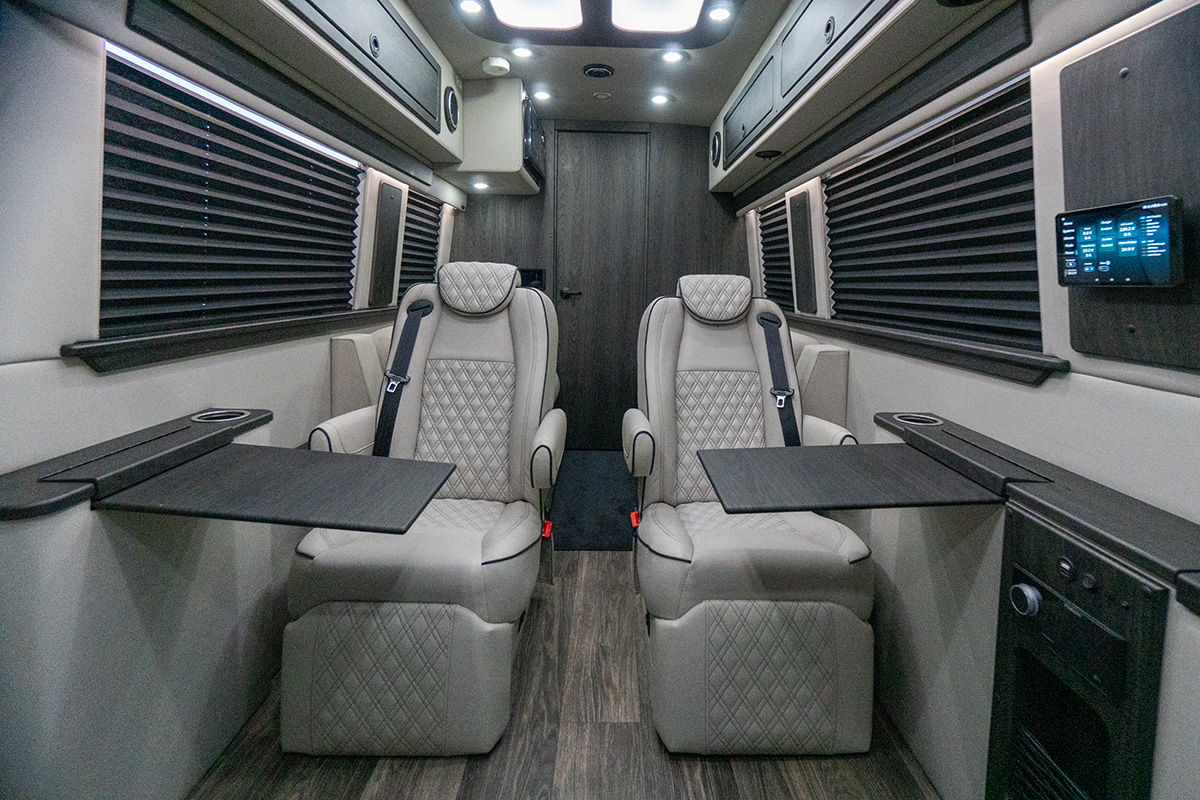
The silver 2025 OGV AWD Family Van in current inventory is a useful inspection example: its listing records AWD, ten seats, four premium captain’s chairs, overhead cabinets, rear-cabin climate equipment, an extended 170-inch platform and an onboard power system. It also has a front partition and rear bathroom, both of which should be judged against your communication and gear-space needs. Confirm the exact vehicle, final seating, cargo dimensions and current availability.
Compare three common layout strategies
1. Maximum seating
Best for larger groups and carpooling. The tradeoff is that bags often compete directly with rear seating. Test the van with every intended seat occupied.
2. Fewer seats, dedicated cargo
Best for one or two players plus family. Giving up unused seats can create a safer, calmer gear area and make every departure easier.
3. Custom sports layout
Best when hockey is only one part of the calendar. A custom design can combine a washable rear bay, stick storage, belted captain’s chairs and removable modules, but the conversion must preserve weight limits, labels and safe access.
The 20-minute tournament drill
Before purchase, run this drill:
- Load the real number of bags and sticks.
- Seat every passenger and buckle every belt.
- Open and close both primary exits.
- Retrieve one bag without unloading the van.
- Simulate a wet-equipment return.
- Check sightlines and rear-cabin communication.
- Drive on rough pavement, a highway and a tight parking lot.
If the routine needs a roof box, hitch carrier or trailer, verify ratings, attachment points, rear-door access and garage length before treating that accessory as the solution.
The buying takeaway
The right travel-hockey van is not the one with the most seats or the largest television. It is the one that repeats the same safe routine on Friday night, Saturday morning and Sunday after the final game.
Prioritize certified belted positions, restrained gear, verified payload, cleanable surfaces and a winter-ready service plan. View Vans for Sale with your measured equipment list, or Build Your Custom Van around a permanent gear strategy instead of improvising in the aisle.
Hero photo note: Dufourfun Vans business-owned inventory image showing the listed 2025 OGV AWD Family Van’s rear cabin. Original stored asset: interior photograph. Creator is not recorded in the listing record; reused here as the business’s own commercial inventory media. No hockey equipment or team affiliation is depicted or implied.