
Youth soccer weekends are a demanding test for a passenger vehicle. Players arrive with cleats and bags, siblings need a comfortable place between games, and parents may carry a canopy, cooler, chairs and luggage. The right luxury van can make that routine calmer—but only if the seating and cargo plan works with everyone belted.
U.S. Youth Soccer publishes national bylaws, tournament policies, travel policies and safety documents. Your club and event may add their own rules, so this article is a buying framework, not a substitute for the tournament packet.
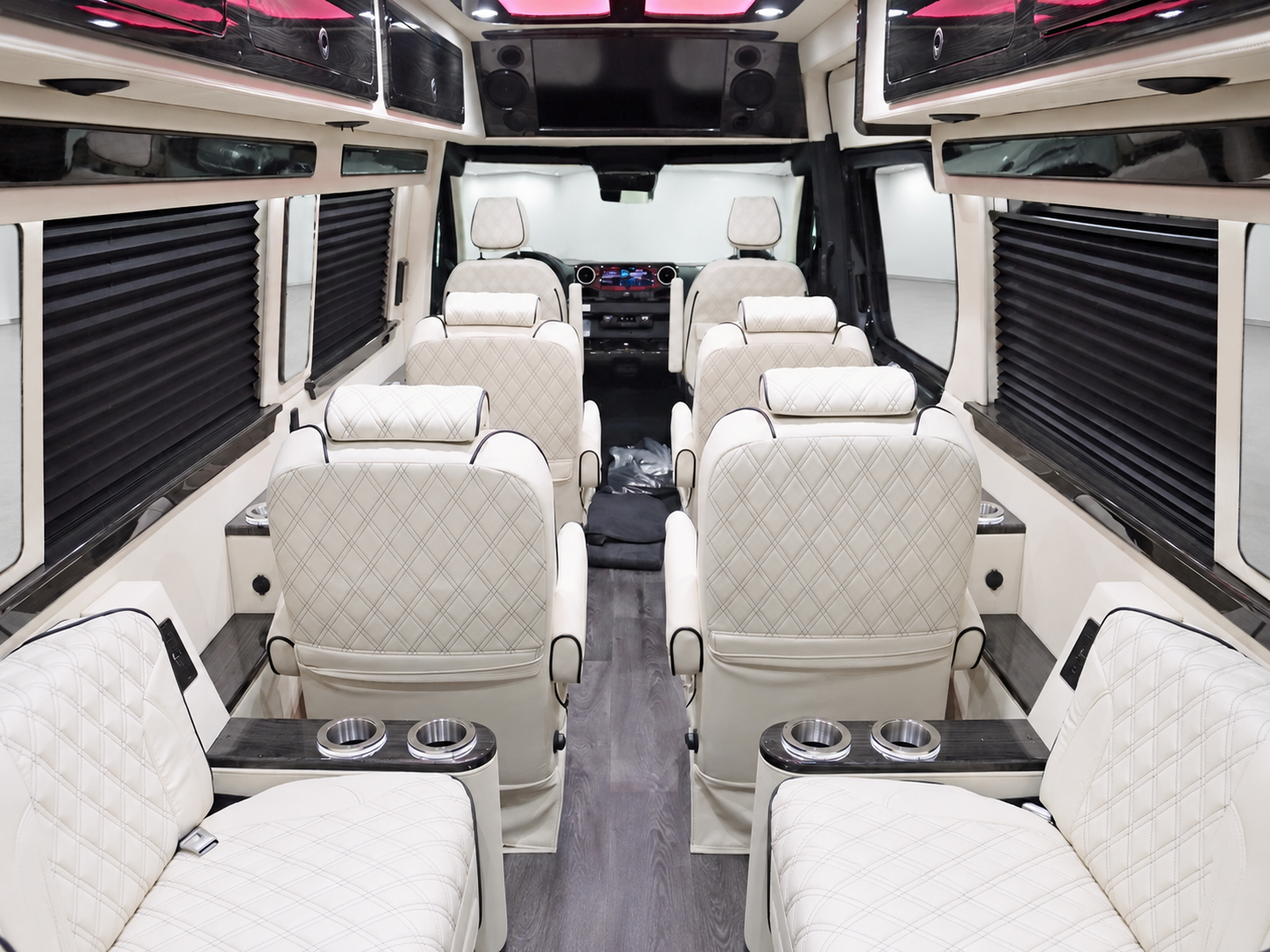
Hero image: Dufourfun-owned photograph of the available 2026 Midwest Luxe Cruiser’s cream passenger cabin. It illustrates cabin layout; it does not show a soccer team or promise that loose tournament gear fits safely.
Start with the people, not the advertised capacity
Write down the normal weekend group before shopping:
- player or players;
- parent drivers;
- siblings;
- grandparents or guests;
- occasional teammate;
- car seats or boosters;
- mobility equipment;
- one realistic load of bags and field gear.
An advertised seat count is not the same as a usable family plan. Each travel position needs a working belt, sufficient legroom and a clear path to the door. Do not count a lounge surface as a travel seat unless the completed-vehicle documentation identifies it as one.
The National Highway Traffic Safety Administration’s seat-belt guidance says everyone should buckle up on every trip and in every seating position. Build the layout around that rule, even for the short drive from a hotel to the field.
1. Test six, eight and ten-seat layouts differently
| Layout question | Why it matters on tournament weekends |
|---|---|
| Are occupied seats fixed, powered or removable? | Controls and seat tracks can affect aisle and bag space. |
| Is there cargo room with every needed seat upright? | Bags should not replace a designated seating position. |
| Can younger riders enter without climbing over gear? | A clear aisle helps at crowded drop-off areas. |
| Can the rear door open with the canopy and chairs loaded? | Field gear often needs to come out before luggage. |
| Can the driver see mirrors and cameras? | High stacked bags can defeat useful visibility. |
A ten-seat van is not automatically better than an eight-seat van. If the larger seat count removes nearly all secure luggage space, a lower-capacity layout may work better for the same family.
2. Bring the booster and car seat to the inspection
NHTSA advises caregivers to choose a restraint based on the child’s age and size, follow both the restraint and vehicle manuals, and confirm that the seat fits the vehicle. Its car-seat and booster-seat guidance also recommends keeping children under 13 in the back seat.
For a converted van, verify the exact travel seat rather than assuming every captain’s chair has the same anchors or geometry. During the inspection:
- install the actual restraint using the correct manual;
- confirm that the belt path is accessible;
- check that adjacent seats can still be used;
- make sure powered movement cannot pinch the restraint or child;
- verify that the aisle and emergency exits remain clear.
Ask the seller or upfitter for written documentation if a seating position is unclear.
3. Give wet and heavy gear a place
The prettiest cabin is not useful if cleats, balls and drink coolers become loose cargo. Create zones:
- field bin: cleats, balls and washable items;
- dry bag: uniforms, jackets and electronics;
- food zone: sealed cooler and trash supplies;
- seat zone: only people and small secured personal items;
- hotel zone: luggage loaded so field gear can come out first.
Use manufacturer-approved tie-down points where provided, and stay within payload and axle limits shown for the completed vehicle. Do not improvise attachments to seat frames or block a door.
Light upholstery can work for a family, but it needs a cleaning plan. Ask which surfaces can be wiped, which cleaners the upfitter permits and whether floor seams trap grass and grit. A removable rubber mat may be more valuable than another screen.
4. Check the between-game cabin
A van is often most useful while parked between games. Test these tasks without pretending the vehicle is an RV:
- changing shoes without standing in the aisle;
- charging phones with the engine off;
- running approved auxiliary power without draining the starting battery;
- accessing water and snacks without unloading the rear;
- giving a tired sibling a quiet, belted seat for the next drive;
- keeping muddy items away from upholstery.
Never idle where prohibited, and never operate combustion-powered equipment in an enclosed or poorly ventilated area. Follow the exact vehicle and equipment manuals.
5. Plan for the drive home
Tournament fatigue matters. NHTSA’s drowsy-driving guidance says adequate sleep is the only true protection against drowsy driving and identifies midnight to 6 a.m. and late afternoon as common sleepiness periods.
A comfortable cabin can reduce passenger complaints, but it cannot make an exhausted driver safe. Build in driver changes, a legal overnight stop or a later departure. Keep the front passenger awake and engaged when appropriate; entertainment systems are for passengers, not the driver.
6. Use an annual ownership test
A family should not buy a van solely because one tournament was stressful. Count the repeat uses:
| Recurring use | What it validates |
|---|---|
| Weekly practices | Easy entry, parking and cleanup |
| League travel | Upright comfort and charging |
| Multi-day tournaments | Passenger-plus-luggage capacity |
| Camps and clinics | Early departures and gear control |
| Family road trips | Broader value beyond one sport |
| Airport runs | Access and suitcase space |
Then add the ownership costs: financing, insurance, registration, storage, tires, chassis service, conversion service and depreciation. Compare those with the number of real trips, not a best-case fantasy.
7. Inspect both halves of the vehicle
A Sprinter conversion has a chassis and a conversion. Ask who services each. Request:
- VIN-specific chassis history;
- upfitter build sheet and manuals;
- completed-vehicle certification labels;
- seat and belt documentation;
- maintenance records for climate, batteries and auxiliary equipment;
- tire age and condition;
- a written explanation of remaining and transferable warranties.
Ultimate Toys, Midwest Automotive Designs, Grech, Battisti, LA West and Becker offer different layouts and equipment. Model names alone cannot confirm the seating, anchors or cargo arrangement on a particular used van.
The buyer’s takeaway
A good soccer-weekend van gives every rider a proper seat, controls cargo, survives wet gear and earns its keep through the rest of the year. The goal is not the most seats or the most electronics. It is a safe, repeatable routine.
View Vans for Sale and test the actual cabin with your passenger list, booster and representative bags. For a layout built around your family’s recurring schedule, Build Your Custom Van.