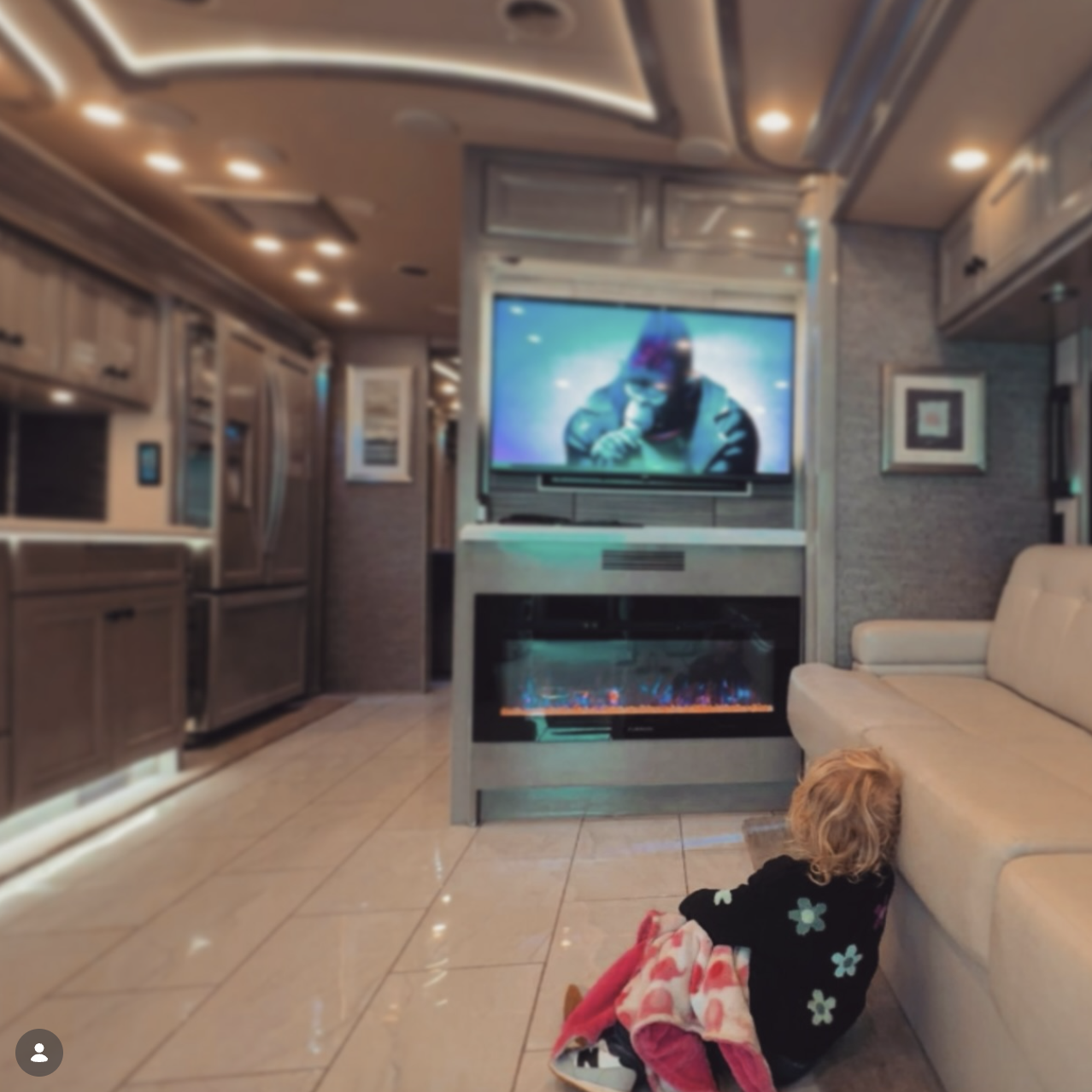

A rear lavatory can make long travel days easier. Open rear cargo can make airport runs and golf weekends far less complicated. Because both features compete for the same finite space and payload, this decision should begin with what you carry most often.
This is a layout guide, not a claim that every model offers every configuration. Plumbing, tank sizes, seating, payload and winterization must be verified on the exact van.
The tradeoff in one table
| Priority | Rear lavatory layout | Open rear luggage layout |
|---|---|---|
| Rest-stop independence | Strong advantage | Requires outside facilities |
| Large suitcase capacity | Usually reduced | Usually stronger |
| Golf clubs and product cases | Fit must be tested | More flexible loading |
| Cleaning and maintenance | Adds plumbing surfaces and systems | Simpler rear compartment |
| Cold-weather storage | May require documented winterization | No bathroom plumbing to winterize |
| Resale audience | Buyers prioritizing travel amenities | Buyers prioritizing passengers/cargo |
“Usually” matters. Cabinets, partitions, seat tracks and installed equipment change the result.
1. Define the bathroom you mean
Manufacturers use terms such as lavatory, rear bathroom and wet bath differently. Ultimate Toys describes the Ultimate Coach Executive as available with or without an XL rear bathroom. Midwest documents a porcelain toilet and sink in the rear area of its Luxe Cruiser.
Before comparing, ask whether the exact van has a toilet, sink, shower, fresh-water tank, gray tank, black tank, macerator, water heater or none of those. If a specification is not on the build sheet or manual, treat it as unknown.
2. Measure luggage as objects, not cubic feet
Bring the airport cases, golf bags, stroller, cooler or product samples you really use. Load them through the actual rear doors. Check whether tall luggage blocks a window, whether clubs fit without entering the aisle, and whether each item can be restrained.
LA West documents a dedicated rear luggage area on its Executive Sliding Door layouts. That demonstrates a luggage-first approach, but it does not prove capacity for your bags or apply to another builder’s floorplan.
3. Recount seats after choosing the floorplan
A model family may offer multiple lengths and arrangements. The rear room, cabinets or cargo wall can change usable aisle space and seating. Count only designated belted positions in the exact completed vehicle; never use a brochure’s maximum as a universal number.
With every seat occupied, walk from the side door toward the rear. Check knees, swivels, bags and access to exits. A bathroom that requires moving cargo each time is not convenient. A cargo bay that tempts you to stack loose bags into the cabin is not a solution either.
4. Put plumbing on the ownership checklist
Where a bathroom is fitted, ask for the precise owner documentation. Midwest’s current materials describe plumbing equipment on certain models, including tank-flush and heated-water-storage features, but procedures and capacities vary by model. Do not assume another Midwest layout—or any Ultimate Toys or custom build—shares them.
Ask the seller to demonstrate:
- filling and draining each documented tank;
- toilet and sink operation;
- leak inspection points;
- approved chemicals and cleaning products;
- winterization and de-winterization steps;
- service access when a component fails.
If there is no exact manual, the answer is “unknown—verify on the exact van.”
5. Weigh the finished van
Passengers, water, luggage, conversion furniture and accessories all consume payload. A published chassis GVWR does not tell you remaining capacity after conversion. Review the certification and tire/loading labels, then obtain an actual scale weight in travel-ready condition. Keep axle limits as well as total weight in view.
6. Think about the next buyer
A rear lavatory may appeal to road-trip buyers who value private facilities. An open luggage area may appeal more to airport-transfer groups, teams, golf travelers and businesses carrying cases. That is an editorial observation, not a resale guarantee. Condition, documentation, market and exact configuration still control the result.
Conduct a real two-layout test
Load both candidate vans with the same people and objects. Use every seat, open the lavatory door, remove the largest bag, walk the aisle and simulate a fuel or meal stop. Photograph the loaded rear area and record remaining payload from exact-van labels. The better layout is the one that completes your normal trip without moving unsafe stacks or carrying systems you rarely use.
Image credit and publishing notes
Hero: “Comfortable Space inside a Van” by Erik Schereder, sourced from Pexels under the Pexels License permitting commercial use and modification. Cropped to 1600×900. Filename: 2026-09-25-open-rear-van-layout-illustrative.jpg. Illustrative generic van interior; it is not represented as an Ultimate Toys, Midwest, LA West or Dufourfun model.