A custom luxury van feels effortless when the small things are exactly where you expect them to be. A phone can charge without a cable stretched across the aisle. A cup has a secure place. The lights make sense on the first evening. A table appears when it is useful and disappears when it is not.
The best build does not begin with the longest option sheet. It begins with the moments you expect to repeat—school breaks, family weekends, client pickups, dinners, airport runs or quiet miles between appointments—and chooses conveniences that make those moments smoother.
Start with what happens in the first five minutes
Picture everyone stepping aboard. Where do phones go? Where does a small bag land? Can a guest adjust the light without asking? Does the seating invite conversation, or does it make people turn awkwardly toward one another?
These questions keep the design grounded in real use without turning the process into a checklist. A few thoughtful decisions often do more for daily comfort than a long list of rarely used features.
The Mercedes-Benz Sprinter Passenger Van is a common foundation for passenger-focused builds. Mercedes-Benz also describes available multimedia and charging technology on its official technology page. Conversion companies then shape the cabin around different kinds of travel, so features and layouts vary by builder, model and selected equipment.
Put charging where people naturally settle
Charging is most useful when it is within easy reach of the seats people actually use. For family travel, that may mean access across several rows. For client hosting, it may mean discreet power near the primary captain's chairs and table positions.
Avoid making one outlet serve the entire cabin. A clean solution keeps cords short and personal items contained. Wireless charging can be helpful where offered, while dependable USB and conventional outlets may suit a broader range of devices.
The goal is not to create a technology showroom. It is to make a low battery a non-event.
Let tables help, then get out of the way
A table can hold lunch, a laptop or a deck of cards. It can also consume valuable cabin space if it is always present. Folding, removable or compact lap-table designs are worth considering when you want usefulness without committing the center of the cabin to one purpose.
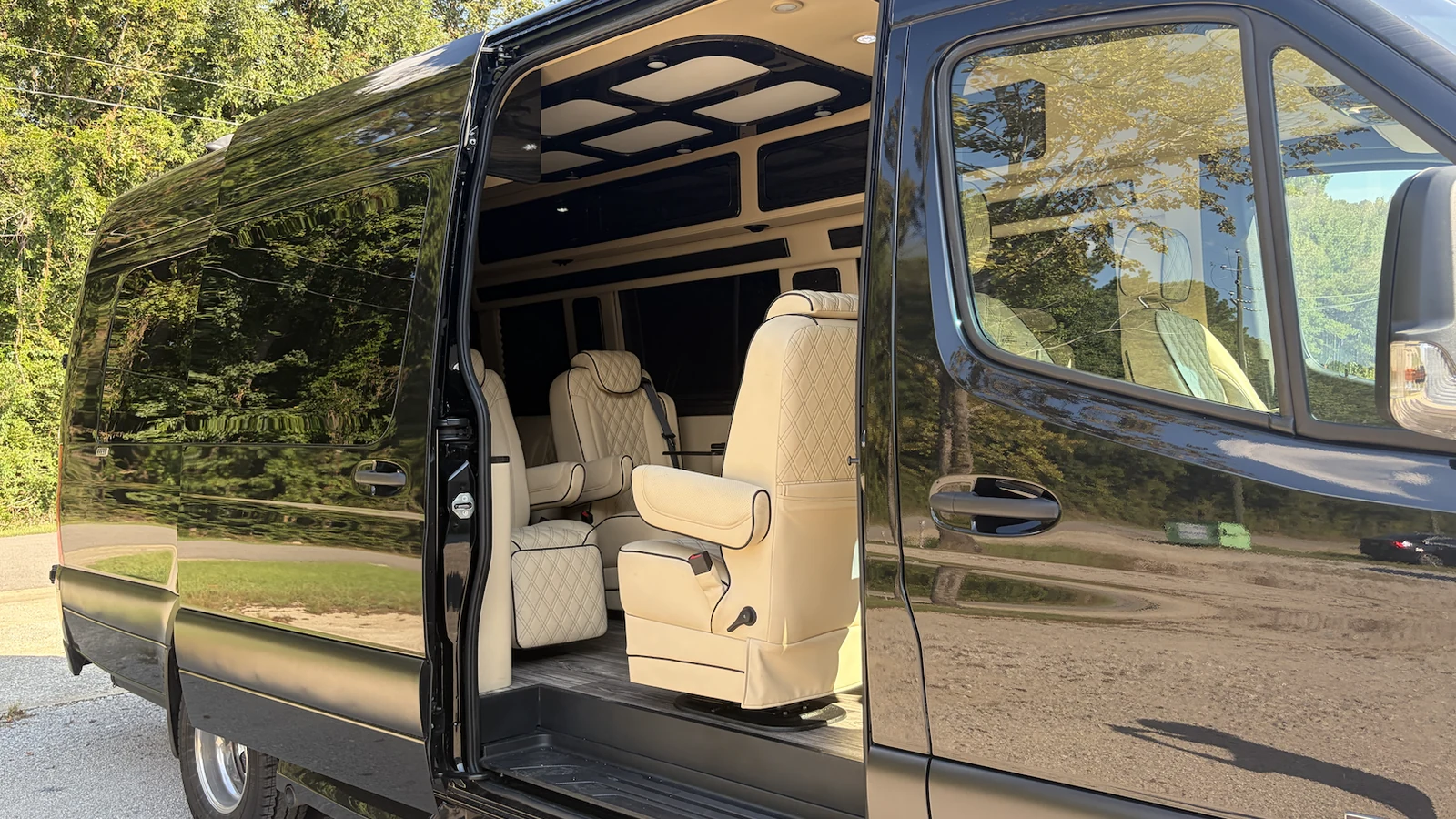
The Ultimate Coach lists adjustable captain's chairs and lap tables among its model-specific features. That pairing is a good example of flexible hospitality: comfortable individual seating with a work or dining surface available when wanted.
Families may prefer open floor space and easy movement. Business hosts may value a table at the principal seats. A mixed-use van can balance both by keeping the table secondary to the seating plan.
Make lighting and privacy intuitive
Good cabin lighting supports several moods without demanding attention. Bright light is useful while organizing belongings. Softer light makes conversation and evening travel more pleasant. Individual reading light can help one passenger stay occupied while others relax.
Privacy shades are another small convenience with an outsized effect. They can make a parked cabin feel calmer and give passengers more control over glare and visibility. Both lighting and shades are equipment-dependent, so choose the control style as carefully as the feature itself. The most elegant system is the one guests understand immediately.
Give small items a sensible home
Large luggage space is easy to notice. Everyday storage is easier to overlook. Phones, sunglasses, keys, headphones, snacks and small bags create clutter quickly when there is no natural place for them.
Useful storage does not have to mean filling the cabin with cabinets. A combination of cupholders, seat-side pockets, shallow drawers and a few deliberate compartments can keep surfaces clear while preserving an open feeling.
Midwest Automotive Designs shows how specific conversions combine custom seating, cabinetry, refrigeration and independent cabin climate systems on models such as the Luxe Cruiser. Those examples are not universal Sprinter equipment; they demonstrate the kinds of choices a custom layout can bring together.
Keep entertainment simple
Entertainment should be easy to start and easy to ignore. For family travel, that can mean a screen and sound arrangement that works from the seats children use, plus charging for personal devices. For client hosting, clear audio and an uncluttered display may matter more than the size of the screen.
The cabin should still feel welcoming when every screen is off. Choose placement that preserves sight lines and conversation. Intuitive controls are more valuable than a complex system no one wants to operate.
Build climate comfort around the cabin
A passenger cabin has different comfort needs from the front seats. Some luxury conversions offer dedicated rear heating and air-conditioning systems; the Midwest Luxe Cruiser page describes rear independent climate equipment on that model.
For families, consistent comfort across rows helps everyone settle in. For client hosting, quiet, even airflow contributes to a composed atmosphere. The exact solution depends on the conversion, but the design priority is universal: passengers should feel comfortable without repeatedly adjusting the cabin.
Choose a calm seating plan
A great seat is only part of a great layout. Consider how people will face one another, how easily conversation flows and whether the aisle remains visually calm. Captain's chairs can give passengers personal space; a rear sofa can create a more social zone or offer additional versatility on certain conversions.
For family use, flexibility and easy access often lead. For business hospitality, consistent sight lines, privacy and a polished principal seating area may matter more. Neither requires an overloaded cabin.
Choose the moments, then choose the features
The strongest custom build brief is experiential: “We want six people to talk comfortably on weekend trips,” or “We host four clients and want a quiet place to connect between meetings.” Those statements lead naturally to the right seating, charging, lighting, storage and table choices.
A feature list can tell you what a van has. Repeated moments tell you why it belongs there. Build around those moments and the finished cabin will feel less like a collection of upgrades and more like a place that was always meant for you.
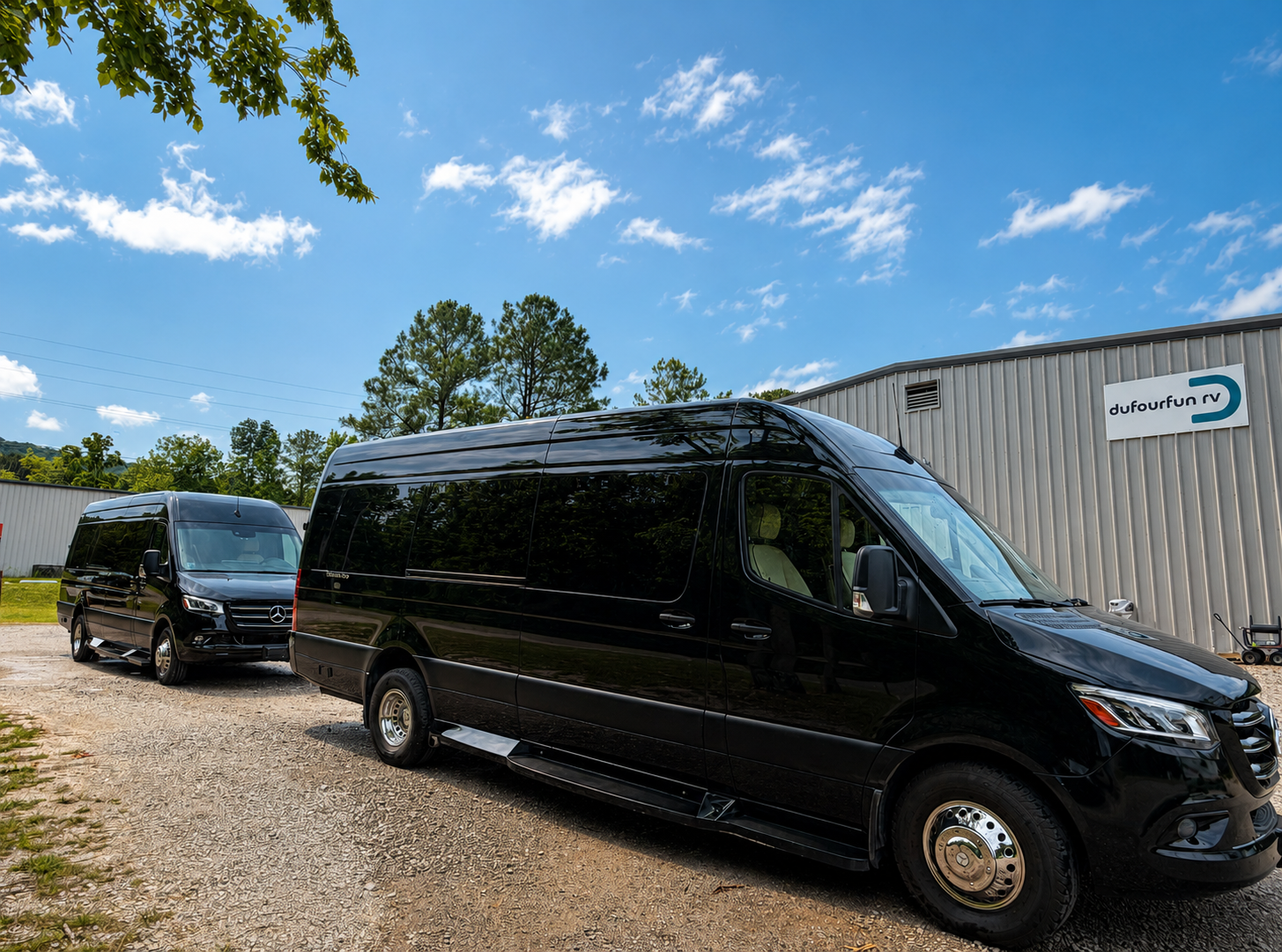
Photo: Dufourfun Vans, Dufourfun-owned active inventory imagery; cropped and resized.