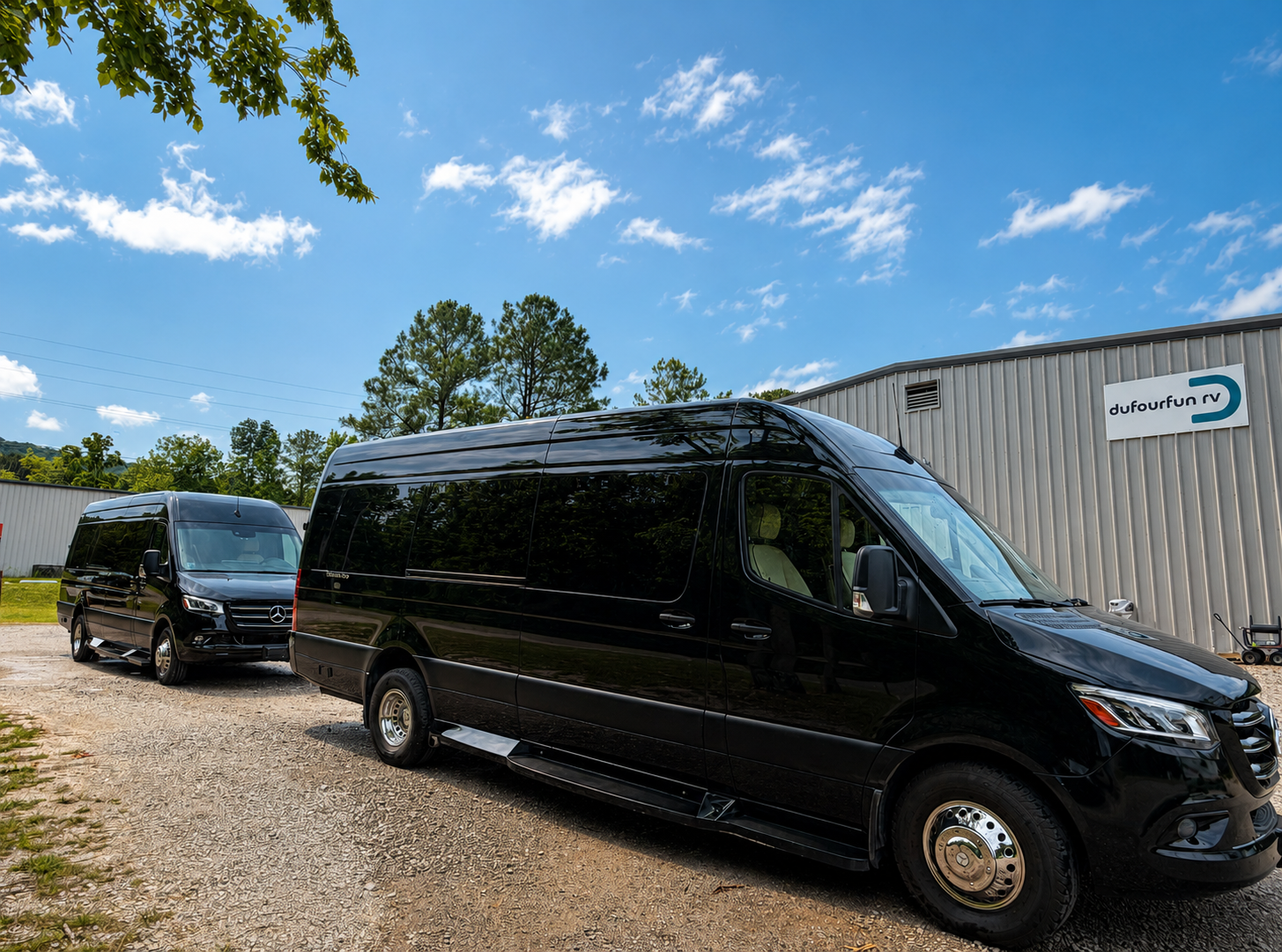

A luxury Sprinter is one beautifully integrated van, but its coverage usually comes from more than one source. Mercedes-Benz built the factory vehicle. A conversion company created the passenger cabin. Individual equipment makers may have supplied particular appliances or electronics.
Once that simple split is clear, warranty questions become much easier: identify which part needs attention, then contact the company responsible for that layer.
Think of the van in three layers
The easiest ownership picture is not really two warranties, but three practical contact groups.
The Mercedes-Benz layer generally covers the factory chassis, engine, drivetrain and original vehicle systems under the applicable Mercedes-Benz terms.
The conversion layer generally covers what the upfitter added or changed—such as cabinetry, custom seating installation, house electrical work, plumbing or conversion-specific trim—under that builder's own terms.
The component layer may cover individual products installed in the conversion, depending on the maker's warranty. Examples might include an inverter, refrigerator or entertainment component.
The cabin may look seamless, but this layered approach helps the right service team respond without unnecessary handoffs.
What Mercedes-Benz publishes for the 2026 Sprinter
The official MY26 Sprinter Service and Warranty booklet lists a New Vehicle Limited Warranty of 36 months or 36,000 miles, whichever comes first. It separately lists a Diesel Engine Limited Warranty of 5 years or 100,000 miles and a Powertrain Limited Warranty of 5 years or 100,000 miles, each subject to its own covered-parts terms and exclusions.
Those two five-year warranties share a time-and-mileage headline, but they are not interchangeable. The diesel-engine section applies to a defined group of engine parts. The powertrain section has its own list covering specified engine, transmission, transfer-case and axle components. The booklet—not the headline—is what controls a particular question.
Mercedes-Benz also states that third-party accessories and equipment, plus items added or changed through customization, upfitting or conversion, are handled under separate warranties rather than the Mercedes basic warranty. That does not make the ownership experience difficult. It simply directs conversion-specific questions to the builder or component maker who knows that equipment best.
For year-specific materials, the Mercedes-Benz Vans warranty and maintenance page is a useful home base.
A comfortable ownership routine
Create one digital folder for the van and divide it into three sections:
- Mercedes-Benz chassis and factory documents
- Converter warranty and build information
- Component manuals and warranty contacts
Add the VIN, purchase date and current mileage at the top. Save photos of the relevant serial-number labels when convenient. If a question appears later, you can open one folder and reach the likely contact without searching through old email threads.
This is organization, not homework. Ten quiet minutes at the beginning can make future service conversations much smoother.
Who should receive the first call?
A factory warning light, drivetrain concern or original Mercedes system generally points toward an authorized Mercedes-Benz Vans service location.
A question about custom cabinetry, cabin upholstery, conversion wiring, plumbing or the way an added feature was installed generally points toward the upfitter.
A single appliance or electronic device may be fastest through the component maker, although the converter may still be the most convenient first contact if the issue involves installation.
When the source is not obvious, describe what you see and when it happens. A good service contact can usually help route the question.
Builder terms belong with the exact van
Upfitter coverage is not universal across the industry. Midwest Automotive Designs explains on its official warranty page that conversion components may have Midwest coverage while chassis and multi-manufacturer components may be covered separately. Other builders, including makers of vehicles such as the Ultimate Coach, provide coverage according to the documents associated with the specific vehicle and purchase.
That is why the actual packet for a particular van matters more than a general model description. Model year, first in-service date, mileage, owner history and individual components can all affect which terms apply. The goal is not to memorize them—it is to keep them together.
Coverage clarity makes ownership feel lighter
A conversion van brings together specialized work from several manufacturers. The positive side of that arrangement is expertise: the chassis team understands the factory vehicle, the converter understands the cabin and the component maker understands its equipment.
With one organized folder and three clear contact categories, owners can enjoy the van without treating every question like a mystery.
Explore luxury Sprinter vans currently for sale, or design a custom van with the cabin priorities that matter to you.
Photo by Mike Bird via Pexels; cropped for presentation.