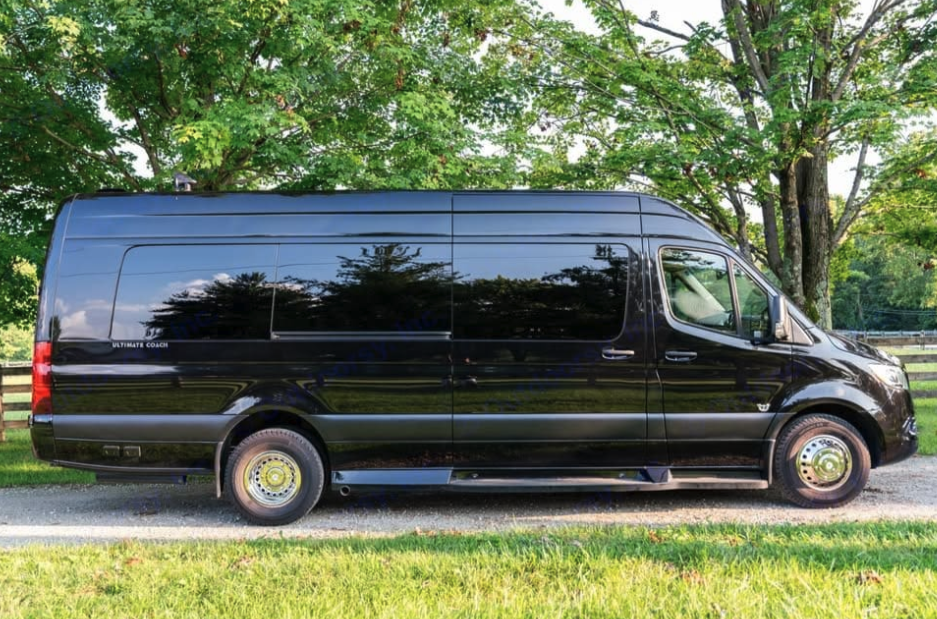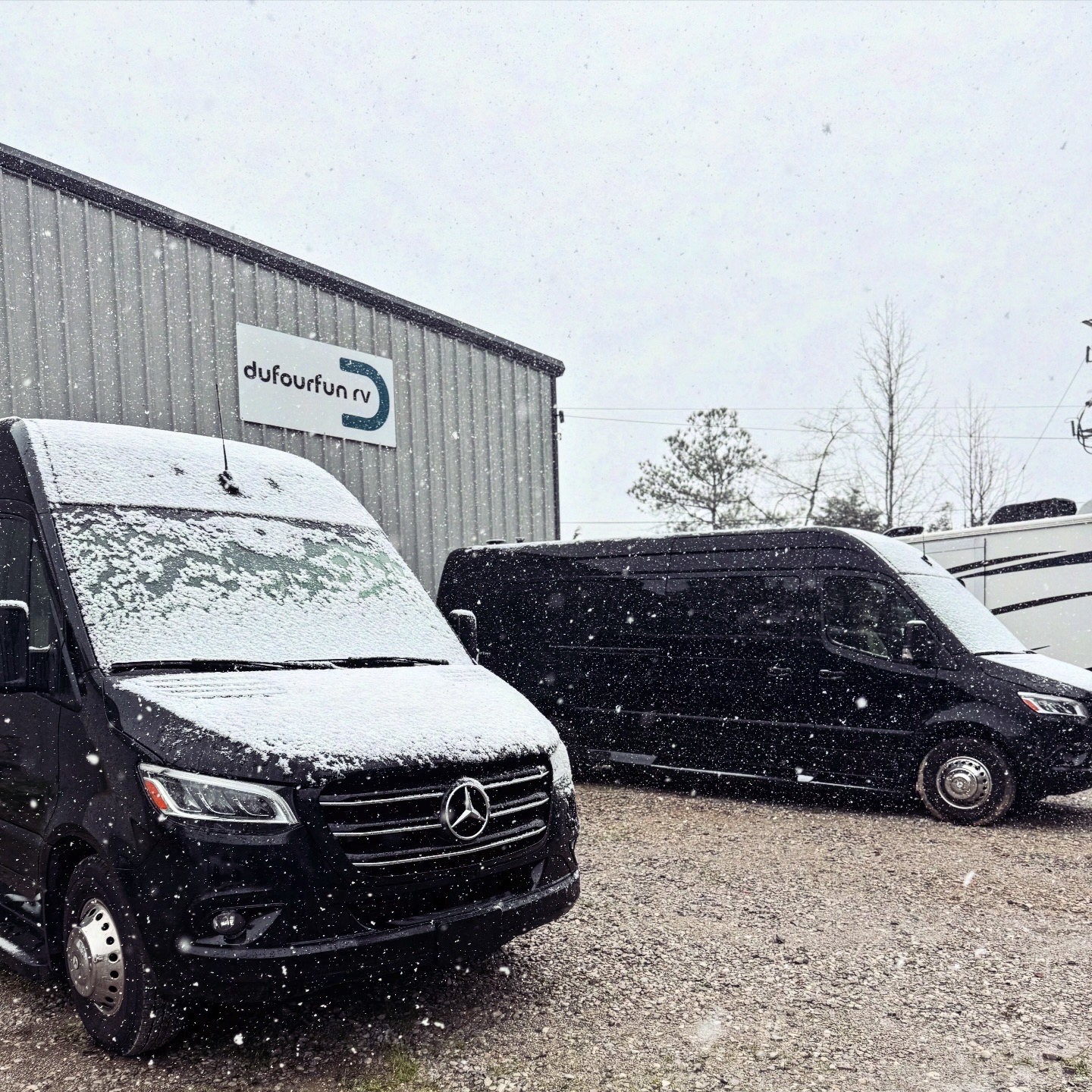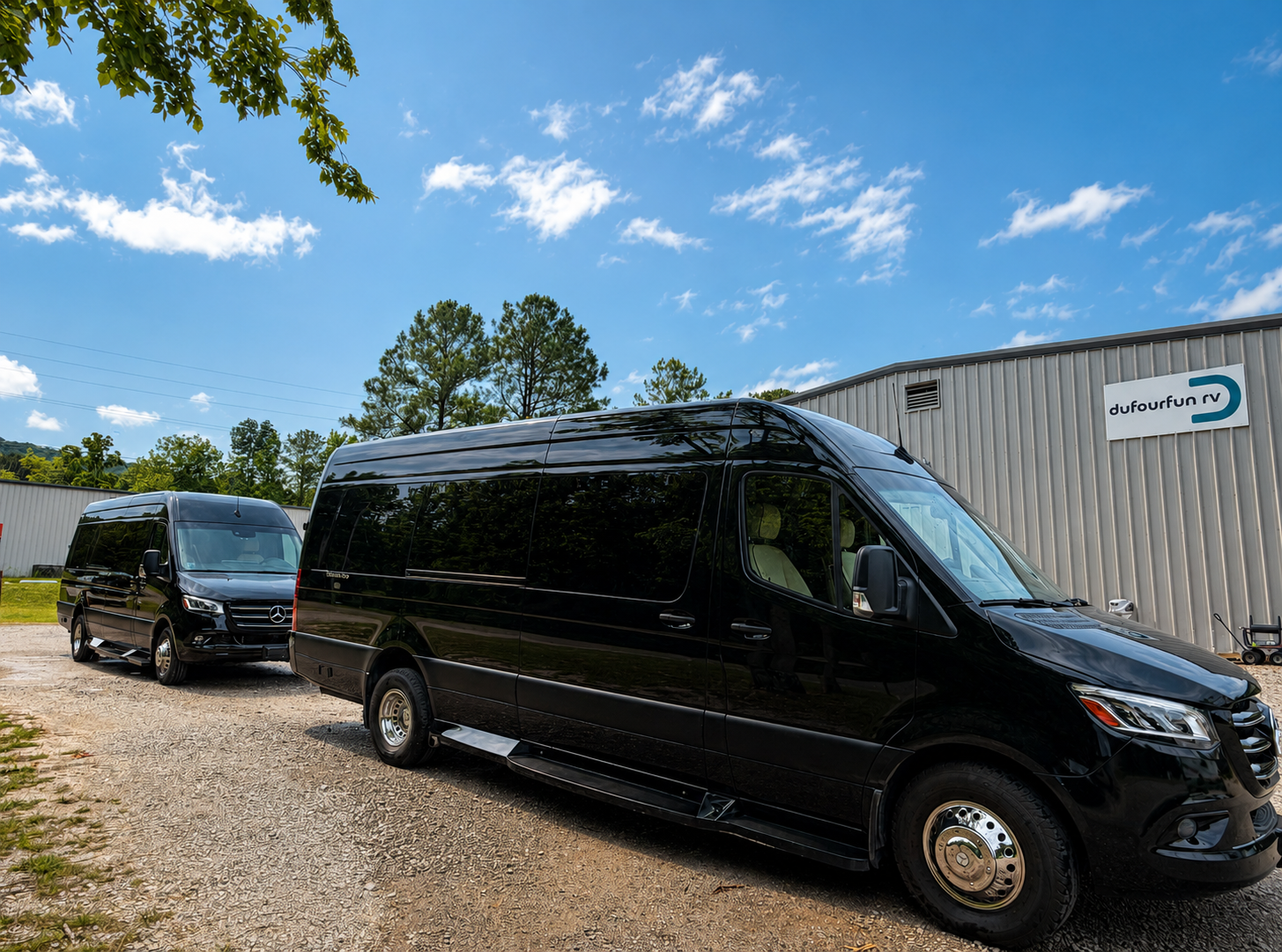
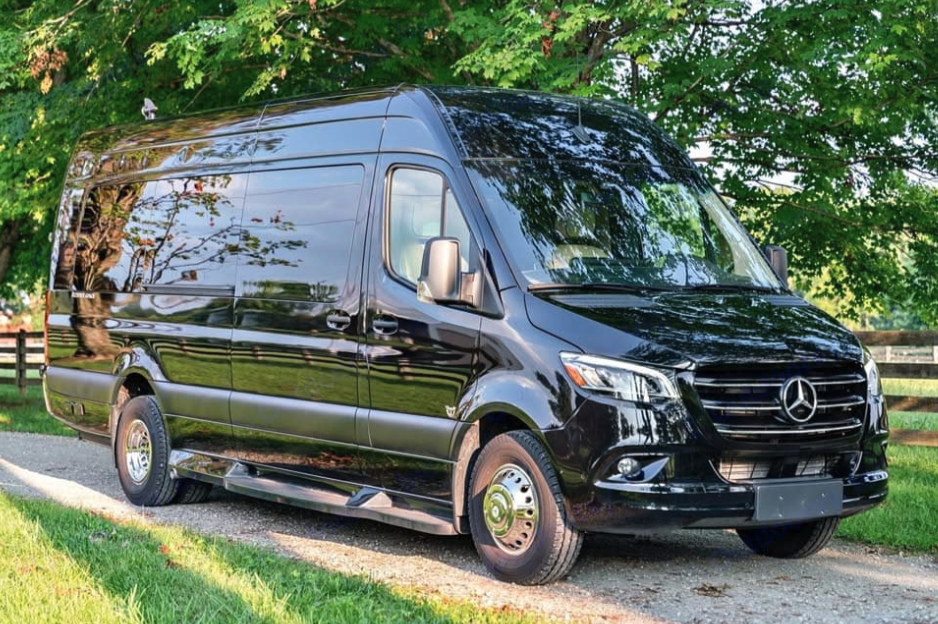
Some luxury Sprinters can tow a trailer. Some configurations should not. The number printed in an online advertisement is only the beginning because the finished conversion, passenger load, wheelbase, drivetrain, hitch and model year all affect the real answer.
The safe question is not “What can a Sprinter tow?” It is “What can this VIN, in this finished configuration and loaded for this trip, tow?”
Why one Sprinter tow rating does not fit every van
Mercedes-Benz publishes ratings by configuration. On its current 2026 Sprinter Passenger Van specifications, Mercedes lists up to 5,000 pounds of towing for several 144-inch-wheelbase Passenger Van 2500 configurations. The same page lists zero towing for certain 170-inch passenger configurations.
That is the most important buying lesson: two vans wearing the same Sprinter badge may have completely different published limits. Model-year pages can change, so use the documents for the actual VIN rather than applying 2026 data to an older van.
Five limits must all work
A tow setup must remain inside every applicable limit:
- Trailer weight. Use the trailer’s actual loaded weight, not its empty or “dry” marketing number.
- GCWR. Gross Combined Weight Rating limits the loaded van and loaded trailer together.
- GVWR. Gross Vehicle Weight Rating limits the van itself.
- GAWR. Each axle must stay within its rating.
- Tongue weight and hitch ratings. The hitch, receiver, ball mount and van must each support the actual tongue load.
The lowest applicable rating controls. An aftermarket hitch with a large number on its label cannot raise the vehicle manufacturer’s rating.
Conversion weight consumes capacity
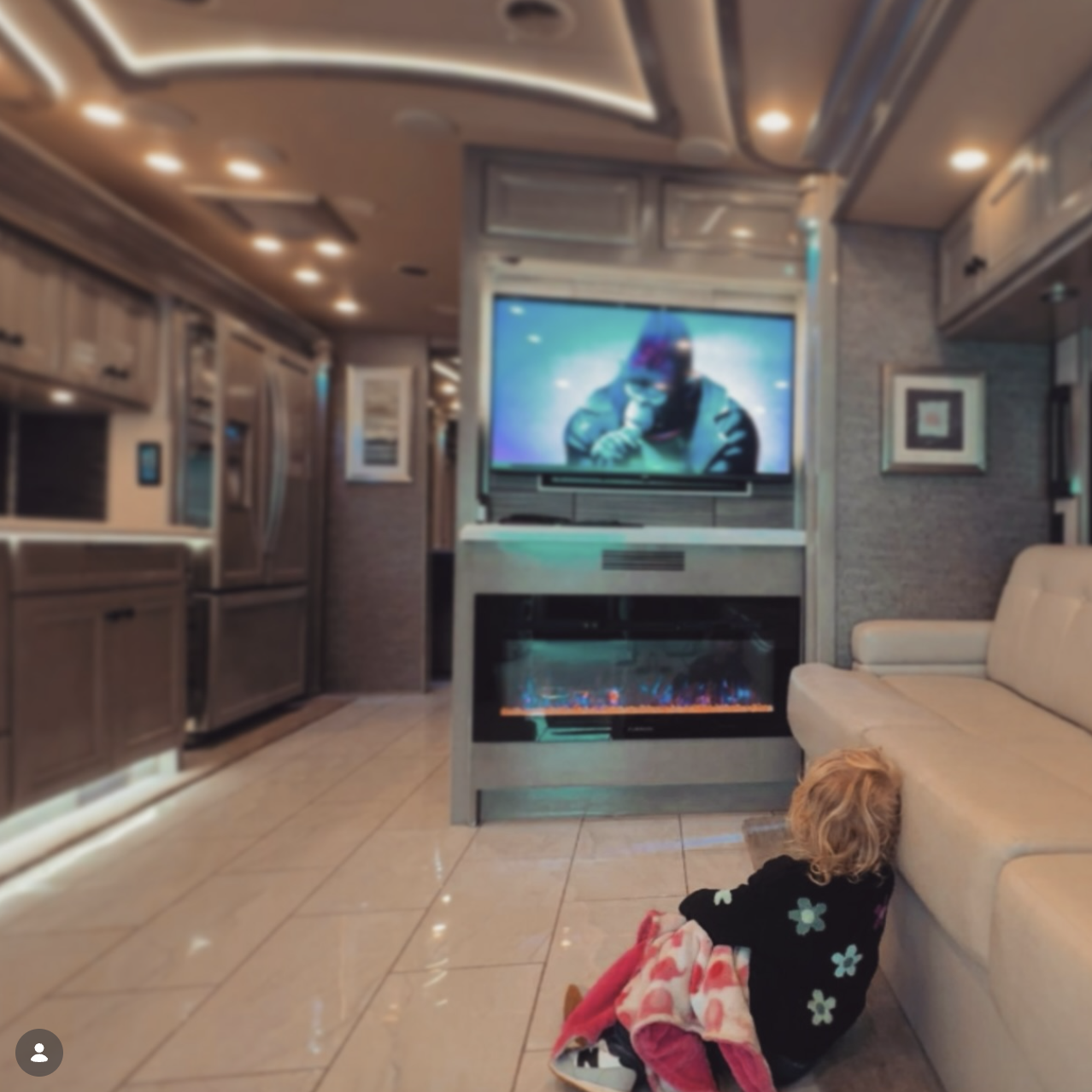
Leather seating, partitions, cabinets, batteries, water, refrigerators, generators and entertainment systems add weight to the van. Passengers and luggage add more. Trailer tongue weight then presses on the vehicle and usually consumes part of its available payload.
Before buying for towing, obtain:
- the final-stage conversion weight or a recent scale ticket;
- individual front and rear axle weights;
- the chassis and converter certification labels;
- the VIN-specific owner’s manual;
- the factory equipment/build data;
- documentation for the installed hitch and wiring.
Our conversion-label guide explains why the final-stage records matter.
Work the numbers in the right order
Use a certified scale with the van in realistic travel condition: fuel, people, luggage, water and removable equipment aboard. Then weigh the trailer loaded as it will travel.
A basic screen is:
Combined margin = GCWR − actual loaded van weight − actual loaded trailer weight
But a positive result is not enough. Separately confirm GVWR, both GAWRs, tire capacity, hitch rating and actual tongue weight.
For example, a van might have room under GCWR but little remaining rear-axle capacity after the conversion and luggage. That rear-axle limit can end the towing discussion before the advertised maximum trailer number does.
Ask whether the converter changed the answer
A conversion can affect structure, wiring, cooling airflow, spare-tire placement and rear overhang. Ask the conversion company:
- Is this specific completed model approved by you for towing?
- Does towing affect the conversion warranty?
- Was the hitch installed by Mercedes-Benz, the converter or a later owner?
- Were frame extensions or rear structure modified?
- Is the trailer connector factory-integrated?
- Are there restrictions involving generators, plumbing or rear accessories?
- What is the finished van’s documented tongue-weight limit?
Get answers tied to the VIN or conversion serial number. A salesperson’s verbal “it should be fine” is not documentation.
Inspect the hardware and electronics
Have a qualified shop inspect the receiver and its attachment points for corrosion, cracks, deformation, missing fasteners and collision repairs. Confirm that the safety-chain attachment points, ball mount and ball are correctly rated.
Test the trailer-light connection. Determine whether the trailer requires brakes and whether the van has a compatible brake-control solution. State requirements vary by trailer weight and location, so verify the laws for every state in which the combination will operate.
The official 2024 Sprinter operator manual is the right place to locate model-year-specific instructions for hitching, braking, tire pressure, stability systems and maximum loads.
Towing changes the driving experience
A luxury van is tall, heavy and often valuable before a trailer is attached. Towing increases stopping distance, affects acceleration and adds heat and load to the powertrain and tires. Crosswinds, downhill grades and emergency maneuvers require more margin.
Plan for:
- slower speeds and longer following distance;
- more conservative mountain-route choices;
- verified cold tire pressures on van and trailer;
- a brake and bearing inspection on the trailer;
- correctly distributed cargo;
- adequate clearance for the van’s long rear overhang;
- a backup camera view that may be blocked or changed.
If the van already has marginal payload, consider carrying the item inside a different tow vehicle instead of forcing the luxury van to do two jobs.
A used-van towing checklist
Before purchase, look for evidence of hard prior towing: receiver wear, loose wiring, rear suspension sag, tire wear, overheated brakes, transmission complaints or collision repair. None proves abuse alone, but together they justify deeper inspection.
Run the VIN through the NHTSA recall lookup and arrange a chassis inspection plus conversion-system inspection. Add our used luxury Sprinter inspection checklist.
Bottom line
A published maximum is not a promise that a completed luxury van can tow that amount. The correct answer comes from VIN-specific Mercedes-Benz data, final-stage documentation, installed-hardware ratings and real scale weights.
If towing is part of your plan, make those records a condition of purchase. Browse current luxury vans for sale and ask Dufourfun Vans for the chassis, conversion and hitch details available for the specific vehicle.