
Insurance should be settled before a luxury van is delivered. The application needs to describe the complete vehicle, not just the Mercedes-Benz chassis.
A converted van can have expensive seating, electronics, cabinetry, batteries, air conditioning and plumbing. It may be owned by a business, driven by employees or used for clients. Those details can change the policy.
This is a buying checklist, not legal or insurance advice. Coverage varies by carrier and state. Ask a licensed agent to confirm the exact policy in writing.
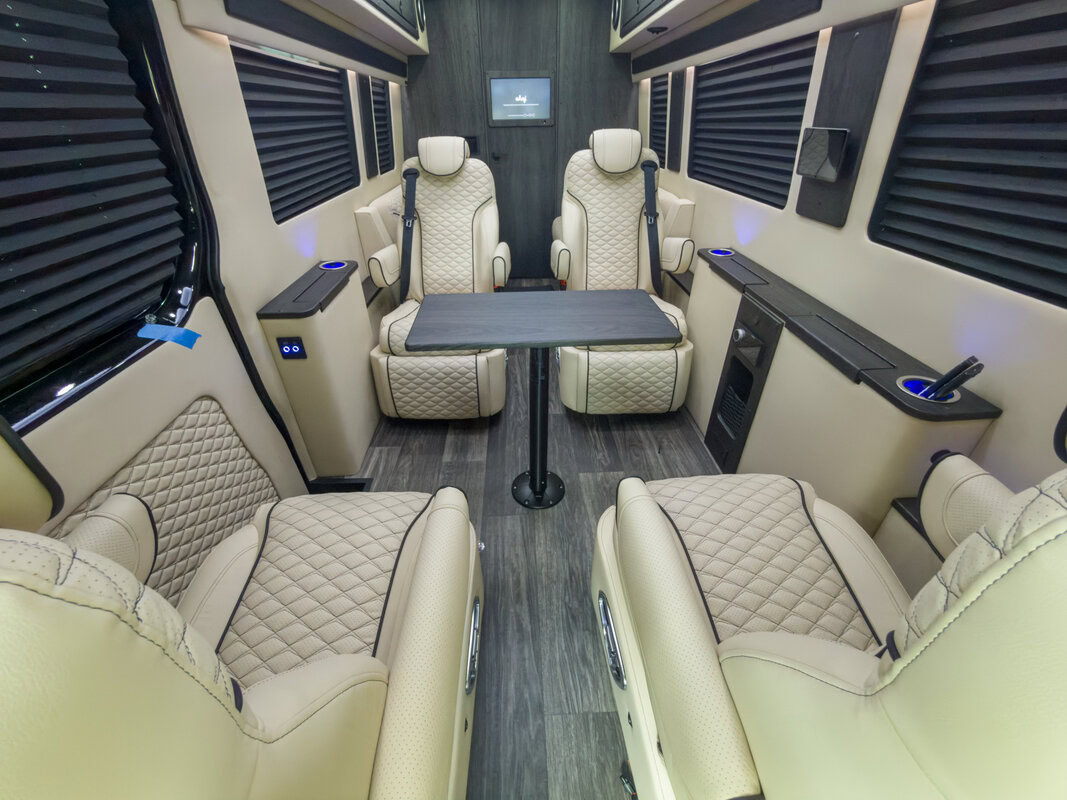
Hero image: a business-owned Dufourfun inventory photo showing a current OGV V-Cruise cabin. It illustrates permanently installed conversion equipment; it is not an insurer’s image. View the source vehicle. Photographer not recorded; commercial use is authorized by Dufourfun Vans.
1. Who will own the van?
Tell the agent whether the buyer is an individual, LLC, corporation or trust. Review the names on the title, loan and policy together.
The NAIC small-business guide says that when a business owns or leases a vehicle, the business should be listed as the principal insured. Do not assume a personal policy follows an LLC-owned van.
2. How will it actually be used?
Be precise: family travel, commuting, client transportation, employee trips, paid passenger service, rental use or mobile-office work.
The NAIC auto-insurance overview explains that personal policies usually do not cover work use, while business policies may include higher limits and provisions for employee-driven or non-owned vehicles. The policy language controls.
3. Who is allowed to drive?
List household drivers, employees, family members and any regular chauffeur. Ask how occasional drivers are treated.
The Alabama Department of Insurance’s shopping tool shows information insurers commonly request: other drivers, business use, annual mileage, garaging address, VIN and lender. Do not wait until a claim to explain that an employee regularly drove.
4. Is the full conversion value covered?
Ask where the policy accounts for:
- powered captain’s chairs;
- entertainment and audio;
- cabinetry and tables;
- lithium batteries, inverter and rear air conditioning;
- bathroom and plumbing;
- suspension upgrades;
- wraps and exterior accessories.
A chassis VIN may not state the retail value of the completed conversion. Send the bill of sale, conversion invoice, equipment list and photos. NAIC advises business owners to consider protection for permanently attached equipment.
Ask whether a total loss uses actual cash value, stated amount, agreed value or another method. Those terms are not interchangeable.
5. Are passengers and business activities described correctly?
A family vehicle, executive shuttle and for-hire vehicle present different risks. Say whether clients ride without charge, employees drive, passengers pay or the van is rented.
Do not describe a revenue-producing van as personal transportation. If use changes, notify the insurer before the next trip.
6. Where will it be stored?
Give the actual overnight address and whether the van is kept in a locked building, fenced lot, driveway or public facility. Confirm height and length fit.
Ask about keys, alarms, GPS tracking, battery disconnects and seasonal storage. NAIC notes that garaging, use and annual mileage are common rating factors.
7. What happens during delivery?
Coverage should start before the buyer assumes risk. Give the agent the VIN, purchase date, pickup plan, temporary-tag details, lienholder and driver.
Ask for an insurance card and binder that match the transaction. If a transporter carries the van, confirm the transporter’s cargo coverage separately. Pair this checklist with the out-of-state purchase guide.
8. What is excluded?
Ask the agent to identify exclusions for business use, rental or livery, unlisted drivers, conversion equipment, personal property, weather, roadside towing for an extended vehicle, foreign travel, diminished value and loss of use.
Get the answer from the policy and endorsements. A verbal summary is not the contract.
Insurance, warranty and recalls are separate
Insurance responds to covered losses. A chassis warranty covers specified defects. A conversion warranty covers different equipment. A recall requires manufacturer action.
Mercedes-Benz currently summarizes a 3-year/36,000-mile basic warranty and 5-year/100,000-mile Sprinter powertrain warranty on its official warranty page. Exact coverage depends on model year, in-service date, mileage and exclusions.
Use the NHTSA recall lookup for the VIN before delivery. An insurance binder does not prove there are no open recalls.
Documents to send the agent
- VIN and chassis model year;
- completed-vehicle title or MSO information;
- purchase agreement;
- conversion invoice or equipment list;
- exterior and interior photos;
- ownership entity and lender;
- regular-driver list;
- expected annual mileage;
- garaging address;
- written description of personal and business use.
Ask the agent to confirm that the policy describes the completed van and intended use. Save the application, binder, declarations, endorsements and photos together.
View Vans for Sale. If coverage needs affect layout or equipment, Build Your Custom Van.