Delivery day should feel exciting, not hurried. A 45-minute acceptance check helps you learn the controls, confirm the equipment you ordered and identify unfinished items while the seller is there to demonstrate them.
Arrange the check in advance. Ask for the van to be ready, charged and supplied for testing its fitted systems. This is a practical handoff routine, not legal advice, an independent inspection or a Dufourfun warranty promise. If a fault or missing document needs more time, pause rather than rushing to meet the clock.
Minutes 0 to 5: VIN and documents
Match the VIN on the vehicle to the purchase paperwork. Review the agreed specification, keys, manuals, warranty documents and any installation invoices. For a used van, review its history report and independent inspection results.
The FTC used-car guide recommends getting promises in writing, asking about the return policy and arranging an independent inspection. A history report does not replace that inspection. Ask for any applicable return policy in writing; do not assume a general cooling-off period exists.
Run the VIN through NHTSA's recall lookup and discuss the result. Its limits matter: repaired recalls and some small-manufacturer or specialty recalls may not appear. A clear result is not proof that every chassis or conversion concern has been resolved.
Minutes 5 to 9: chassis, warning lights and keys
Start the van and have the seller explain any warning that remains illuminated. Test each supplied key, remote lock and backup key procedure. Check the odometer against the paperwork. Use the Mercedes manuals hub to find the correct model-year instructions rather than relying on another Sprinter's controls.
Do not accept an unexplained warning as normal simply because the van drives. Record it and ask for diagnosis before completing the handoff.
Minutes 9 to 14: conversion switches and powered features
Have the seller demonstrate every installed control, then operate it yourself. Check lighting zones, shades, partition, intercom, powered door and other powered features if equipped. Label unfamiliar controls or photograph the demonstrated settings for your own reference.
Features differ by build. Compare what operates with the written option sheet. A feature shown on a manufacturer's website is not evidence that this particular van includes it.
Minutes 14 to 18: seats and seatbelts
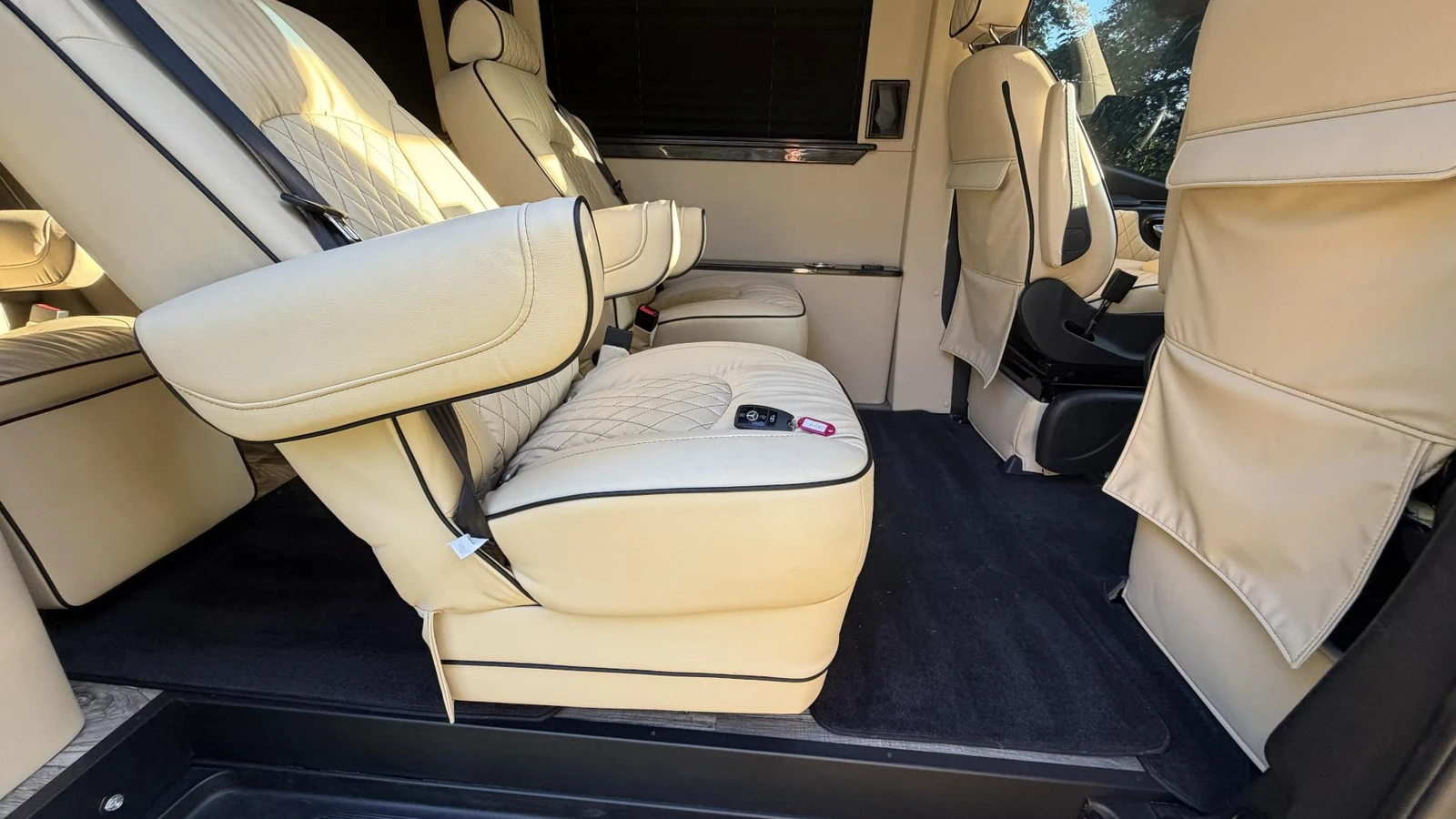
Check each passenger seat's adjustments and locks as instructed. Inspect the supplied belts, buckle each one and confirm the seating positions you intend to use. Test footrests and table stowage if installed. Keep hands clear of moving mechanisms and do not force an adjustment.
Minutes 18 to 23: HVAC and entertainment
Try the front and rear climate controls, confirming that each fitted zone responds. Test audio, screens, remotes and an input you actually use. Pair your phone only with permission, and remove it afterward if you are not completing the purchase. Demonstrate internet-dependent functions using an active connection rather than assuming a screen guarantees service.
Minutes 23 to 28: house systems, if equipped
Ask the seller to demonstrate the house battery display, charging, inverter and shore-power connection using the correct instructions. Observe expected operation without opening electrical panels or handling live wiring. Confirm which outlets work in each supported mode.
If water or a toilet is fitted, demonstrate the pump, taps, flush and accessible leak checks with the system prepared for use. If the van is winterized, agree in writing how and when a proper demonstration will happen. Do not improvise around an unavailable test.
Minutes 28 to 32: exterior openings
Open and close the doors, storage compartments and other fitted exterior openings. Check latches, seals and obvious damage. Confirm access to charging points and service connections. Test powered openings only in a clear area and follow their operating instructions.
Minutes 32 to 41: road test and rattles
Use an agreed route with a licensed, insured driver and properly belted passengers. Listen for cabin rattles and note steering, braking or warning-light concerns. A passenger can check conversation comfort and obvious trim noise while the driver concentrates on traffic. Return for closer inspection if anything feels wrong.
This short drive is not a substitute for a mechanical inspection. For a used van, arrange the independent assessment before the purchase commitment, not as an afterthought at delivery.
Minutes 41 to 45: the signed punch list
Write down every unresolved item. Identify the van by VIN, describe the issue, name who is responsible, state the agreed remedy and timing, and keep a copy acknowledged by both parties. Clarify any effect on handoff or payment in the actual agreement rather than assuming a checklist changes your contract.
Coverage deserves its own conversation. Midwest's warranty page explains that conversion coverage can vary with model year, use and components. Ultimate Toys' benefits page cautions buyers not to rely solely on website warranty descriptions and to obtain complete details. Neither page establishes a Dufourfun warranty or coverage for a different vehicle. Obtain the exact written chassis and conversion terms, exclusions and claim contacts.
Leave with confidence, not unanswered questions
The best outcome is a van you understand and a clear record of anything still outstanding. Bring the build-document checklist so the delivered equipment and the paperwork tell the same story.
Find your next van
View Vans for Sale to compare available layouts. Prefer a cabin built around your own routine? Build Your Custom Van.