
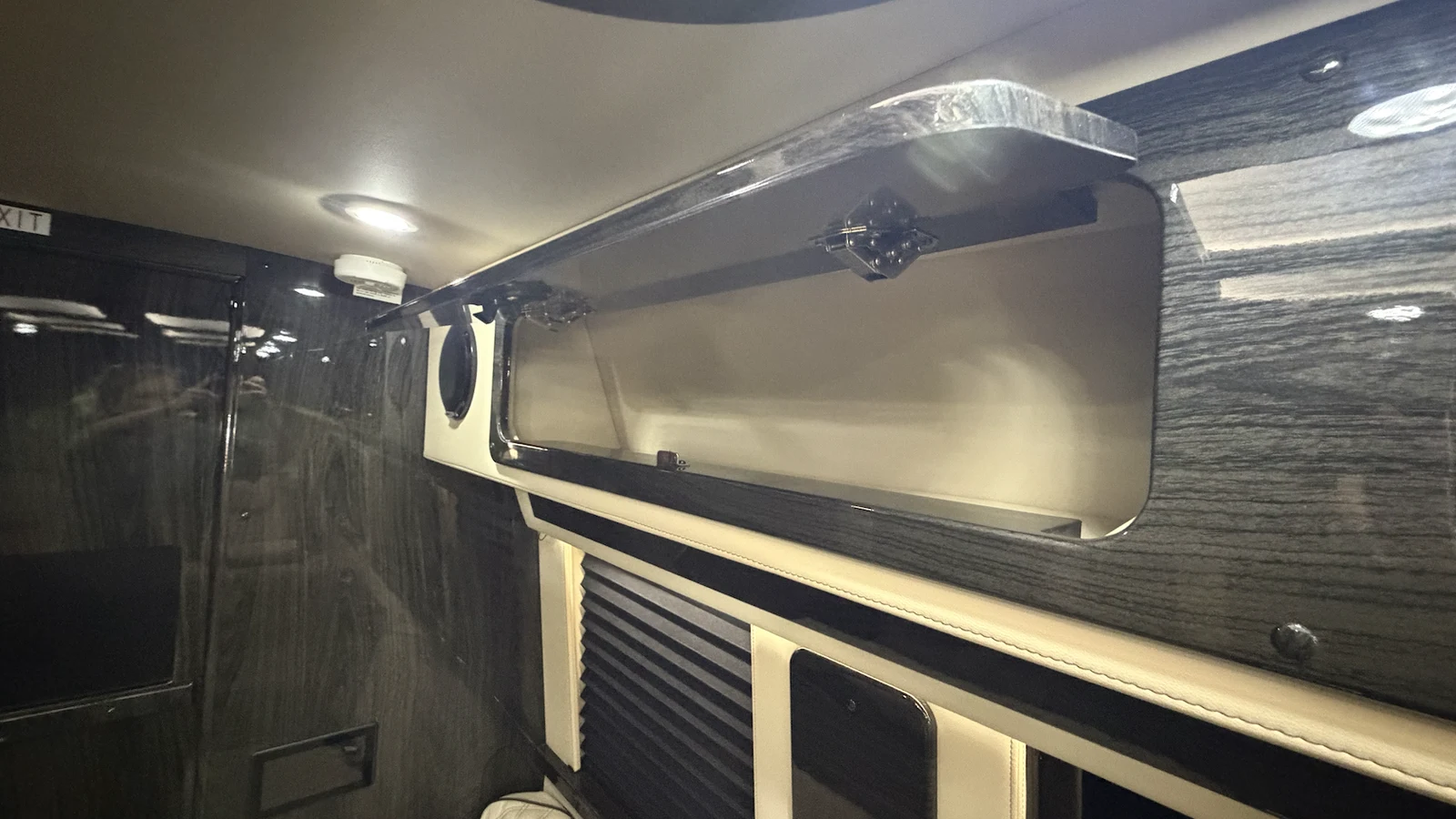
A luxury van bought for dinners, airport pickups or weekend returns will spend some of its useful life after dark. An attractive cabin is only part of the decision. The driver needs a clear view ahead and behind, while passengers need lighting that makes settling in, reading and getting out comfortable.
A good night-drive evaluation begins in daylight and spends its first lighting checks parked. It is not a performance demonstration, a medical assessment or a substitute for a professional inspection. The goal is to learn how the exact conversion behaves during the evening journeys you expect to repeat.
Start with clean glass and a daylight walk-through
NHTSA's safe-driving guidance recommends keeping the windshield, mirrors and headlights clean, avoiding sunglasses or tinted lenses at night and having headlamp aim checked during inspection. The guidance is written in an aging-driver context, but these equipment and visibility habits are useful background for a buyer's test. This article does not diagnose eyesight or offer medical advice.
Look through the windshield from the actual driving position. Check the glass for film and obvious damage, then review mirrors, wipers, washer operation and defogging controls in daylight. Ask a qualified technician to assess anything questionable instead of trying to prove it safe on a dark road.
Have the seller demonstrate the fitted lights and controls. A converter's switches may not behave like factory switches, and a bright display in the rear can matter even when it is not directly in the driver's line of sight.
Use the manuals as examples, not a feature list
The 2025 Sprinter Operator's Manual is a model-year example. Its interior-light and body-manufacturer switch descriptions depend on vehicle equipment. Automatic lighting behavior is not identical across every van or conversion. The manual also advises keeping lamps functioning and checking headlamp adjustment regularly.
For screen-related operation, use the appropriate handbook from Mercedes-Benz Vans owner manuals. The 2025 Sprinter MBUX manual is another model-year reference, not proof that the van you are buying has a particular display or control. Use the exact chassis and converter documentation for the unit under consideration.
Accent strips, passenger reading lights, digital mirrors and cameras may be converter-installed or optional. Ask what is actually fitted and which instructions apply. A glossy cabin photograph cannot answer those questions.
Park first: build a comfortable driver setup
Choose a safe, legal place to park, then spend a few unhurried minutes in the driver's seat.
- Set the seat and steering position so the road and instruments are clearly visible. Confirm that your comfortable daytime position still works with the cabin lighting on.
- Adjust instrument and display brightness while stationary. Aim for readable information, not a blacked-out dashboard or an unnecessarily bright screen.
- Set mirrors and demonstrate the interior mirror's glare-reduction function where fitted. Do not assume every mirror is automatic or every conversion retains the same sightline.
- If cameras or a digital mirror are present, review their brightness controls and limitations using the correct instructions. Check the display from the driving position, not just from outside the van.
Do not change settings simply to make a brief demonstration look better. Note the setup you can comfortably repeat on ordinary trips.
Check cabin reflections before moving
With the vehicle parked after dark, ask a passenger to operate the rear controls one at a time. Begin with the usual travel setting, then compare overhead lights, accent lights, reading lights and any entertainment screen that would normally be used.
Look at the windshield and side glass. A reflection can be faint in daylight yet distracting against a dark exterior. Notice whether a screen or bright trim is reflected near the road view, whether the interior mirror collects cabin glare and whether one passenger's reading light changes the driver's view.
If the cabin has shades, use them only as permitted by the relevant instructions and without obstructing required visibility. Do not improvise coverings over driver glass or safety equipment. A lower-light travel setting should still let passengers find essential items comfortably.
| What to check while parked | What a useful result looks like | What to ask the seller |
|---|---|---|
| Windshield reflections | Road view is not dominated by cabin light or screens | Which fitted lights can be reduced independently? |
| Mirrors and camera displays | Views remain readable without excessive glare | What glare or brightness controls does this exact system provide? |
| Reading lights | A passenger can read without flooding the driver area | Are controls individual or linked to the whole cabin? |
| Aisle and step lights | Entry and movement at a stop are clearly visible | What happens when doors open, close or the vehicle is locked? |
| Wipers and defogging | Controls are understood and the glass can be kept clear | Which faults or maintenance items need professional attention? |
These are buyer observations, not manufacturer performance specifications.
Then take a familiar, legal route
Only proceed when the driver is comfortable, the vehicle appears fit for use and conditions allow a safe test. Choose a familiar route with ordinary stops rather than an unfamiliar, demanding road. Carry a passenger who can manage permitted rear-cabin lighting; the driver must not reach for rear controls or experiment with menus while moving.
Begin with the parked settings that worked. The passenger can note concerns and, when safe, make a small agreed lighting change. If a setting causes distraction, return to a comfortable setting or stop safely. Do not create glare deliberately in traffic or test emergency maneuvers.
Observe the normal headlight view and whether mirrors remain useful with ordinary traffic behind you. Do not judge headlamp aim by glare complaints alone or adjust lamps experimentally on the road. Have aim and lamp condition checked professionally. Assess wiper and defogging visibility only in suitable conditions; there is no need to seek difficult weather to complete a purchase evaluation.
Passenger comfort includes safe stops and a rested driver
At a legal stop, test aisle and step lighting with doors in their normal entry position. Check that passengers can find belongings and see their footing without needing all the brightest lights on during travel. Reading lights and a restful cabin should be compatible, rather than forcing everyone into the same setting.
Allow more following space after dark and pull over in a safe place when tired. Plan a driver handoff before a long evening return: the alternate driver should be authorized, rested and familiar with the vehicle. Keep the key and seating routine simple. Our driver-handoff buyer test explores that part of repeated ownership.
If nobody is fit to drive, stop or arrange another safe option. Lighting upgrades and a comfortable chair are not fatigue cures.
Buy the cabin you can use comfortably after dark
Write down what worked, what the passenger could control and what needs professional attention. An unresolved visibility concern is a reason to pause the decision, not a reason to keep testing in increasingly difficult conditions.
Use those observations when comparing luxury vans for sale. If you are planning a build, discuss separate travel, reading and entry-light settings through the custom van builder, with the installer confirming what is available and appropriate for that design.
The best evening cabin is not necessarily the one with the most lights. It is the one whose real controls support clear driver visibility and comfortable passengers on the journeys you make again and again.
Choose a van for the trips you repeat
Image credit
Creator: Dufourfun Vans. No named photographer is documented. Usage basis: business-owned inventory image in site-controlled storage. Original inventory image. Processing: EXIF orientation normalized; center crop [0, 149, 1680, 1094] from 1680x1244; Lanczos resize to 1600x900; WebP quality 88; no darkening, generative, background, equipment or vehicle edits. This is an illustrative daylight inventory cabin photograph with its existing lighting visible, not a documented night-drive scene. It was not darkened to imply nighttime.