
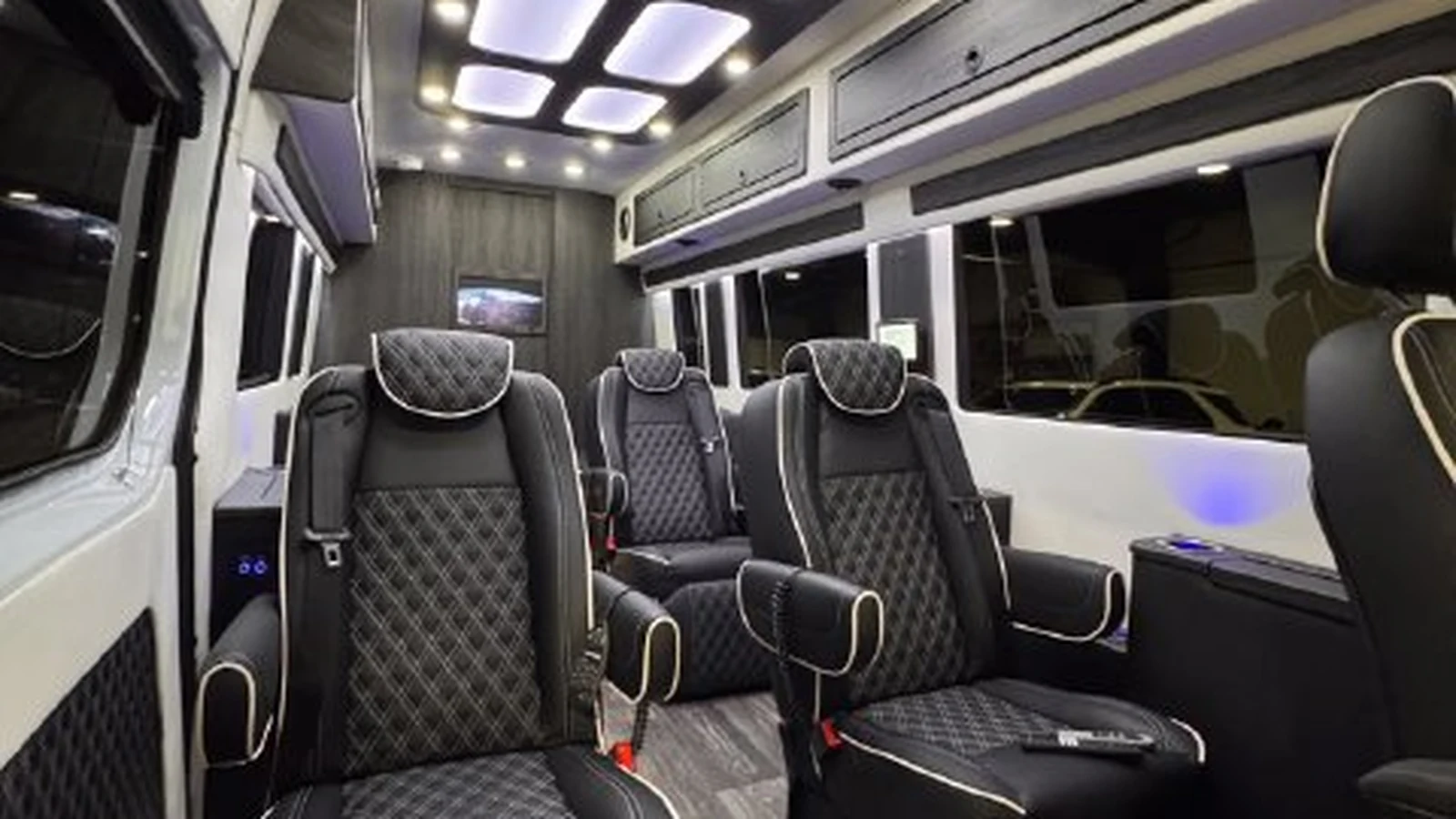
The first extension of a power leg rest is an easy moment to like. The more useful question is whether you still want that seat after an hour on the highway, with your usual shoes, your travel companion and the bags you actually bring.
For owners who make frequent long trips, the value is in repeated comfortable use, not the button demonstration. Test a seat as part of a working cabin rather than as an isolated recliner.
Start with the specific model, not the feature name
The current Ultimate Toys Ultimate Coach page describes power leg lifts. Grech’s 2027 LUSSO-ion Lounge page identifies power leg lift and limited power recline in its GRECH Exclusive Seating. These are model-specific examples, not evidence that every luxury van, every model year or every passenger position has the same equipment.
Ask the seller to show which seats in the actual vehicle have the feature and to provide the conversion-seat operating instructions. A model badge or a photograph of a chair does not tell you its full movement range. The hero photograph here illustrates a passenger cabin; it does not show an extended leg rest or establish that this pictured van has one.
First, test the movement while parked
Set the van safely at rest and work through the controls before the road test. Do not put fingers into hinges or moving upholstery to explore a pinch point.
- Use your normal sitting position. Set your feet and back comfortably before moving the leg rest. Check whether the support reaches a useful part of your legs without leaving your heels awkwardly suspended.
- Try the permitted combinations. Explore leg lift and recline separately, then together within the seat maker’s instructions. Notice whether the usable range is smaller than the maximum mechanical range.
- Look ahead and below. Watch clearance to the next seat, cabinetry and footwell. Check whether a normal travel bag would interfere, then store it somewhere appropriate instead of accepting the obstruction.
- Invite the neighboring passenger. Have them use their usual position. Confirm that one person’s preferred setup does not take away another’s foot space or make entry and exit awkward.
- Return to the travel position. Retract the leg rest and restore the approved upright position several times. Make sure the controls are understandable and the movement completes without assistance.
| Check | What a useful result feels like | Reason to ask more questions |
|---|---|---|
| Clearance | Movement finishes without touching nearby furniture or another passenger | Contact, rubbing or a blocked footwell |
| Controls | You can identify and reach the right button without searching | Ambiguous controls or difficult reach |
| Shared space | Your companion retains comfortable foot space and aisle access | One seat’s adjustment obstructs the other person |
| Upright return | The seat reliably returns to its approved travel position | Incomplete travel, hesitation or need for hand assistance |
| Sound and upholstery | Operation is consistent without obvious strain or snagging | Grinding, repeated clicking or upholstery caught in a moving joint |
Some motor sound is normal. The point is not silence at any cost; it is whether the sound and movement are consistent, and whether the seller can explain anything unusual.
Keep the travel posture and the belt working together
The 2025 Mercedes-Benz Sprinter Operator’s Manual, in its front-seat adjustment guidance, says to adjust the seat properly before the journey and keep the backrest almost vertical for the seat belt’s intended protection. It also instructs drivers to verify that the driver’s seat is engaged before starting and warns against adjusting the driver’s settings while moving.
That same section says to keep objects out of the footwell and from under or behind seats when moving them back, and to keep body parts clear of the seat’s movement. Those are practical boundaries for the demonstration, not a claim that a Mercedes chassis manual approves an upfitter’s reclining seat for every position or every use. Consult the specific conversion-seat instructions as well as the Mercedes owner-manuals portal.
A leg rest does not override belt-position guidance. Before the highway ride, use the approved travel position, confirm any applicable seat locking or engagement and keep the aisle clear. Do not assume that a deeply reclined showroom pose is an appropriate belted travel position.
The hour-long test is the one worth remembering
Arrange a real highway ride with the seller, using the seating position permitted by the vehicle and seat instructions. Take a familiar route if possible so you can pay attention to the cabin rather than the destination. Make adjustments while safely stopped.
At the beginning, note where the support meets your legs and whether your feet have a natural place to rest. After an hour, ask simpler questions: Are you still comfortable? Have you been shifting constantly? Does the cushion edge feel intrusive? Can you reach your essentials without abandoning a good seated posture? Does your companion still have room?
Then stop and try the return-to-upright sequence again. Getting out for lunch should be straightforward, not a negotiation between two extended chairs and an aisle full of bags. The open-cabin versus partition guide is useful if the seat arrangement is only one part of your layout decision.
Buy for the trips you repeat
Someone making regular interstate family visits may use this feature often. Someone taking short local trips might prefer easier cabin movement, simpler controls or a different seating arrangement. Neither choice is a verdict on luxury; it is a choice about how you live with the vehicle.
This is a comfort evaluation, not a medical claim. The best result is a seat that remains pleasant, works reliably and fits the people around it after the novelty has worn off.
Choose the van around the trips you actually take
View Vans for Sale to compare current inventory, then Build Your Custom Van if your preferred travel setup calls for a different layout.