
A luxury van can feel perfect on a dry showroom floor and awkward the first time six passengers board in the rain. Wet weather changes the driver's view, the entry routine, the floor, the step and the way the group handles coats, umbrellas and luggage.
That makes a rain test useful for buyers who expect school trips, airport runs, client dinners, sports weekends or family travel throughout the year. The goal is not to prove that one van is universally safer. It is to see whether the exact vehicle, conversion and routine work together when conditions are less convenient.
The NHTSA severe-weather guidance advises drivers to slow down and increase following distance on wet roads because control and stopping are harder. It also says to turn around rather than enter flooded roads. Those are driving rules, not features a luxury conversion can replace.
Start the test while the van is parked
Do most of the inspection without moving.
1. Inspect the glass in daylight
Look through the windshield from the real driving position. Check for chips, scratches, haze, residue and reflections from the dashboard or converter-installed trim. Inspect the side glass and mirrors, too.
Clean glass matters because a light film that seems minor in daylight can scatter light in rain or at night. Pair this with our night-drive visibility test.
2. Run every wiper and washer function
Use the exact owner's manual for the chassis and model year. The Mercedes-Benz Vans owner-manual library is the right starting point. The 2025 manual is only an example, not proof that another van has identical controls.
The 2025 Sprinter Operator's Manual describes model-specific wiper and window-defogging procedures. It also notes that worn blades can stop wiping properly. Confirm blade condition, washer spray coverage and any rear wiper or camera-cleaning features on the exact van.
3. Make the windshield fog on purpose
With the vehicle parked, load the intended number of passengers for several minutes and observe how quickly the glass fogs. Use the documented defrost or defog controls and time how long it takes to restore a clear view.
Do not generalize from a sales demonstration. Climate equipment varies, and the conversion may add a separate rear system. The 2025 Sprinter manual explains that recirculation can make windows fog more quickly and provides different clearing procedures depending on the installed climate system.
Test the passenger entry routine
Rain creates a small traffic jam at the sliding door. One person pauses to close an umbrella, another reaches for the step and a third tries to protect a bag.
Run this parked exercise:
- Place a dry mat outside the van to simulate the wet curb area safely.
- Have every passenger enter with a closed umbrella or coat.
- Confirm that the exterior handle, step and interior grab points are easy to find.
- Turn on the step and aisle lighting.
- Decide where wet items can go without blocking the door or soaking upholstery.
- Check whether the floor remains secure under clean, damp shoe soles. Do not pour water into the cabin.
A buyer should also inspect door seals, roof penetrations, windows and conversion joints for staining, odor or prior moisture. A dry inspection cannot prove there is no leak. If there is any concern, use a qualified inspection rather than creating a water test that could damage the van.
Look at the whole wet-weather system
| Area | Parked test | Road-test question |
|---|---|---|
| Windshield | Clean glass, washers, defog controls | Does the view stay clear without constant distraction? |
| Mirrors and cameras | Check brightness and water exposure | Can the driver interpret the view in spray? |
| Sliding door | Repeat entry with coats and bags | Does the routine stay organized at stops? |
| Step and aisle | Test lighting and grab points | Are exits clear when the group arrives? |
| Floor | Inspect material and transitions | Can it be cleaned without trapping moisture? |
| Rear cabin | Test climate and window clearing | Do passengers create distracting condensation? |
Use a short, familiar route
Only drive when conditions are legal and comfortable. Use a familiar route, keep extra following distance and let a passenger manage rear-cabin lighting, shades and wet items. The driver should not experiment with unfamiliar controls while moving.
Stop the test if visibility, flooding, fatigue or vehicle behavior creates concern. A buyer test is not worth forcing through unsafe conditions.
What to document before purchase
Record:
- Chassis model year and exact owner manual
- Wiper blade condition and washer performance
- Windshield and side-glass condition
- Installed climate and defog equipment
- Door-seal and roof-penetration inspection findings
- Step, aisle and entry lighting
- Floor material and cleaning instructions
- Any camera or digital-mirror limitations in rain
- Who services the Mercedes chassis and who services the conversion
A rainy-day routine becomes an ownership advantage only when everyone understands it.
Image credit
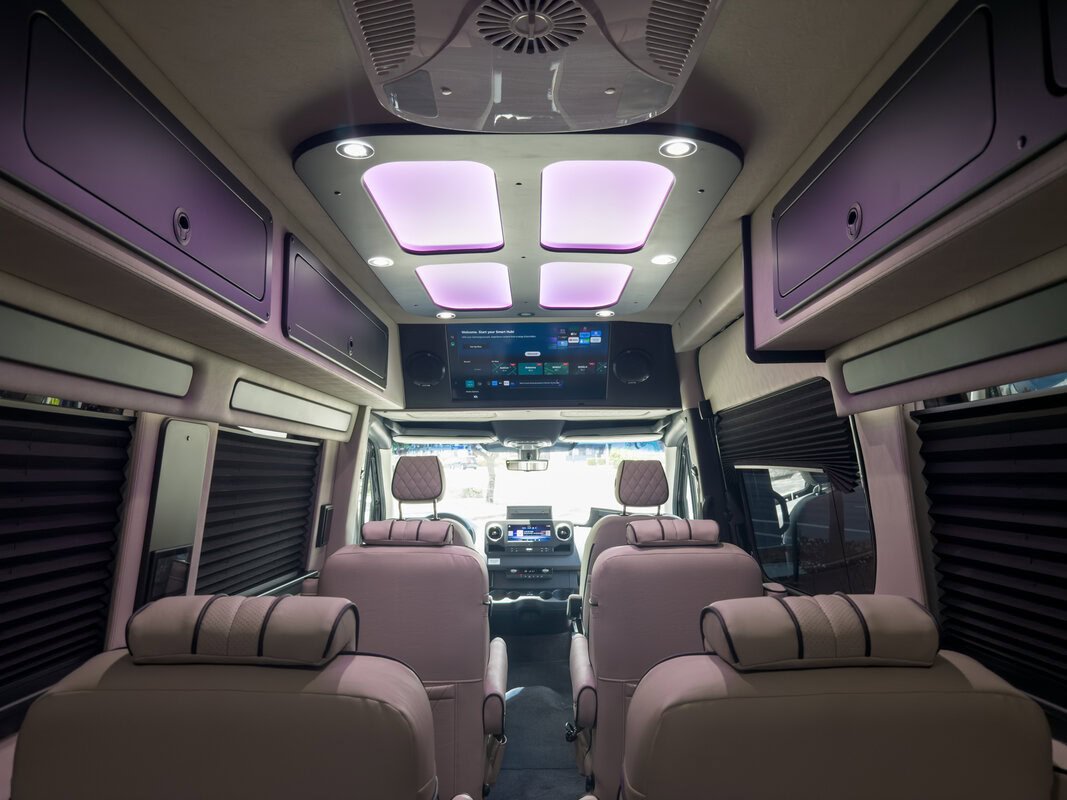
Original source: Dufourfun Vans inventory image. Creator: Dufourfun Vans; no individual photographer is documented. Usage basis: business-owned image stored in Dufourfun's site-controlled media library. The hero uses the storage service's center-crop rendition. It is a daylight cabin and windshield illustration, not a photograph of rain or a wet-road test.