
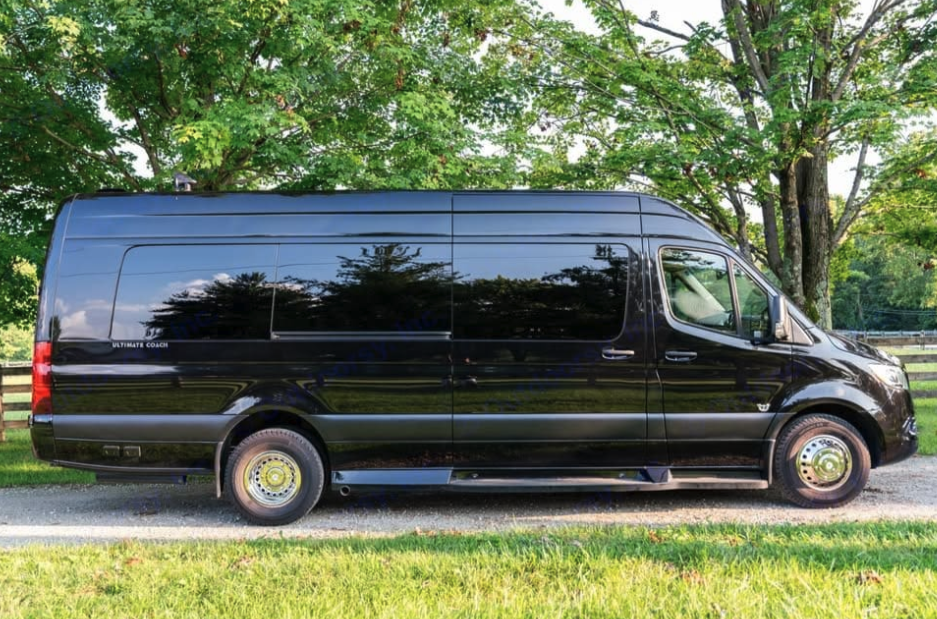
A Sprinter 3500XD badge may suggest more heavy-duty capability than a 2500, but it does not answer the most important buying question: how much capacity remains after the luxury conversion, passengers, luggage, water and accessories are included?
Choose by the completed vehicle’s ratings and measured weight, not by chassis reputation or an empty-cargo-van number.
Manufacturer information was checked September 7, 2026. Specifications vary by body, drivetrain and model year.
Why the conversion changes the calculation
A luxury conversion adds captain’s chairs, sofas, cabinetry, flooring, insulation, entertainment equipment, batteries, climate systems, tanks and plumbing. All of that consumes part of the original chassis capacity before your group loads a single suitcase.
Mercedes’ current 2026 cargo-van page illustrates how much configuration matters. It lists a 144-inch 2500 configuration with up to 4,211 pounds of payload and a 170-inch extended 2500 example with 3,704 pounds. Those are base cargo-van specifications for the configurations shown, not available payload figures for a completed luxury conversion. Mercedes-Benz Sprinter cargo specifications
Current premium converters often choose heavier-duty underpinnings for large builds. Ultimate Toys identifies the Ultimate Coach as a 170-inch extended 3500XD, and Midwest lists its current Luxe Cruiser floor plans on the same chassis class. Ultimate Coach specifications, Midwest Luxe Cruiser lineup
That choice is relevant, but it still does not tell you the remaining capacity of an individual finished van.
Learn the four numbers that matter
| Number | What it tells you |
|---|---|
| GVWR | Maximum permitted weight of the loaded vehicle |
| Front GAWR | Maximum permitted weight supported by the front axle |
| Rear GAWR | Maximum permitted weight supported by the rear axle |
| Actual scale weight | What the van weighs in the condition measured |
A basic estimate of remaining total capacity is GVWR minus the actual loaded-condition scale weight. But staying below GVWR is not enough if one axle exceeds its rating.
Find the applicable certification and loading labels on the vehicle and compare them with the VIN and ownership documents. If labels are missing, altered or confusing, pause the purchase and get help from the manufacturer or a qualified specialist.
Request a scale ticket
Ask for a recent weight ticket showing individual axle weights. Ideally, weigh the van with normal fluids, installed equipment and the items that permanently stay onboard.
Then add a realistic trip load:
- Driver and every passenger
- Suitcases, golf clubs, strollers or sports gear
- Food and drinks
- Freshwater and waste carried during travel
- Tools, spare parts and accessories
- Any later-added equipment
- Trailer tongue weight, if towing is approved
Do not substitute an advertised “dry weight” unless you understand exactly what it excludes. If the seller cannot document the van’s current weight, make weighing it a purchase condition.
Seat count is not load capacity
A ten-seat layout does not prove the van can carry ten large adults, their luggage and full tanks while remaining within all ratings.
Use your expected passenger weights and actual baggage estimates. If the result leaves only a narrow margin, repeat the calculation with the heaviest realistic trip. Do not rely on always packing perfectly.
Also consider weight distribution. A rear bathroom, luggage compartment, batteries and a loaded trailer can concentrate weight toward the rear. That is why separate axle values matter.
Do not infer equipment from the badge
Confirm the full chassis configuration from the VIN and vehicle documents. Determine the model year, wheelbase, body length, drivetrain, engine, rear-wheel setup and installed towing equipment.
A seller’s title may say “3500,” “3500XD” or “dually” imprecisely. Photographs can help screen a listing, but they do not replace documentation.
The same caution applies to horsepower, towing and payload statements copied from a new-vehicle website. Current specifications may not apply to the model year or build in front of you.
Consider the ownership tradeoffs
A more capable chassis may be appropriate for a large conversion, but compare the complete ownership picture:
| Question | Why it matters |
|---|---|
| Do tires match the required size and load rating? | Replacement choices and cost differ |
| Are all tires the same age and suitable condition? | A multi-wheel rear axle adds inspection points |
| Can your normal shop lift and service the van? | Dimensions and weight can affect service access |
| Does your storage space fit the body and height? | Chassis class does not solve parking |
| Is the ride acceptable at normal load? | Test the van as you intend to use it |
| Is towing documented for this completed van? | Hitch hardware alone is not approval |
Have a qualified technician inspect suspension, brakes, tires and any aftermarket modifications. Review the vehicle and conversion manuals before changing wheels, suspension or towing equipment.
Compare two vans on one worksheet
For each candidate, record:
- VIN and chassis model year
- Chassis designation and drivetrain
- GVWR and both axle ratings
- Current front, rear and total scale weights
- Expected passenger and cargo load
- Remaining margins by total and axle
- Tire specifications and condition
- Documented towing limits, if relevant
Then use our 144 versus 170-inch Sprinter guide to compare size and our used luxury Sprinter inspection checklist for condition.
Buy capacity you can document
Browse luxury Sprinter vans for sale and request the finished weight information before treating any candidate as suitable.
A 2500 may fit a lighter conversion and use case. A 3500XD may provide the foundation a larger build requires. Neither conclusion should come from the badge alone. The right van is the one whose verified ratings and scale weights leave a sensible margin for your real passengers and cargo.