A used luxury Sprinter advertised as “4x4” may not have the same drivetrain as a newer AWD model. Before paying extra, establish what the vehicle actually has and what problem it will solve on your trips.
Our recommendation is to treat drivetrain as one buying requirement alongside seating, condition and service history, not as a shortcut to judging the whole van.
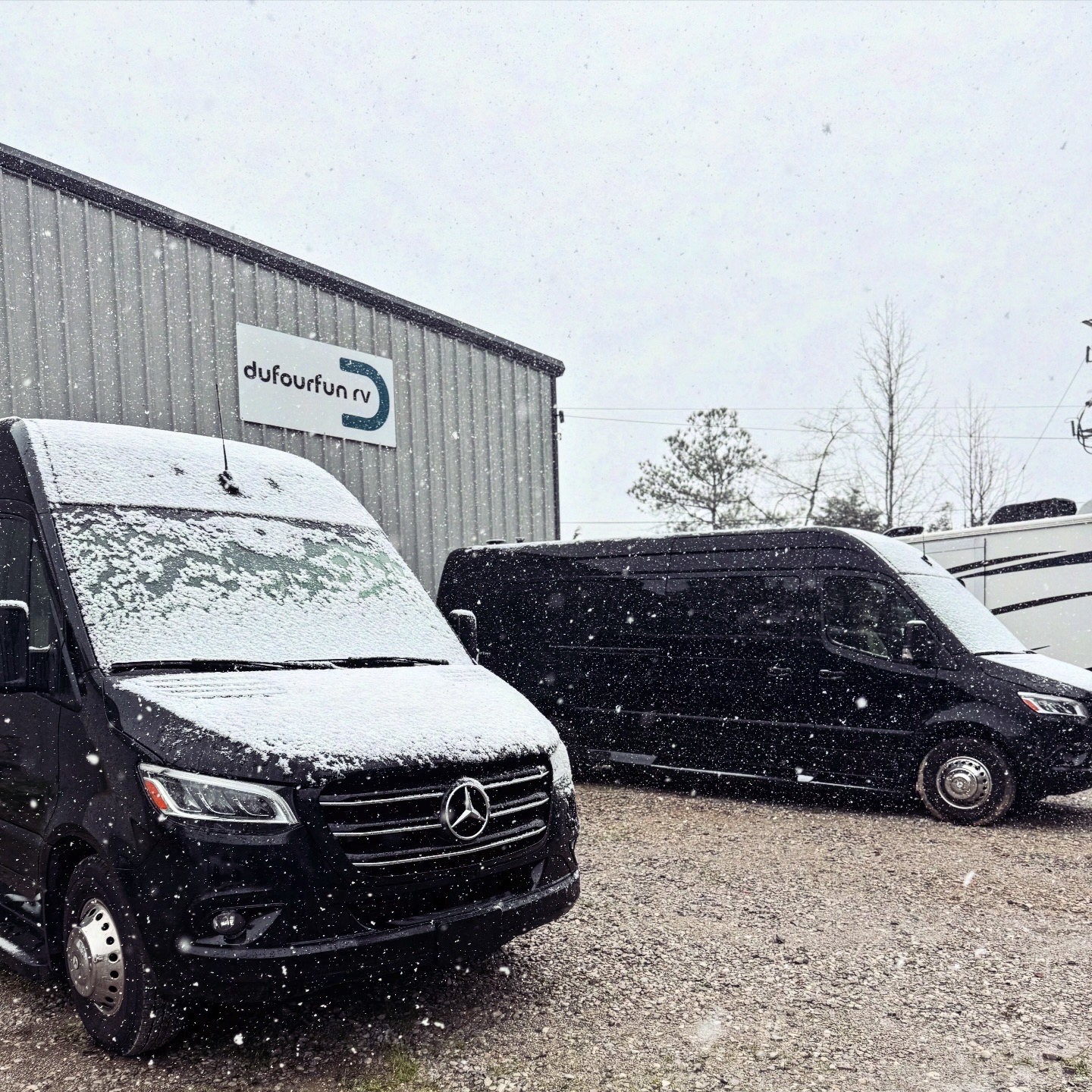
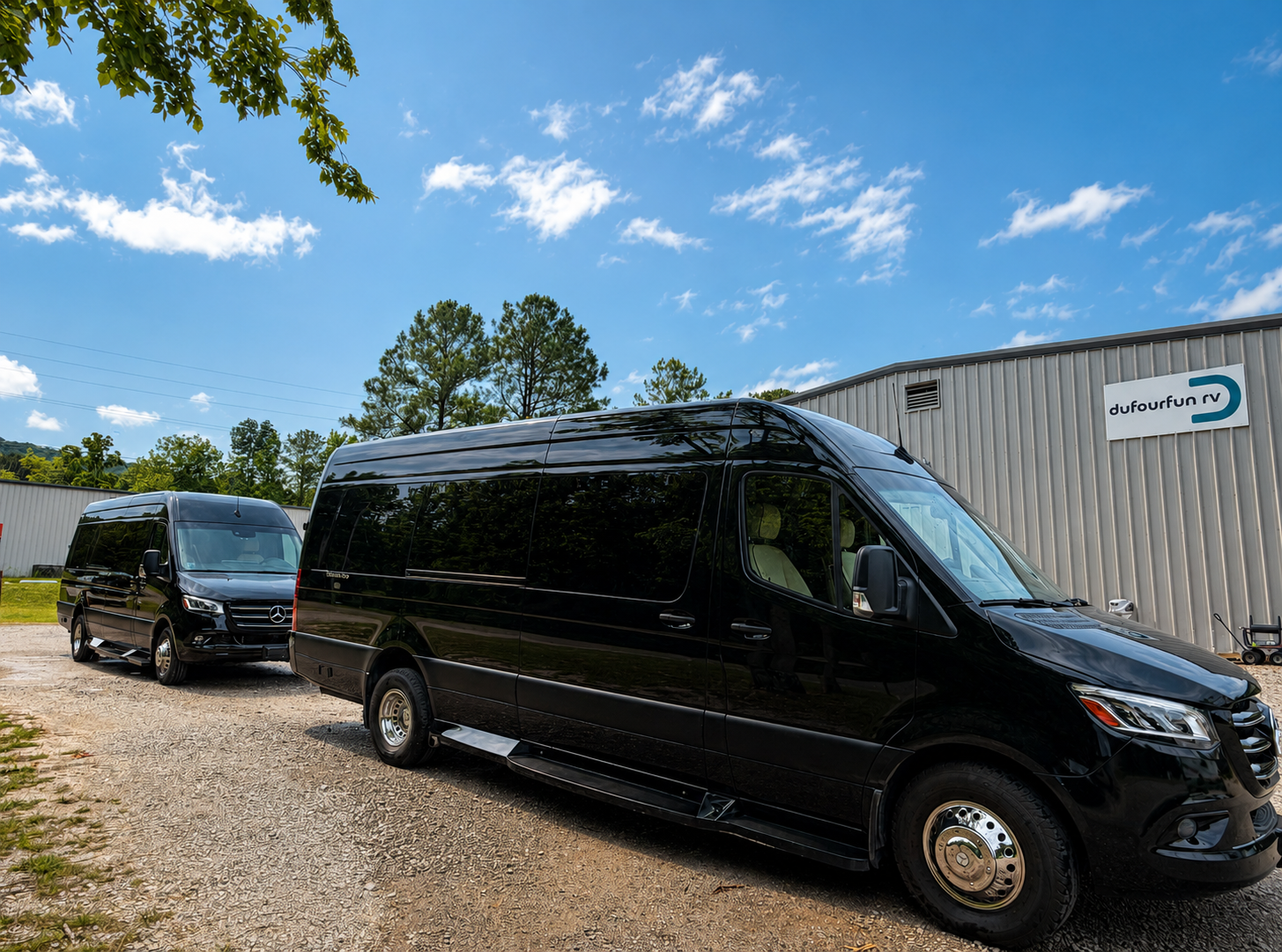
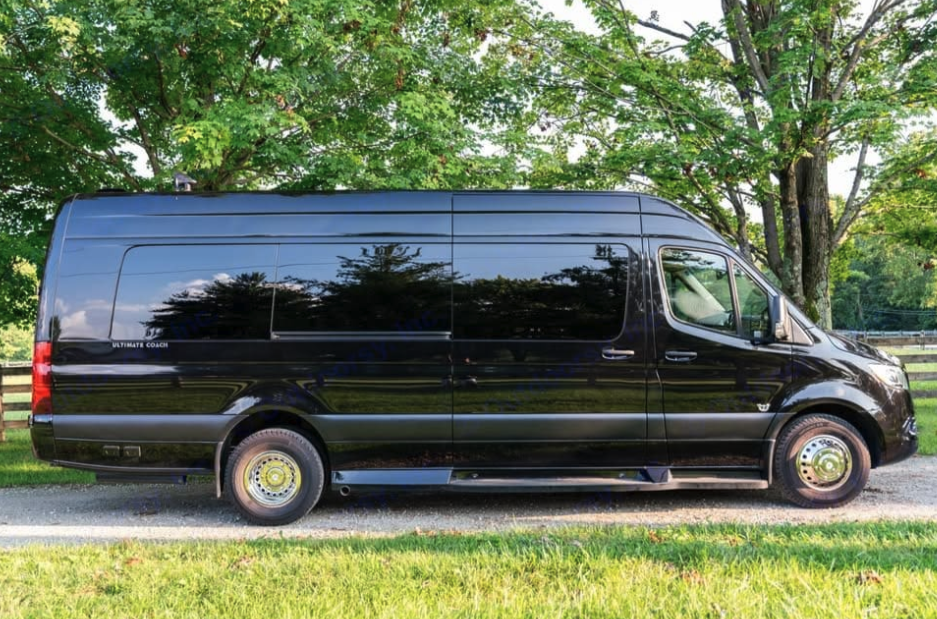
Manufacturer information was checked September 6, 2026. The accompanying Dufourfun exterior photo illustrates a luxury Sprinter; it does not identify that vehicle as AWD or 4x4.
Know what changed
Mercedes-Benz announced its newer Sprinter AWD system on March 8, 2022, as part of the model-year-2023 powertrain transition. The announcement distinguishes automatic torque-on-demand AWD from the previous engageable 4x4 system. Mercedes-Benz announcement
Mercedes' current Sprinter overview describes the newer system as distributing torque automatically when needed, with up to a 50% split to each axle. It does not require the earlier 4x4 engagement switch. Mercedes-Benz Sprinter AWD overview
That distinction matters when a seller uses “4x4” loosely as a search term.
| Listing description | What to establish before buying |
|---|---|
| Older factory 4x4 | Exact equipment, engagement procedure and applicable operating limits |
| Newer factory AWD | VIN-specific confirmation that AWD is fitted |
| “2023” or later luxury conversion | Mercedes chassis year, not just the conversion's advertised year |
| Lifted van or off-road wheels | Whether the drivetrain was changed at all, and documentation for modifications |
| Rear-wheel drive | Whether its capability suits your normal routes and conditions |
Do not infer drivetrain from ride height, wheels, badges or an exterior photograph. Ask a Mercedes-Benz van dealer to help confirm factory equipment from the VIN.
Separate chassis year from conversion year
Luxury vans involve both the original vehicle and the finished conversion. When a listing gives only one year, ask which it describes.
Request the VIN, chassis identification information, conversion manufacturer's label and original equipment documentation. If the paperwork uses different years, have the seller explain the distinction before you compare mechanical specifications.
This is especially useful near a drivetrain change. A current model webpage cannot tell you which system is installed in an older individual van.
Our used luxury Sprinter warranty guide covers another reason to keep those records straight: warranty questions require more than a model name and low mileage.
Write down where AWD would help you
Be specific about the trip instead of choosing by image.
For a buyer who mainly visits hotels, paved venues and maintained highways, our advice is to compare a suitable rear-wheel-drive candidate before ruling it out. For a buyer planning frequent winter trips or access to slippery rural driveways, AWD may deserve greater weight in the shortlist.
Those are selection priorities, not guarantees that either van can travel safely on a particular day. Ask whether you can postpone a trip, change the destination or use a different vehicle when conditions deteriorate.
A van that meets your actual schedule can be more useful than one chosen for an imagined expedition.
AWD does not settle the winter-driving question
Washington State's transportation department warns that four-wheel-drive and all-wheel-drive vehicles do not stop or steer better on ice. NHTSA also advises reducing speed and increasing following distance on slick or snow-covered surfaces. WSDOT winter-driving guidance, NHTSA winter-driving tips
Before a purchase, have a qualified tire professional assess the installed tires for your vehicle, load and intended conditions. Ask about tire age, condition, appropriate replacements and the applicable vehicle pressure guidance. Obtain the owner's instructions for traction devices rather than assuming any chain will fit.
Check the current restrictions for your route before each winter trip. A drivetrain badge is not permission to ignore road closures or local requirements.
Inspect the finished conversion's clearance
The chassis is only part of the vehicle you are buying. Ask the inspector to examine running boards, low-mounted equipment, plumbing, tanks and any aftermarket additions.
If an unpaved driveway matters, provide its photos and measurements. Ask which part of the finished van would approach the ground first. Do not assume a factory clearance description accounts for every added component.
Likewise, a lift or aggressive-looking tire does not by itself establish the suitability of a modification. Request installation records and have a qualified specialist evaluate compatibility.
Compare complete vehicles, not just option labels
For two candidates, compare purchase price, mileage, maintenance evidence, tires, conversion equipment and the comfort of the seats your passengers will occupy.
Ask the inspector to assess the drivetrain actually fitted, including leaks, unusual noises, warning messages and undocumented modifications. Request a normal road test following the vehicle manual; do not experiment with engagement procedures copied from another model year.
Use our 25-point inspection checklist for the rest of the evaluation.
Make a route-based shortlist
Browse luxury Sprinter vans for sale with three details ready: your typical destinations, expected weather and the passenger layout you need.
If AWD solves a recurring access need, document that requirement. If it does not, keep more of the market in consideration. The strongest purchase is the van whose verified equipment and condition fit your travel, not the listing with the most adventurous wording.