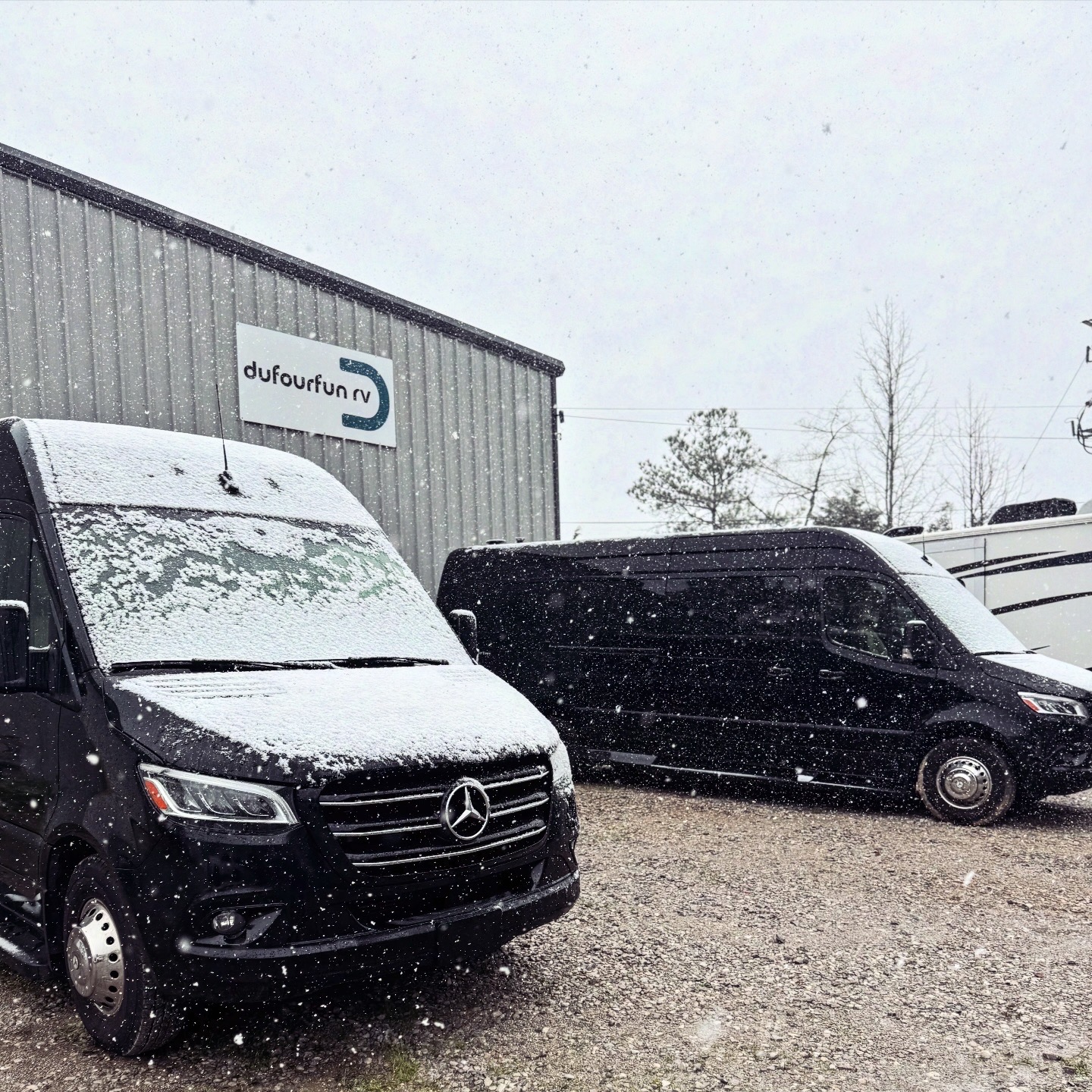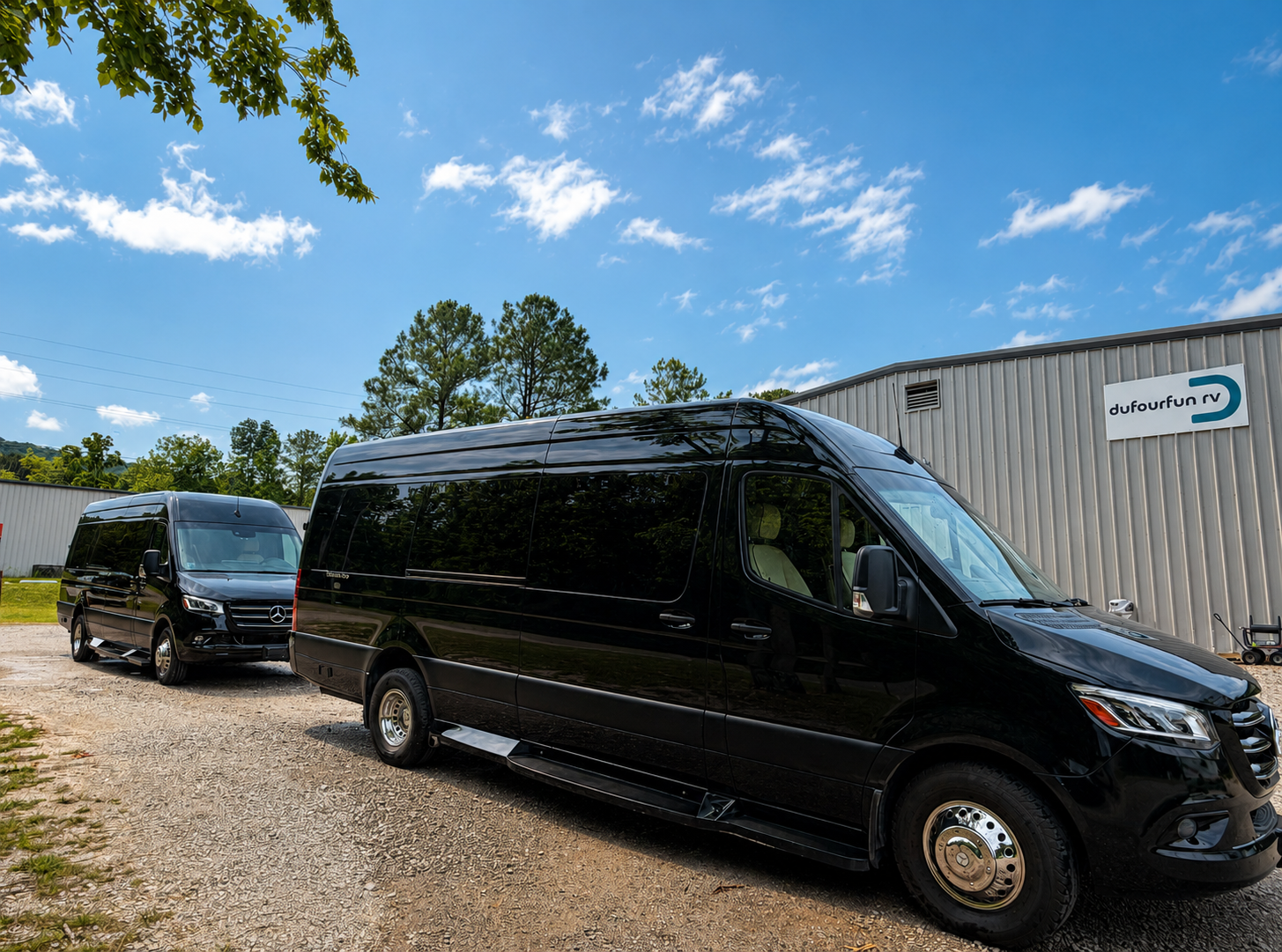
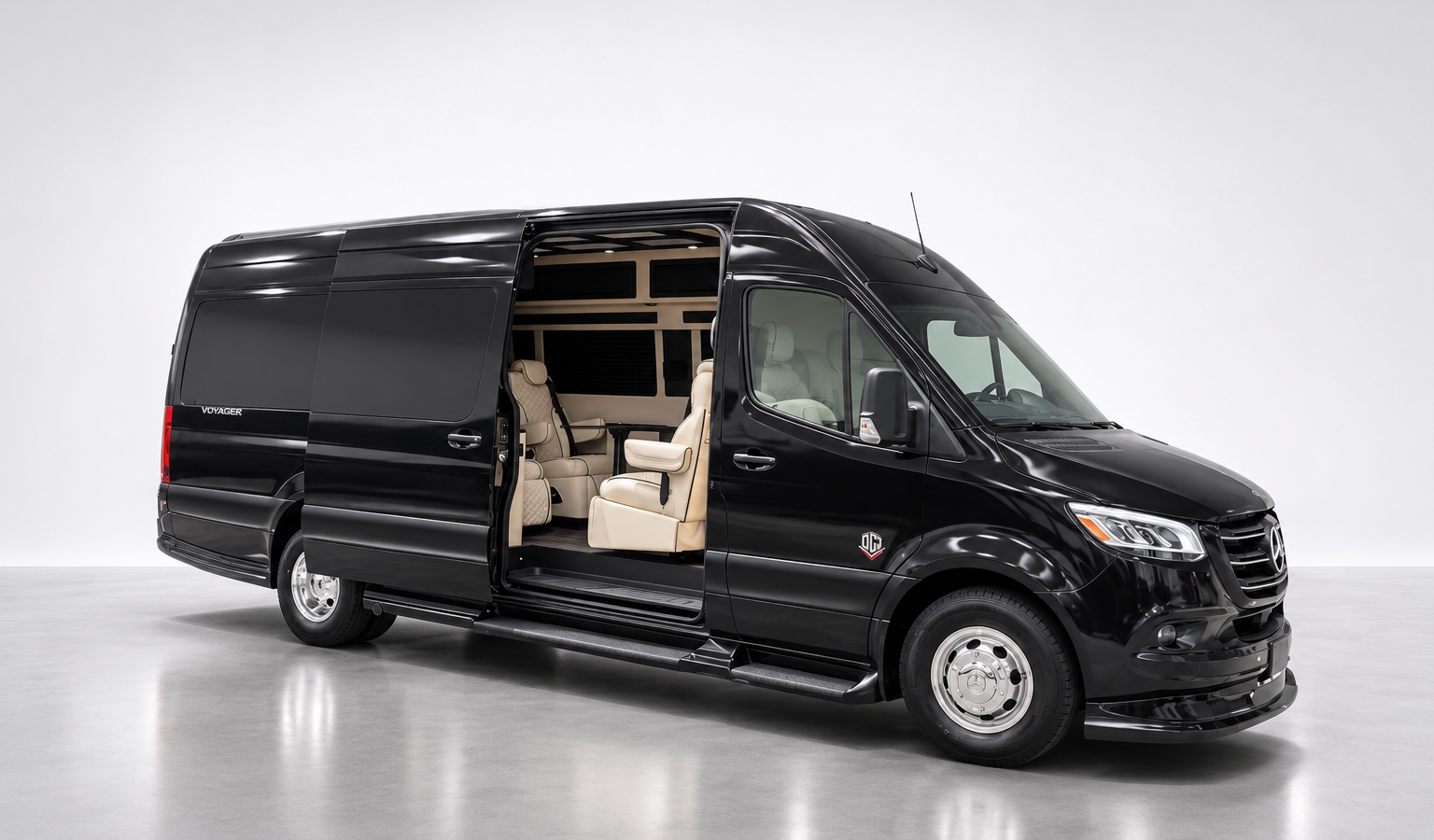
The rear wheels under a luxury Sprinter are easy to notice and easy to misunderstand. A wide rear tire, a dual-wheel setup or a polished wheel cover can look like a simple styling choice. It is actually part of a larger chassis, axle, tire, load and service decision.
For buyers, the safest approach is documentation first. Do not identify the chassis or its capacity from a photo, model badge or salesperson's shorthand.
Mercedes-Benz's current Sprinter Body and Equipment Guidelines portal lists technical limits for upfitters. The 2025 guideline's model overview shows the 2500 with single tires, and the 3500 and 3500XD with super-single and dual-rear-wheel configurations. That does not mean every body length, drivetrain or model year offers every combination.
Start with four exact records
Before comparing wheel layouts, collect:
- The full VIN
- The Mercedes-Benz certification and identification labels
- The final-stage manufacturer's label and build documents
- A current scale ticket with front, rear and total weight
Use NHTSA's official VIN decoder as one check, then compare it with the physical labels and seller documents. A decoded chassis description is not a substitute for the completed vehicle's weight and certification information.
What the names mean
A conventional dual-rear-wheel configuration places two tires at each rear side. A super-single configuration uses one wider tire at each rear side. Both can appear on certain heavier Sprinter chassis, but the exact ratings, tire sizes, wheel hardware and approved pressures belong to the specific vehicle.
Do not use a visible wheel cover to decide. Conversion bodywork and decorative trim can make the wheel arrangement harder to see.
The buyer comparison
| Decision area | Super single | Dual rear wheels | Best verification |
|---|---|---|---|
| Rear tires | One wide tire per side | Two tires per side | Tire sidewall, wheel and vehicle labels |
| Chassis availability | Vehicle and model-year specific | Vehicle and model-year specific | VIN, build sheet and Mercedes data |
| Load capacity | Never infer from appearance | Never infer from appearance | GVWR, GAWR and scale ticket |
| Spare strategy | May require a specific emergency plan | Requires exact dual-compatible plan | Owner manual and written roadside plan |
| Tire service | Confirm local availability and equipment | Confirm dual-wheel access and torque procedure | Tire shop and Mercedes service confirmation |
| Conversion packaging | Check wheelhouse, bodywork and systems | Check wheelhouse, bodywork and systems | Final-stage build records |
| Purchase question | What exact tire and wheel package is installed? | What exact tire and wheel package is installed? | Written answer tied to VIN |
The table does not rank one configuration as universally better. The correct choice depends on the certified vehicle, completed weight, passenger load, luggage, intended use and access to qualified service.
Weight the completed van, not the brochure
The 2025 Sprinter Body and Equipment Guidelines PDF warns that permissible axle loads must be observed and says overloading can affect vehicle systems and damage suspension or structural components.
A luxury conversion adds seats, cabinetry, batteries, electronics, climate equipment, tanks and finishes. Brochure payload for an unfinished cargo van does not tell you how much capacity remains after that work.
Ask for a scale ticket showing:
- Front axle weight
- Rear axle weight
- Total vehicle weight
- Fuel and fluid condition during weighing
- Whether water tanks, luggage and passengers were included
Then compare the measurements with the exact vehicle labels. Use our payload guide to account for people and bags.
Build a tire and roadside plan
The Mercedes-Benz owner-manual library should be used for the exact model year. Tire pressures, spare limitations and procedures can differ by installed equipment.
Before purchase, get written answers to these questions:
- What are the exact tire size, load index and speed rating?
- What cold pressures are listed on the vehicle placard?
- Is the wheel setup original, approved or modified?
- Is a spare included, and what are its speed and distance limits?
- Can the intended tire shop service and balance this configuration?
- What is the wheel-nut torque procedure?
- What roadside provider can handle the van's height, length and weight?
- Are decorative covers or body panels removed for service?
Do not promise that a super single is easier, quieter or more efficient, or that dual rear wheels automatically create more usable payload. Those outcomes depend on the exact chassis, tires, conversion and loading.
Inspect the body around the wheels
A finished conversion may place cabinetry, plumbing, batteries, air lines, electrical runs or exterior trim near the wheelhouse. Inspect both sides for rubbing, damaged liners, loose trim and unauthorized modifications.
If the van has air suspension or other suspension changes, obtain the installer records and confirm compatibility with the chassis and tire package. The wheel decision cannot be separated from the rest of the completed build.
The right purchase conclusion
Choose the vehicle with the clearest records, acceptable scale results and a service plan you can actually use. A polished wheel is not evidence of remaining capacity. A chassis badge is not a scale ticket.
Image credit
Original source: Dufourfun Vans inventory image. Creator: Dufourfun Vans; no individual photographer is documented. Usage basis: business-owned image stored in Dufourfun's site-controlled media library. The hero uses the storage service's center-crop rendition. The visible wheel is illustrative only and does not establish the vehicle's certified tire, axle or weight configuration.