
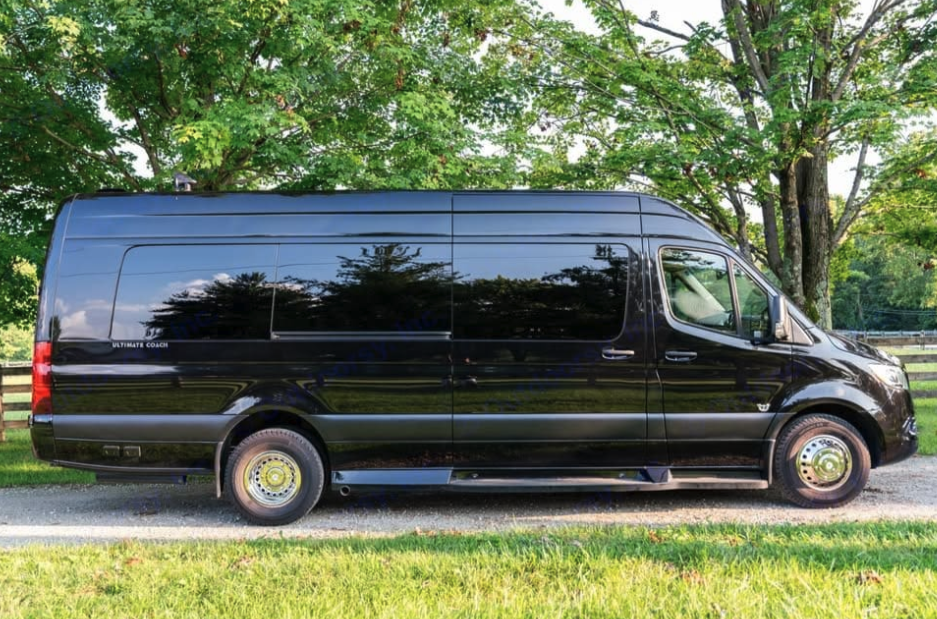
Luxury seating, a bathroom, large batteries, extra air conditioning and premium cabinetry all add value to a Sprinter conversion. They also add weight. That means the payload shown for a factory van is not automatically the amount a finished luxury van can carry.
The correct buying question is: How much capacity remains after this exact conversion is fueled and ready for travel?
Mercedes-Benz publishes different payload figures across its current 2026 Sprinter Passenger Van configurations. The figures vary with wheelbase, roof, drivetrain and chassis. A converter then adds seats, walls, flooring, electronics, tanks, appliances and other equipment. Buyers need the completed vehicle’s labels and an actual scale weight—not a number copied from a different Sprinter.
Four weight terms buyers should know
| Term | What it means | Why it matters |
|---|---|---|
| GVWR | Maximum rated loaded weight of the vehicle | The van should not exceed it |
| GAWR | Maximum rated weight for an individual axle | One axle can be overloaded even if total weight is below GVWR |
| Unloaded or curb weight | Vehicle weight under the definition used by the manufacturer | The completed conversion may weigh much more than the base van |
| Occupant and cargo capacity | Weight available for people and everything they bring | This is the practical trip-planning number |
NHTSA’s vehicle-capacity label guidance explains that the driver-side placard states: “The combined weight of occupants and cargo should never exceed” a specified amount. NHTSA also explains that vehicle capacity cannot exceed the difference between GVWR and unloaded vehicle weight.
Why the factory payload is only a starting point
A current Sprinter specification can help identify the chassis family, but it does not account for every completed conversion. Common additions include:
- Powered captain’s chairs and seat tracks.
- Sofas, partitions and cabinetry.
- House batteries, inverter and charger.
- Generator and fuel system.
- Rear air conditioning and ductwork.
- Bathroom, plumbing and holding tanks.
- Refrigerators, microwaves, televisions and audio systems.
- Running boards, wheels, racks and exterior accessories.
Each addition reduces the capacity available for people and luggage unless the completed vehicle was rated and labeled around that final weight.
Mercedes provides Sprinter Body and Equipment Guidelines covering technical specifications and limitations for companies modifying the van. A buyer does not need to engineer the conversion, but should confirm that the finished vehicle has the expected certification and loading labels. Our guide to luxury van conversion labels shows what to inspect.
A practical payload calculation
Start with the finished vehicle’s stated occupant-and-cargo capacity, if present. Then subtract everything loaded for the trip:
- Driver and passengers at their actual weights.
- Suitcases, coolers and sports equipment.
- Water carried in onboard tanks.
- Food, tools, bedding and supplies.
- Hitch-mounted boxes or accessories that load the van.
- Any equipment added after the capacity label was issued.
Example—not a specification for your van
Assume a finished luxury van’s valid label allows 1,700 pounds of occupants and cargo.
| Trip load | Example weight |
|---|---|
| Eight occupants | 1,280 lb |
| Luggage | 240 lb |
| Water and supplies | 130 lb |
| Hitch-mounted carrier and contents | 100 lb |
| Total | 1,750 lb |
That example would be 50 pounds over the stated capacity. The solution is to reduce the load, not to assume premium tires or air suspension create more legal capacity.
Use actual weights for your group. The example is only a method.
Count passengers and payload separately
A van may have eight, ten or more labeled seating positions, but the number of seats does not promise enough remaining payload for a full-size adult and a suitcase in every one.
Before buying, request:
- A photo of the completed vehicle’s certification label.
- A photo of the tire-and-loading or occupant-and-cargo label.
- The converter’s floor plan and stated seating capacity.
- An actual scale ticket for the van in travel-ready condition.
- Individual front- and rear-axle weights.
If the seller cannot provide a scale ticket, make weighing the van part of the pre-purchase inspection.
Why axle weights matter
Total weight can look acceptable while the rear axle is overloaded. Luxury vans concentrate substantial mass behind the driver: seats, bathroom, water tanks, batteries, generator, galley, cargo and sometimes hitch storage.
Weigh the van with its typical fuel level and, ideally, a realistic passenger and cargo load. Obtain separate front- and rear-axle readings. Compare each with the GAWR printed on the finished certification label.
Also check the installed tires’ size, load rating, condition and pressure instructions. Our luxury van tire inspection guide explains why a tire’s sidewall maximum is not a replacement for the vehicle manufacturer’s loading guidance.
Water is cargo
A bathroom or wet bar changes the calculation twice: the plumbing equipment adds permanent conversion weight, and carried water adds trip weight.
Water weighs roughly 8.3 pounds per U.S. gallon. A 20-gallon fresh-water load is therefore about 166 pounds before counting anything in gray or black tanks. Do not assume the seller’s “dry” weight includes full water, supplies or passengers.
Ask where each tank sits. A rear-mounted tank affects the rear axle differently from a centrally mounted tank.
Hitch accessories still load the van
A rear cargo carrier, mobility device, bicycle rack or trailer tongue places load on the vehicle. Even when an accessory has its own rating, the van must remain within its GVWR, axle ratings and hitch limits.
Do not subtract only the item’s scale weight from payload and ignore leverage or axle distribution. For a significant rear accessory, have the loaded axle weights checked. If towing is part of the plan, also read our guide to towing with a luxury Sprinter.
Used-van red flags
Pause the purchase when:
- The chassis label is present but the final-stage or alterer documentation is missing or inconsistent.
- The seller quotes a factory payload without knowing the finished weight.
- A high-seat-count van has very little documented occupant-and-cargo capacity.
- The rear appears to sag or tires show uneven load-related wear.
- Heavy equipment was added after the loading label was created.
- Scale weights exceed GVWR or either GAWR.
- The VIN, model designation and conversion documents do not agree.
A heavier-duty chassis can provide more margin, but model names alone are not enough. Compare the exact configurations in our Sprinter 2500 vs. 3500XD guide.
The buyer’s rule
Treat payload as a measurable fact. Verify the finished labels, weigh the van by axle and calculate a realistic trip load before signing.
When reviewing our luxury vans for sale, ask for the specific vehicle’s seating documentation, conversion equipment and weight information. A comfortable van should carry your group without turning every suitcase into a guessing game.