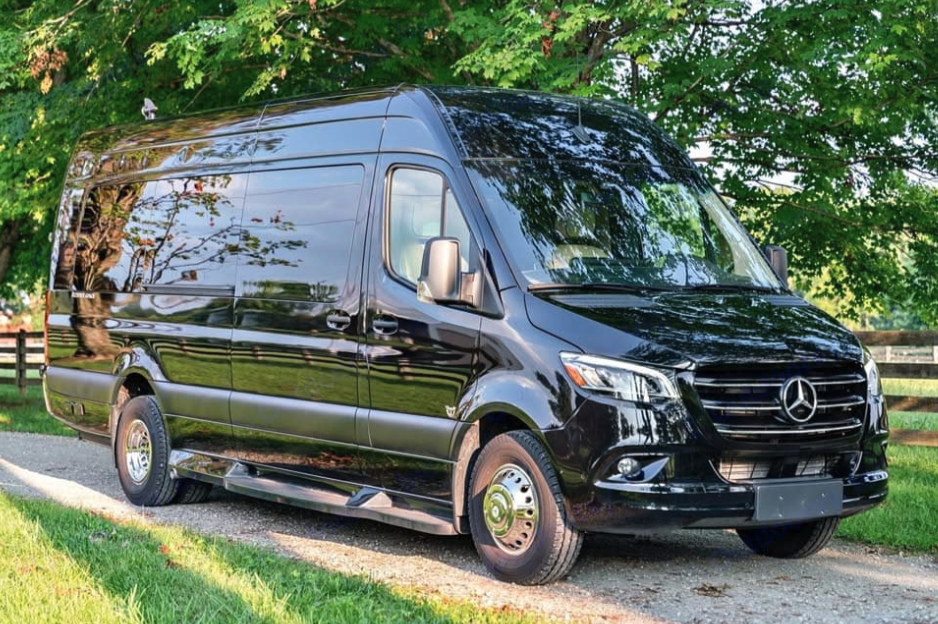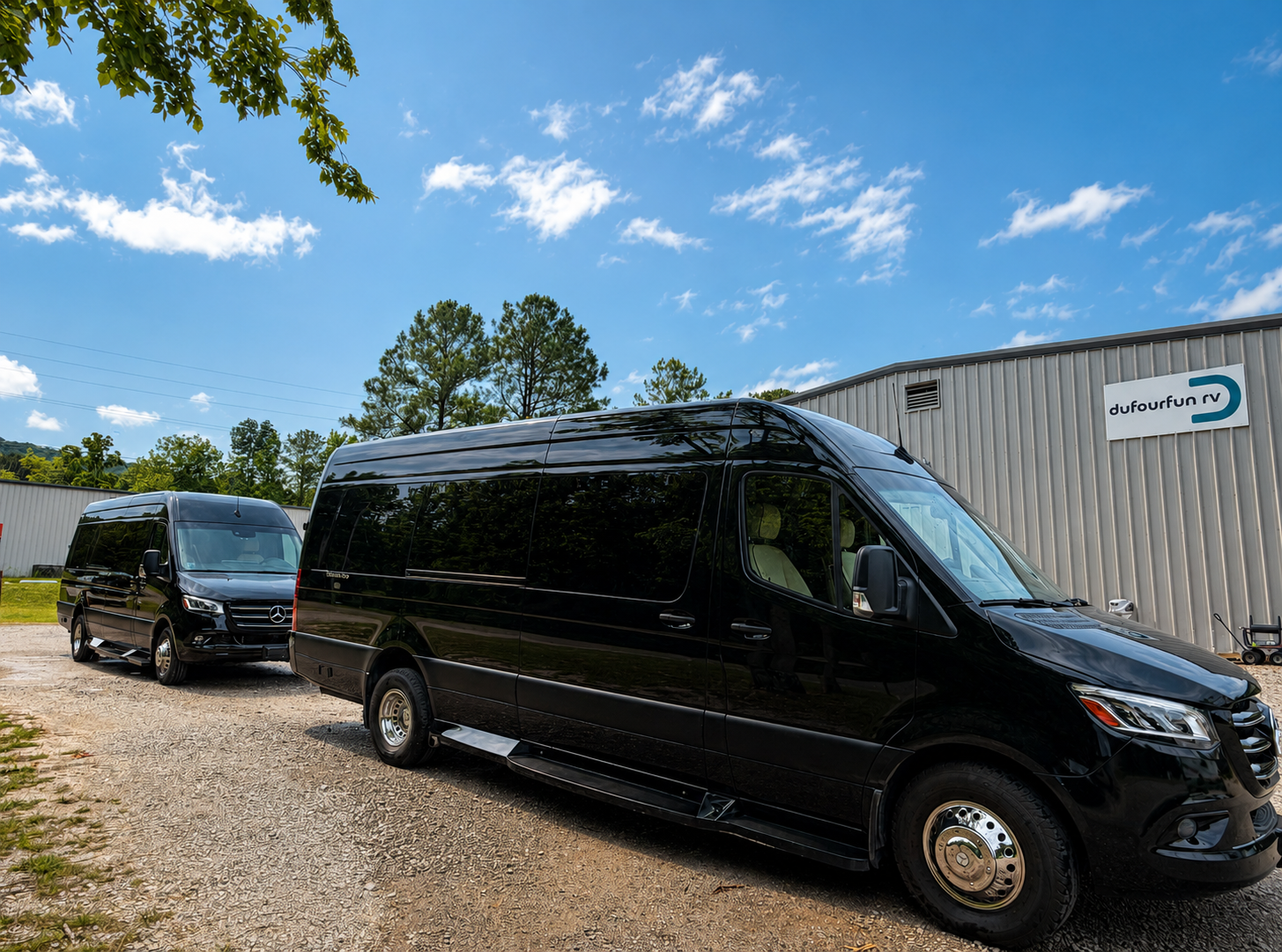
L.A. West and Midwest Automotive Designs both build on the Mercedes-Benz Sprinter platform, but their current product pages point toward different missions.
L.A. West emphasizes upscale livery, executive shuttle, portal-door, sliding-door and paratransit configurations. Midwest’s Luxe Cruiser emphasizes personal luxury travel with an open cabin, premium seating, bathroom, galley and entertainment equipment.
That makes this comparison less about which badge is “better” and more about whether the finished van was designed for your actual use.
The buyer-first comparison
| Priority | L.A. West tendency | Midwest Luxe Cruiser tendency |
|---|---|---|
| Core use | Executive transport, livery, shuttle and fleet | Private luxury travel, entertainment and road trips |
| Entry door | Portal-door and sliding-door series available | Conventional Sprinter-based luxury layouts |
| Seating | Configuration-dependent, including shuttle-focused layouts | Current Luxe Cruiser page lists multiple eight-to-eleven-seat layouts |
| Bathroom/galley | Build and series dependent | Toilet, sink, refrigerator and microwave highlighted on current page |
| Accessibility | Paratransit models offered | Verify model-specific equipment; not the primary Luxe Cruiser positioning |
| Purchase test | Passenger flow, luggage, door duty cycle and fleet service | Living space, bathroom, power, HVAC and passenger comfort |
These are current lineup tendencies, not specifications for every used van. Floor plans, equipment and certifications change by model year and order.
Where L.A. West is different
L.A. West’s official Mercedes-Benz Sprinter lineup focuses on three branches:
- European-style portal-door configurations.
- Conventional sliding-door configurations.
- Paratransit configurations with accessibility equipment.
The company describes the lineup around upscale livery and shuttle transportation. Its portal-door system is promoted for driver-controlled operation and passenger flow, while its stadium-seating options are intended to preserve cargo capacity.
For a buyer moving hotel guests, executives, wedding parties or commercial groups, those design priorities may matter more than a sofa bed or residential-style galley.
L.A. West also identifies itself as a Forest River Bus & Van division and a Mercedes-Benz Expert Upfitter on its company overview. That manufacturer status is useful context, but a used buyer still needs the actual vehicle’s labels, build documents and maintenance history.
Where the Midwest Luxe Cruiser is different
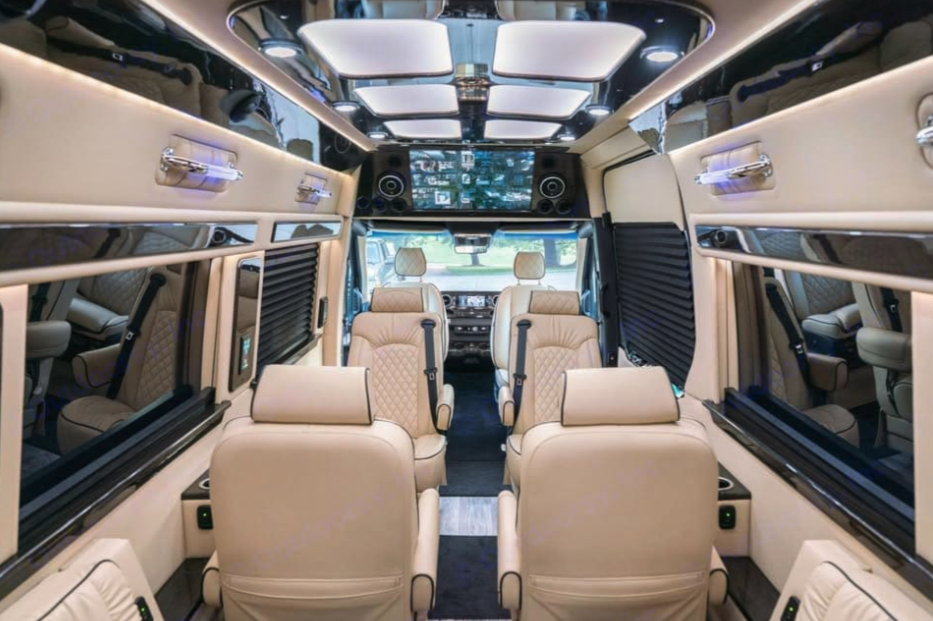
Midwest describes the Luxe Cruiser as an open-floor-plan travel vehicle with premium seating. Its current page highlights a porcelain toilet, sink, refrigerator, microwave, sound system, televisions and independent rear heating and air conditioning. Lithium and air-suspension packages are listed as options.
The page currently shows several 3500XD 170-inch extended floor plans with different seating capacities:
- S5: 11 total seats.
- D4: eight total seats.
- D6 and partition variants: ten total seats.
- LD4: ten total seats.
Those numbers describe the current published floor plans. They do not establish the seating in a used vehicle. Count the labeled belt positions and verify the converter build sheet.
If you are also considering Ultimate Toys, read our Ultimate Coach vs. Midwest Luxe Cruiser comparison.
1. Decide whether the van is transportation-first or leisure-first
A transportation-first buyer should prioritize:
- Safe and efficient passenger entry.
- Aisle width and movement through the cabin.
- Luggage capacity with every seat occupied.
- Door reliability under repeated daily use.
- Easy-to-clean finishes.
- Fleet service access.
- Driver visibility and passenger communication.
- Commercial insurance eligibility.
A leisure-first buyer may prioritize:
- Reclining captain’s chairs.
- Entertainment screens and audio.
- Bathroom privacy.
- Refrigerator and microwave.
- Sofa or sleeping conversion.
- Parked electrical capacity.
- Rear climate control.
- Personal storage.
Many vans can do some of both. The mistake is buying a beautiful cabin that performs poorly on the trips you make every week.
2. Compare passenger flow
The entry system is one of the largest practical differences. On an L.A. West candidate with a portal door, demonstrate opening, closing, obstruction response and emergency operation. Ask who services the mechanism and whether parts are available near you.
On any conventional sliding-door van, check track alignment, powered operation, manual override, step deployment and the clearance between the door and captain’s chairs.
Load the van with representative passengers. Confirm that the first seat does not block the aisle and that bags do not obstruct an exit.
3. Measure luggage with every seat in use
Manufacturer photos usually show an uncluttered cabin. Real trips include suitcases, golf bags, strollers, coolers or mobility devices.
For a shuttle-focused van, inspect rear cargo height, tie-downs and access with the last row occupied. L.A. West specifically promotes cargo capacity with certain stadium-seating arrangements on its Sprinter page, but capacity still depends on the exact floor plan.
For a Luxe Cruiser, determine how much rear volume remains after bathroom, galley, sofa and tanks. Confirm whether luggage interferes with the rear HVAC, electrical panels or emergency access.
Then calculate passenger and cargo weight using our luxury Sprinter payload guide.
4. Inspect seats and certification
A premium seat must be more than comfortable. Check:
- Completed-vehicle seating capacity.
- Seat-belt labels and condition.
- Seat bases, tracks and locking mechanisms.
- Access to emergency exits.
- Final-stage manufacturer or alterer label.
- Tire-and-loading information.
- Any wheelchair securement and occupant-restraint documentation.
Our guide to luxury van conversion labels explains why the Mercedes chassis label alone may not tell the whole conversion story.
Mercedes publishes Sprinter Body and Equipment Guidelines for modifications, but the buyer should not assume compliance from appearance. Use records and an inspection.
5. Compare climate and electrical systems
A shuttle that runs during passenger service may rely heavily on engine-driven rear climate equipment. A leisure van may need rear air conditioning, outlets, refrigerator and entertainment while parked.
For each candidate, ask:
- Which systems operate with the engine running?
- Which operate from the house battery?
- Which require shore power or a generator?
- How long can the battery support the expected load?
- Who manufactured the rear HVAC?
- Where are filters, breakers and service panels?
- Are manuals and wiring diagrams present?
Do not accept “it has an inverter” as proof that the air conditioner can run all night. Test each power mode.
6. Used-van inspection priorities
L.A. West candidate
- Cycle portal or sliding door repeatedly.
- Inspect steps, interlocks and emergency release.
- Verify passenger count and commercial-use history.
- Look for high-cycle wear on seats, doors and entry flooring.
- Check rear cargo hardware and luggage damage.
- Review fleet HVAC maintenance.
- Confirm accessibility equipment, if present.
Midwest Luxe Cruiser candidate
- Test toilet, sink, tanks and leaks.
- Run rear HVAC in every supported power mode.
- Test inverter, batteries and charging.
- Operate every chair, sofa, shade, screen and controller.
- Confirm air-suspension or lithium options by model and invoice.
- Inspect roof and window penetrations.
- Measure sleeping and luggage space.
For either, combine the converter inspection with our used luxury Sprinter checklist.
7. Plan the service network
Ask the seller to separate Mercedes chassis components from conversion components. Then identify who will service:
- Engine, transmission and factory electronics.
- Passenger door system.
- Seats and restraints.
- Rear climate control.
- House electrical system.
- Plumbing and tanks.
- Suspension upgrades.
- Entertainment and control systems.
A feature is less valuable when no nearby shop can diagnose it or the model-specific manual is missing.
The verdict
Start with L.A. West when passenger movement, livery, shuttle or accessible transport is the main mission. Start with the Midwest Luxe Cruiser when the goal is a private luxury travel cabin with bathroom, galley and entertainment features.
Then ignore the generalization and inspect the exact van. A specific floor plan, condition and paper trail should decide the purchase.
Browse our luxury vans for sale and ask us to help compare seating, cargo, power and conversion documents before you buy.