
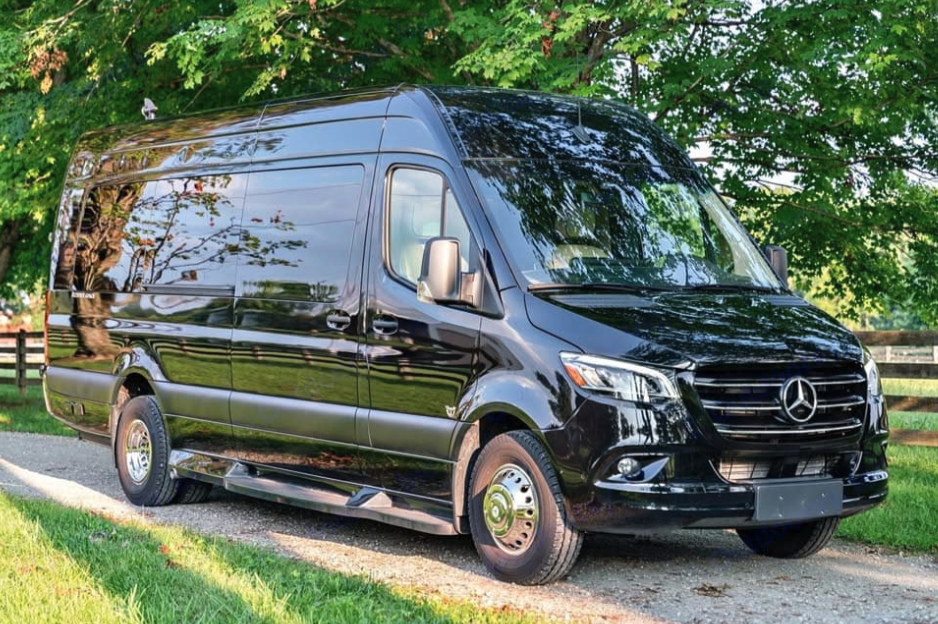
A luxury Sprinter can look like a private jet inside and still ride like a tall commercial van on broken pavement. Air suspension is often presented as the cure, but “air ride” can mean very different hardware.
Some systems replace major spring components and automatically control ride height. Others add helper air springs to support the existing suspension. Springs and upgraded dampers are another path. The right choice depends on the actual weight, axle loading, ride complaint and service plan.
The short answer
Air suspension can be worthwhile for a buyer who values passenger comfort, repeatable ride height or certain leveling functions and is willing to maintain a more complex system. It is not a substitute for correct chassis selection, legal payload, good tires or proper weight distribution.
VB-Airsuspension’s official Sprinter system overview distinguishes full-air systems, semi-air helper systems, reinforced springs and optimized shock absorbers. A listing that says only “air suspension” does not tell you which one is installed.
Know the four common approaches
| System type | What changes | Typical buyer goal | Main caution |
|---|---|---|---|
| Full air suspension | Replaces major original spring components with controlled air springs and related hardware | Maximum ride-height control and comfort potential | More complexity, cost and specialized service |
| Helper or semi-air system | Adds air support to the existing suspension | Reduce sag and manage changing loads | Not the same as full air; pressures and operation matter |
| Reinforced springs | Changes or supplements mechanical springs | Support a consistently heavy build | May make an unloaded ride firmer |
| Upgraded dampers | Changes shock control without adding payload | Reduce bounce, pitch or poor body control | Cannot correct every spring-rate or weight problem |
Those are categories, not a performance ranking. Installation design and the van’s weight can matter as much as the product name.
Start by defining the ride problem
Before buying an upgrade—or paying extra for a used van that has one—identify what you want to improve.
- Harsh impacts over sharp pavement joints.
- Repeated bouncing after a bump.
- Side-to-side rocking entering driveways.
- Rear sag when loaded.
- Nose dive during braking.
- Crosswind sensitivity.
- Difficulty leveling at a campsite or event.
- A tall first step when loading passengers.
A road test with realistic passenger and luggage weight is essential. A nearly empty demonstration drive may not reproduce the condition that bothers you.
Full air versus helper air
VB describes VB-FullAir 2C and 4C as fully automatic systems covering two or four wheels. Its VB-SemiAir products are helper systems intended to provide additional support under load.
For a buyer, the distinction affects:
- Which factory components remain.
- Whether ride height is controlled automatically.
- Whether the driver manually changes pressure.
- Whether a parked-leveling function is present.
- How many compressors, sensors and control components require service.
- Which shops can diagnose the system.
Ask for a model number and installation invoice. Do not infer “four-corner full air” from a dashboard controller or an exterior badge.
Air suspension does not erase weight limits
A van that sags may be overloaded, poorly distributed or simply matched to the wrong suspension. Raising the rear with air pressure does not prove that the axle, tires or vehicle are within their ratings.
NHTSA’s capacity-label guidance explains the relationship among GVWR, unloaded vehicle weight and occupant-and-cargo capacity. Unless the responsible manufacturer or alterer has lawfully changed and documented the ratings, use the numbers on the valid completed-vehicle labels.
Review our luxury Sprinter payload guide and weigh the van by axle. Fix an overload by reducing or redistributing weight—not by hiding the sag.
Installation quality is critical
Mercedes publishes Sprinter Body and Equipment Guidelines for companies modifying the vehicle. The guidelines include technical specifications and limitations that apply to upfit work.
A pre-purchase inspection should examine:
- Air-spring clearance through suspension travel.
- Brackets, fasteners and evidence of contact or movement.
- Air-line routing near heat, sharp edges and moving parts.
- Compressor mounting, wiring and fusing.
- Ride-height sensors and linkages.
- Moisture, corrosion or contamination.
- Warning messages and controller operation.
- Alignment and tire wear.
- Service access around tanks, batteries and plumbing.
Luxury conversions can leave limited underbody space. Confirm that the suspension installation and the generator, tanks, exhaust, steps and wiring do not interfere with one another.
How to road-test an air-equipped van
Drive the exact van, not merely another vehicle with the same brand of suspension.
- Begin with the system at its normal ride setting.
- Verify there are no suspension warnings after startup.
- Drive smooth pavement to establish baseline noise and vibration.
- Cross moderate expansion joints and broken pavement at safe speeds.
- Enter an angled driveway slowly to feel body movement.
- Brake progressively and note pitch or instability.
- Listen for the compressor cycling unusually often.
- Park, measure ride height and recheck it after the demonstration.
- Demonstrate any raise, lower or leveling mode exactly as the manual permits.
Do not crawl under a van supported only by its air system. Inspection underneath belongs on proper shop equipment.
Questions about parked leveling
Some buyers want the van to level itself at a campsite, tailgate or mobile office location. Confirm what the specific system can do:
- Does it level automatically or only raise and lower?
- What surface slope is within its operating range?
- Must the engine or ignition be on?
- How much ground clearance remains?
- Can doors, steps and plumbing operate in that position?
- Is there an emergency reset or manual procedure?
- What happens if the compressor or controller fails?
A leveling function should be demonstrated with the correct manual present.
Used-system records to request
Ask for:
- Original product invoice and installer name.
- Exact kit and controller model.
- Installation date and vehicle mileage.
- Alignment and calibration records.
- Parts-and-labor warranty terms.
- Maintenance and repair invoices.
- Owner’s manual and emergency procedure.
- Any chassis warranty correspondence.
Then call a shop that services that exact system and ask whether parts and diagnostics are readily available in your travel area.
Warranty and recall questions
Aftermarket coverage, converter coverage and Mercedes chassis coverage may come from different companies. Get the answer in writing for the exact VIN and component. A warranty can exclude a failure caused by an unrelated modification, but the details depend on the documents and diagnosis.
Use the official NHTSA recall lookup for open safety recalls. A clean recall result does not certify the aftermarket suspension and does not replace inspection.
Is it worth it?
Air suspension earns its cost when the buyer can feel and use a meaningful improvement, the van remains within all ratings, and qualified service is available. It is poor value when it masks overloading, lacks documentation or adds complexity without solving the actual complaint.
Compare the ride against a well-sorted conventional-suspension van on the same road. Also compare chassis capacity using our Sprinter 2500 vs. 3500XD guide.
When shopping our luxury vans for sale, ask whether the van has full air, helper air, upgraded springs or only different shocks—and request the installation records before valuing the upgrade.