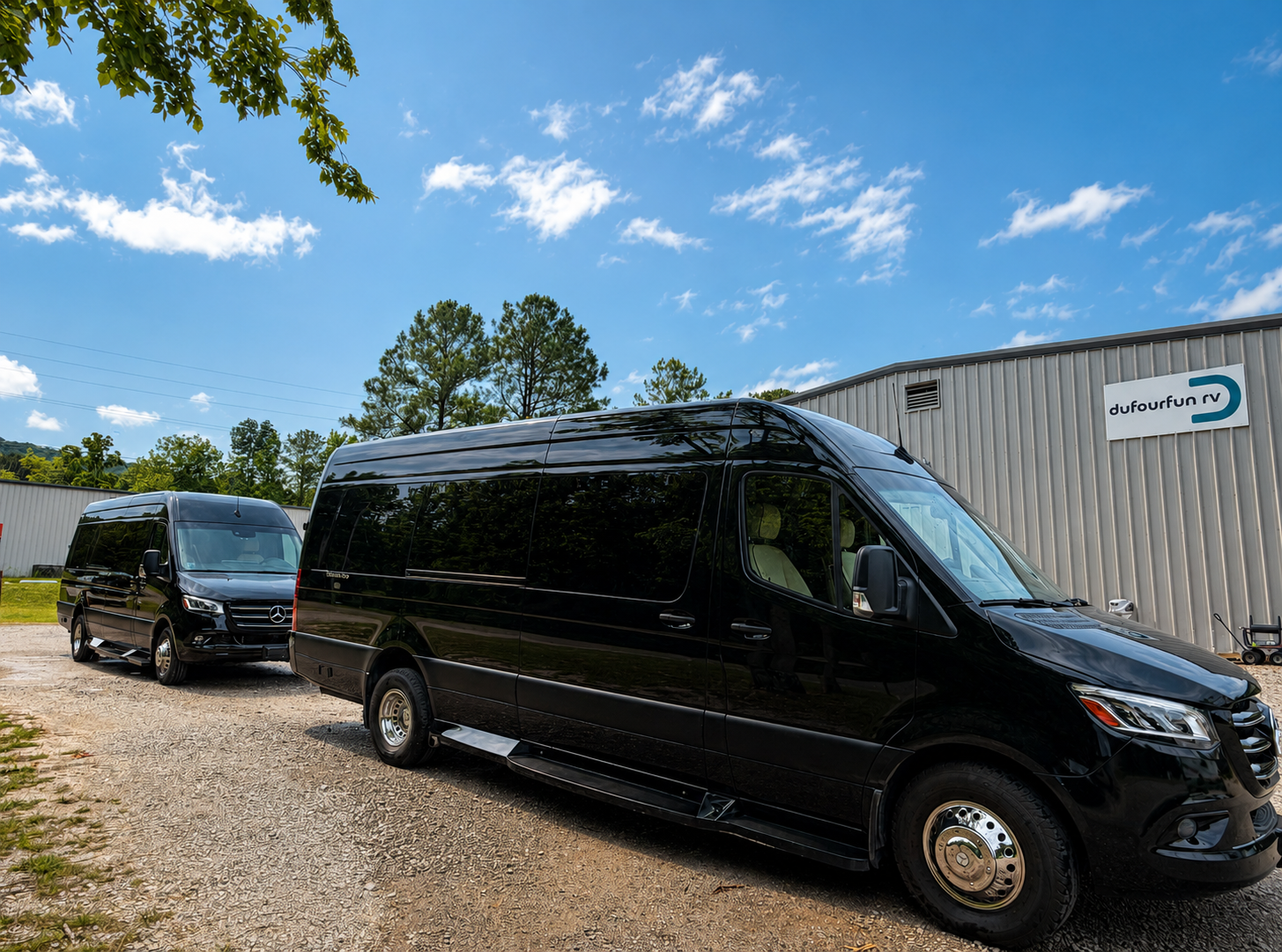
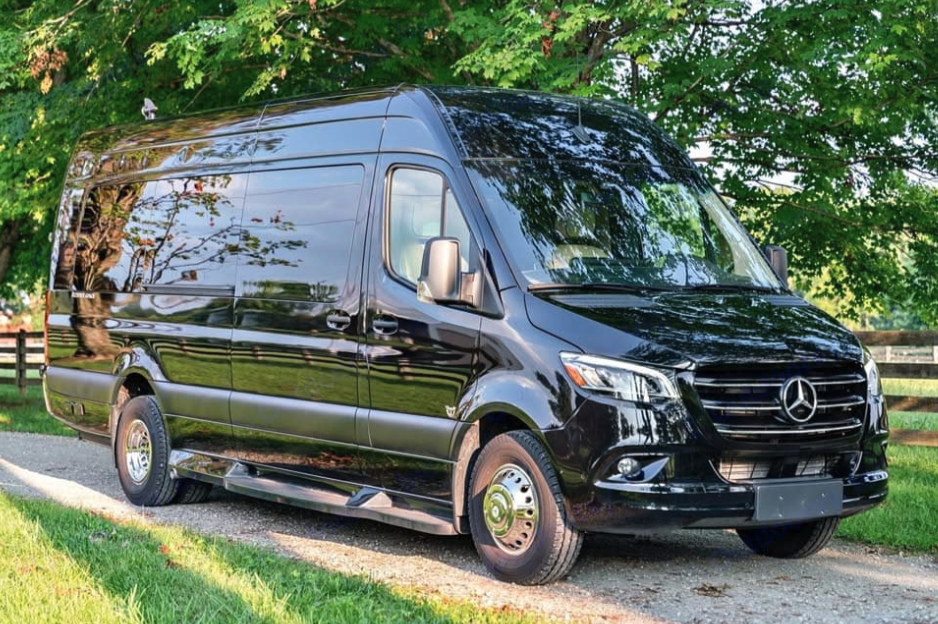
Choosing between a Mercedes-Benz Sprinter and a Ford Transit is not simply a badge decision. In a finished luxury van, the upfitter, seating installation, electrical system, weight, maintenance history and floor plan can matter more than the chassis underneath.
The practical approach is to choose the finished van that fits your passengers and travel first. Use the platform as a tiebreaker only after comparing two genuinely similar conversions.
The current platform choices
As of September 8, 2026, Mercedes-Benz markets the Sprinter with four-cylinder diesel power and rear-wheel or all-wheel drive. Its current cargo-van page lists 144-inch and 170-inch wheelbase configurations, including an extended-body option.
Ford’s 2026 Transit order guide describes gas and electric choices, rear-wheel and all-wheel drive, two wheelbases, three roof heights and three overall lengths. Not every combination is available in every body style, and an upfitter may work with only part of the factory catalog.
| Buyer question | Mercedes-Benz Sprinter | Ford Transit |
|---|---|---|
| Current combustion-engine emphasis | Four-cylinder diesel | Gasoline |
| Driven-wheel choices | Rear-wheel drive or AWD | Rear-wheel drive or AWD |
| Factory size strategy | 144- and 170-inch wheelbases, plus extended configuration | Two wheelbases, three roof heights and three lengths |
| Electric factory option | Verify current U.S. availability and upfit compatibility | E-Transit is in Ford’s current commercial lineup |
| Best reason to shortlist | The completed Sprinter fits your needs and has good support | The completed Transit fits your needs and has good support |
These are factory-platform summaries, not promises about a converted vehicle. An upfit changes overall height, curb weight, passenger capacity and the service path.
Start with the finished conversion
Two vans on the same chassis can feel entirely different. One may have airline-style captain’s chairs, a rear lavatory and a modest house battery. Another may trade passenger capacity for a bed, shower, larger tanks and off-grid equipment.
Confirm:
- Legal seating capacity and restraint equipment
- Comfortable seating after everyone’s luggage is loaded
- Whether the rear is a lounge, bed, bathroom or cargo area
- Installed electrical loads and how they run when parked
- Actual exterior height after roof equipment
- Loaded weight and remaining carrying capacity
- The companies that installed and support the conversion
If a seller cannot document the seats, wiring, plumbing and cabinetry, the platform name does not remove the risk.
Diesel versus gasoline changes the ownership plan
A current diesel Sprinter and gasoline Transit ask different things of an owner. Instead of trusting general claims about operating cost, price the exact routine services and likely wear items near you. Ask a local chassis dealer whether it services converted vans of the vehicle’s height and weight.
For a used Sprinter, review diesel-emissions system history, fluid specifications and stored warnings. For a used Transit, verify the engine and drivetrain, then review its service schedule and history. In either van, scan all modules and road-test it from a cold start.
The conversion contains systems the chassis dealer may not service. Get the upfitter’s parts and service contacts before purchase. You need a plan for both halves of the van.
Compare service access before the badge
Call the nearest likely chassis shop and conversion specialist. A map pin does not prove a shop can lift a tall, heavy converted van or diagnose its house system.
Ask whether the shop services the VIN, can accommodate the measured height and weight, accepts the upfit, and handles warranty work when chassis and conversion systems interact. A useful answer names the responsible provider for each system.
Measure and weigh the completed van
Factory dimensions exclude some conversion accessories. Measure the vehicle at its tallest point and bumper to bumper. Compare the numbers with your garage opening, driveway, parking space and usual service stops.
Wheelbase affects daily use too. A shorter van is generally easier to place, while a longer body can create room for more seating, a bathroom or luggage. Our 144 versus 170-inch Sprinter guide explains that tradeoff.
Do not compare payload with an empty cargo-van brochure figure. Seats, cabinetry, electronics, tanks and appliances add weight before passengers board. Use the completed vehicle’s labels and, ideally, a scale ticket. Add passengers, bags, water and accessories. If comparing Sprinter weight classes, read our Sprinter 2500 versus 3500XD guide.
Test-drive the completed van
Drive both candidates on comparable roads. Include highway merging, rough pavement, crosswinds, tight turns and parking. Ride in the rear while another qualified person drives. Listen for cabinet noise, check climate distribution and make sure every passenger can enter and exit comfortably.
Test steering effort, brake feel, camera views, wind noise, rear-seat comfort and noise from pumps, inverter, generator or roof A/C. A platform that looks better on paper can lose to a better-executed conversion on the road.
A simple buying rule
Choose the van that passes four gates:
- Layout: Everyone and everything fits on a real trip.
- Safety and capacity: Seating, restraints, tires and weight ratings are documented.
- Service: You know who supports the chassis and conversion.
- Condition: A qualified inspection finds no unacceptable problems.
Then use powertrain preference, brand familiarity and styling to break a close tie.
Before buying, work through our 25-point used luxury Sprinter inspection checklist. When you are ready to compare real configurations, browse Dufourfun Vans inventory and request details for the exact vehicle.