
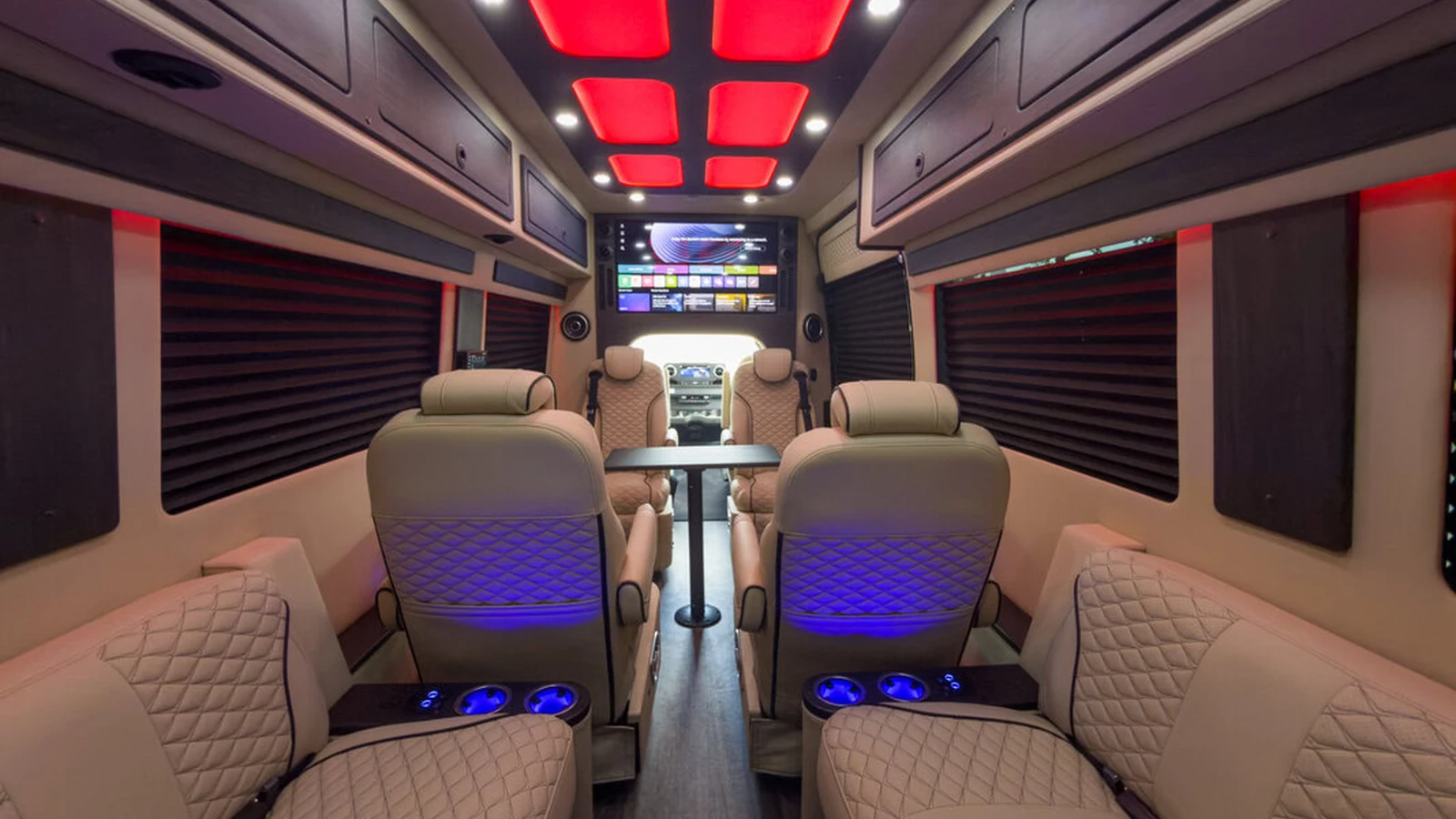
A beautiful lounge can feel very different after an hour on the road. Motion sickness varies by passenger, and the CDC's Yellow Book explains the common sensory-mismatch theory: signals from the inner ear, eyes, and body do not match the brain's expected pattern of movement.
That makes the passenger's view a useful part of a luxury van road test. It does not make any seat a cure. Behavioral measures are only partially effective, and this article is buyer guidance rather than medical advice.
Bring the passengers who will travel most
The driver may love a van that leaves a rear passenger uncomfortable. Invite the family members, friends, or clients who take repeated long trips and let each person try every row they are likely to use.
Keep the test safe and ordinary. The National Highway Traffic Safety Administration says seat belts should be buckled on every trip. Use installed belts correctly, park before changing seats, and use child restraints appropriate to each child. Test only seating orientations that are installed and legal for travel in that van.
Compare the view, not only the upholstery
| Passenger test | What to do | What to notice | Ownership question |
|---|---|---|---|
| Horizon and window view | Sit in each row on the same route | Whether the passenger can see outside without twisting or leaning | Are windows and seat positions useful for the people who need them? |
| Normal road motion | Include ordinary acceleration, braking, and curves | How secure and relaxed each passenger feels | Does the seating position suit repeated trips? |
| Screens off and on | Try a short interval with each | Whether watching a display changes comfort | Should a screen be optional rather than central to every seat? |
| Airflow and shades | Adjust available vents and shades while parked and during suitable road segments | Glare, fresh air on the face, and the ability to restore an outside view | Can each passenger change the environment without disturbing others? |
| Seating orientation | Try only installed, travel-legal positions | Whether facing direction changes the passenger's experience | Is a flexible layout genuinely useful for this group? |
The CDC Yellow Book reports that obtaining a horizon reference, avoiding reading or visual scanning, and limiting head movement can reduce motion sickness in some settings. These observations give you specific things to compare, not a promise about an individual traveler.
Run the same route twice
- Start with the usual driver. Use normal speeds and a representative mix of straight road, curves, stops, and highway travel. Avoid dramatic maneuvers.
- Let passengers note their experience. A simple recollection of each seat is enough: outside view, screen use, airflow, and overall comfort.
- Repeat with a second driver. Different driving styles can change acceleration and braking. This helps separate a seating preference from a driving preference.
- Change seats only while parked. Repeat a useful portion of the route so comparisons are not based on completely different road conditions.
- Take a break when needed. The purpose is to learn whether the van suits repeat ownership, not to push a passenger through discomfort.
The CDC traveler guide suggests measures including looking at the horizon, sitting in the front of a car or bus, and staying hydrated with water. Those general strategies can inform a test, but there is no single best seat for every luxury van or every person.
Turn the test into layout choices
Seat position and window placement matter because a premium chair with a blocked view may not serve a susceptible passenger as well as a simpler seat with a clear sightline. Shades are valuable for privacy and glare, but passengers should be able to adjust them when appropriate. Screens should not be the only entertainment choice.
Ride quality and suspension also deserve an ordinary-road evaluation, but no suspension should be presented as a medical solution. Compare how the van feels over real routes and ask what is installed on the exact vehicle. Storage matters too: water and small personal items should be reachable without repeated twisting or unnecessary movement.
For related buyer tests, see our guides to swivel-seat travel positions, screens and speakers from each seat, and headroom and aisle movement.
The tradeoff is personal, not theoretical
A rear lounge may be ideal for conversation on one trip and wrong for a particular passenger on another. A forward view can require giving up a preferred social seat. Large windows can bring light and glare along with a useful horizon reference. The right van leaves your group with practical choices rather than relying on a claim that one layout works for everyone.
If motion sickness is a recurring concern for a traveler, discuss that individual situation with a qualified healthcare professional. For the purchase itself, let repeated passenger experience guide the layout choice.
Image credit
Original stored source: OGV V-Cruise cabin inventory photo. Creator: Dufourfun Vans, with no named photographer on the business-owned source. Usage basis: business-owned inventory image. A 1600 by 900 center crop and upscale were made.