
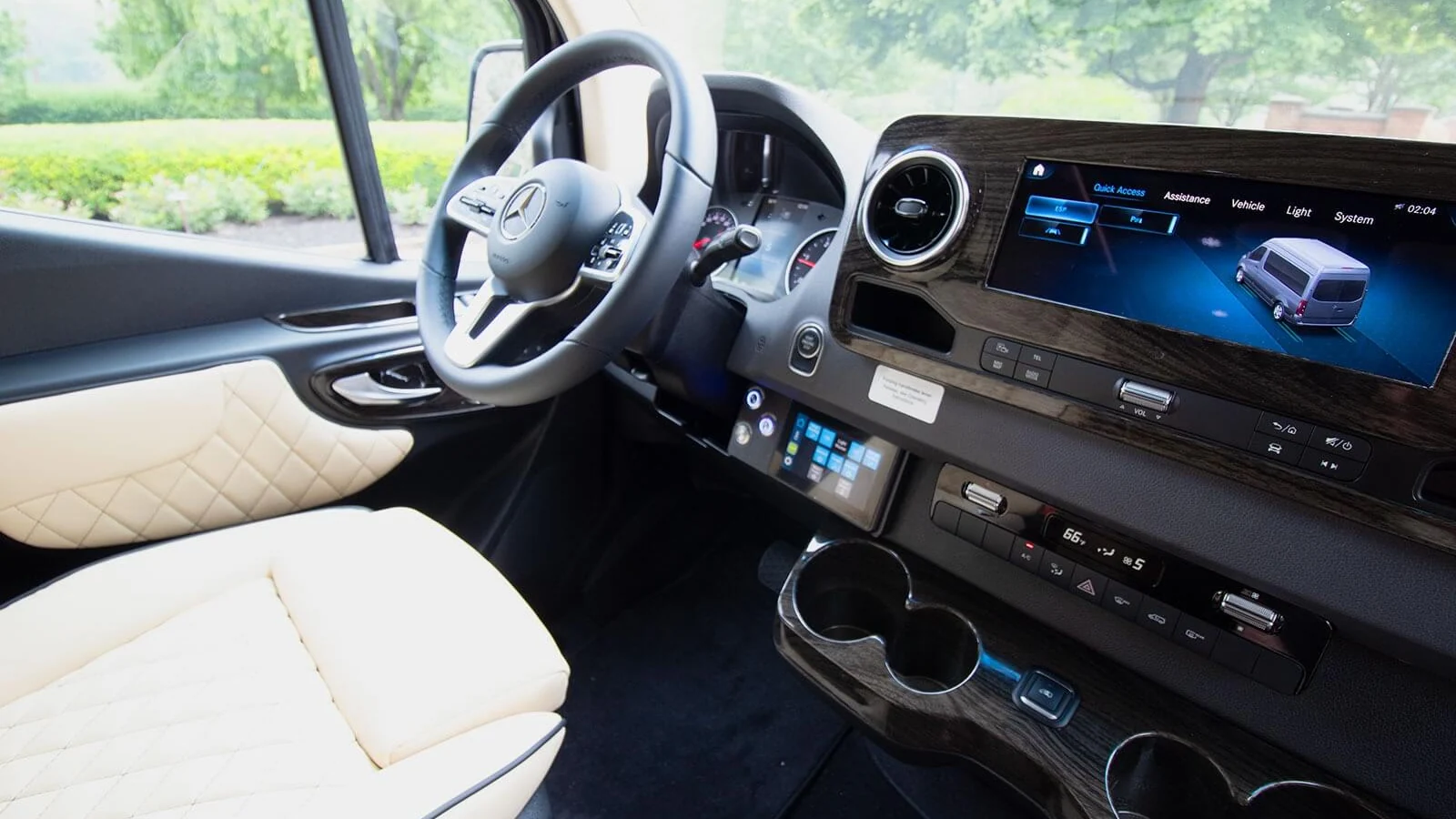
A swivel seat is appealing because it can turn a row of passengers into a conversation. But the useful part is not the feature name. It is whether the seat moves comfortably and leaves you somewhere you actually want to sit.
If you regularly use a van as a parked lounge, a quiet work spot or a place for family to gather, test that arrangement before you buy. A front cab seat and a rear captain's chair may use different mechanisms and instructions. Treat each seat as its own piece of equipment.
Begin with the exact van's instructions
Manufacturers do not describe every swivel in the same way. Midwest's construction overview describes swivel seating options. The Ultimate Coach page describes swivel seating among its business-travel features. Neither marketing description proves the equipment or operating procedure on a particular used van.
A clear model-specific example appears in the Grech Vacanza-ion 19 owner's manual, printed page 48. Its swivel-seat instructions call for a completely stationary vehicle with the parking brake engaged, clearance around the seat, operation of the release lever and a locked seat afterward. They also require the front seats to return to the forward-facing, locked position before driving. Those are instructions for that model, not a universal procedure for every converter.
The 2025 Mercedes-Benz Sprinter Operator's Manual, in its front-seat adjustment and rotation sections, likewise calls for proper seat adjustment and engagement before travel. Match the instructions to your chassis year and fitted equipment through the Mercedes manual index. Ask for the converter's manual and seating certification too, especially if the seat base has been changed.
A practical parked test in six steps
1. Identify which seats actually turn
Ask the seller to point out each swiveling seat and demonstrate its normal controls. Do not assume all captain's chairs rotate because one does. Establish whether the mechanism is manual or powered, what adjustments precede rotation and how the seat locks.
Start with the vehicle parked securely and follow its specific instructions. If a control is stiff or unexplained, pause for a demonstration rather than forcing it.
2. Follow the full permitted arc
Watch the seat as it moves through its intended range. Check the steering wheel, door trim, console, armrests and the neighboring chair. Some designs require sliding the seat or opening a door first. That can be perfectly workable, but you should know the sequence before calling the feature effortless.
Look down as well as across. Flooring edges, tracks and objects under the seat should not interfere. The right test is the full permitted turn, not an assumed 360-degree rotation. Never push past the mechanism's stated limits.
3. Confirm the lock, not just the direction
Have the seller show how to recognize a properly engaged lock in every approved position you intend to use. A seat facing the right way is not necessarily locked. For travel, return it to the required position and confirm engagement using the exact manual's method.
The Mercedes front-seat rotation guidance specifically warns about driver and front passenger seats that are not engaged in the direction of travel. Use that as a reason to understand the lock, not as permission to improvise a test while driving.
4. Sit down in the finished arrangement
Once rotation is complete, sit as you would during a parked visit. Is there room for your knees? Can another person pass? Does the chair face someone naturally, or does a console put you awkwardly off to one side?
Try the setup with the people who matter most to the purchase. A comfortable two-person conversation may be more valuable to you than another rarely used seating position. Our six chairs or rear lounge guide helps frame that tradeoff.
5. Bring the table and cables into the test
Deploy the fitted table according to its instructions. Check whether rotation and table use work together without trapping knees or blocking the aisle. Put your laptop or notebook where you would actually use it while parked.
Inspect cable routing without pulling connections apart. Seat wiring and charging leads need appropriate slack through permitted movement, with nothing pinched or stretched. Ask a qualified service provider to assess an unexplained wiring or mechanism concern. Our lap-table buying guide covers the table side of this decision.
6. Return the cabin to travel mode
Stow the table and loose items, return seats to the positions required for travel and verify their locks. Check that belts are accessible and properly routed. Your parked lounge setup should be enjoyable, and its return to travel mode should be clear and repeatable.
Choose flexibility you will actually use
Swivels add flexibility, but they can also add a setup sequence. A buyer who hosts while parked every week may welcome that tradeoff. Someone who mostly wants comfortable forward-facing travel might value a simpler arrangement more.
Before committing, request the exact build sheet, manuals and seating documentation. Our build-document guide explains which records help separate a model's marketing from a particular van's equipment.
Hero photograph: an illustrative Dufourfun luxury-van front seat and dashboard. Seat rotation is not depicted.
Find the right van for your next chapter
View Vans for Sale to compare current passenger vans. If your seating and storage priorities call for a different layout, Build Your Custom Van.