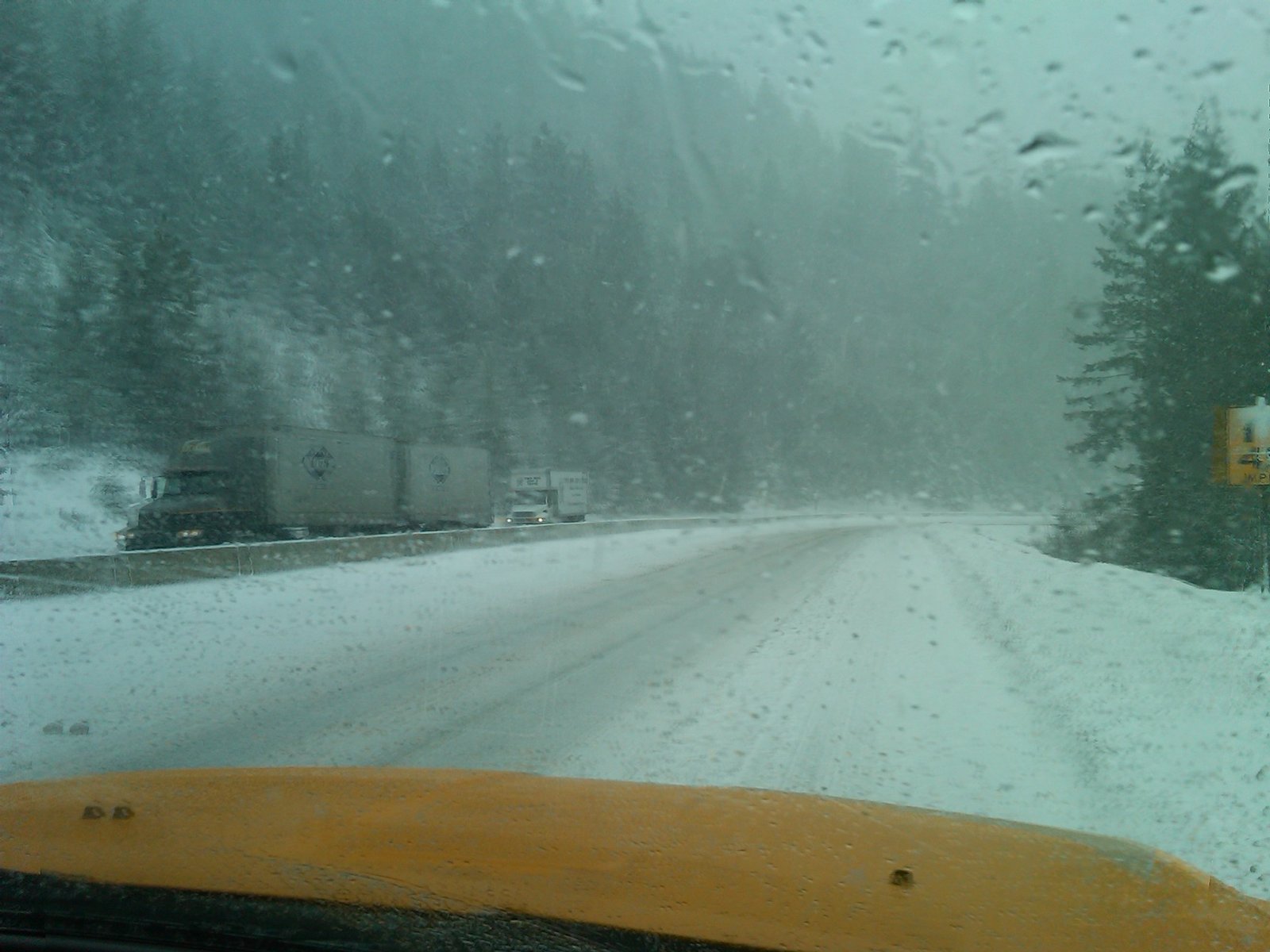
Hero photo: I-5 in Oregon’s Siskiyou Mountains by the Oregon Department of Transportation, licensed CC BY 2.0. Resized and JPEG-compressed. This is a general winter-driving scene, not a specific ski-resort road.
A luxury van can turn separate ski-weekend cars into one shared trip. The buying mistake is focusing on AWD and overlooking everything behind it: tires, legal traction equipment, wet gear, luggage and a safe storage plan.
For repeat winter travel, use this test before choosing a floorplan.
1. Treat AWD as one part of the system
Mercedes-Benz says the current Sprinter AWD system can direct up to 50 percent of torque to the front axle and operates without the old manual 4x4 switch. That describes the factory system; it does not promise traction in every condition.
Tires, tread and road rules still matter. If Colorado is on your calendar, the Colorado Department of Transportation’s traction-law page says an active Passenger Vehicle Traction Law requires qualifying tires and tread on AWD/4WD vehicles, or chains or an approved alternative traction device. Under the more severe passenger-vehicle chain law, every vehicle must use chains or an approved alternative.
Rules can change. Check the state transportation agency for every route immediately before departure, and make sure the equipment fits the exact wheel-and-tire package on the van.
2. Bring the ski gear to the viewing
Do not ask only how many skis fit. Load the skis or boards, boots, helmets and overnight bags your group actually carries. A six-person cabin is not a six-person ski-weekend solution if equipment consumes a travel seat or blocks an exit.
| Load-test question | What to demonstrate |
|---|---|
| Do long skis fit? | Rear doors close without pressing gear against finished trim |
| Can one person retrieve boots? | Access without unloading everyone’s luggage |
| Where does wet gear go? | A removable, cleanable area away from electronics and upholstery |
| How is equipment restrained? | Converter-approved storage or restraint points |
| Is emergency gear reachable? | Shovel, scraper, blankets and traction equipment are not buried |
Photograph the successful loading arrangement. Then ask the seller to explain which attachment points are designed for cargo restraint. Do not improvise around seat belts, seat tracks or interior furniture.
3. Verify the winter equipment on the exact van
Read the tire size, load rating, tread depth and winter markings on the vehicle in front of you. Confirm whether a second wheel set will clear brakes and bodywork, and whether the converter’s added equipment changes access to the spare or service points.
NHTSA’s winter driving guidance recommends checking tire inflation when the tires are cold, inspecting the spare and considering snow tires. It also notes that tire pressure falls as temperature drops.
This is an ownership routine, not a one-time accessory purchase. Add seasonal tire changes, inspections and storage to the annual operating plan.
4. Test heat where passengers actually sit
Start with a cold vehicle if the seller can arrange it. Sit in each intended position and check airflow, defrosting and control access. Ask the converter to identify the chassis heating system and any separate rear or house system. Do not assume a rear screen that says “heat” operates independently with the engine off.
If a bathroom or plumbing system is fitted, request the converter’s cold-weather and winterization instructions. A general model description cannot tell you how the exact build’s tanks, lines and appliances are protected.
Never use prolonged engine idling as a substitute for an approved heating plan. NHTSA warns that a snow-blocked exhaust can create carbon-monoxide danger if a vehicle becomes stranded.
5. Create an emergency-access zone
NHTSA recommends winter supplies including a shovel, ice scraper, abrasive material, jumper cables, warning devices, blankets, food, water, medicine and a charged phone.
Place that kit where it can be reached with every passenger and bag aboard. In a large conversion, an impressive rear compartment is not useful if the emergency equipment is behind stacked luggage.
Also keep the fuel tank reasonably full and check the route, weather and road conditions before leaving. The safest choice may be delaying the trip.
6. Decide whether repeat use supports ownership
Write down last season’s actual ski trips and the coming season’s likely trips. Add other uses the van would serve. Then obtain real numbers for purchase, insurance, storage, tires and maintenance.
The reason to own may be control over the cabin and the ability to travel together, not a guaranteed savings calculation. If the van is used only twice each winter and has no strong role during the rest of the year, ownership deserves a harder look.
For more chassis context, read our Sprinter AWD vs. 4x4 buyer guide and luxury-van tire inspection guide.
Ready to test a real vehicle with your equipment? View Vans for Sale, or Build Your Custom Van around secure ski storage and the passengers who travel with you.