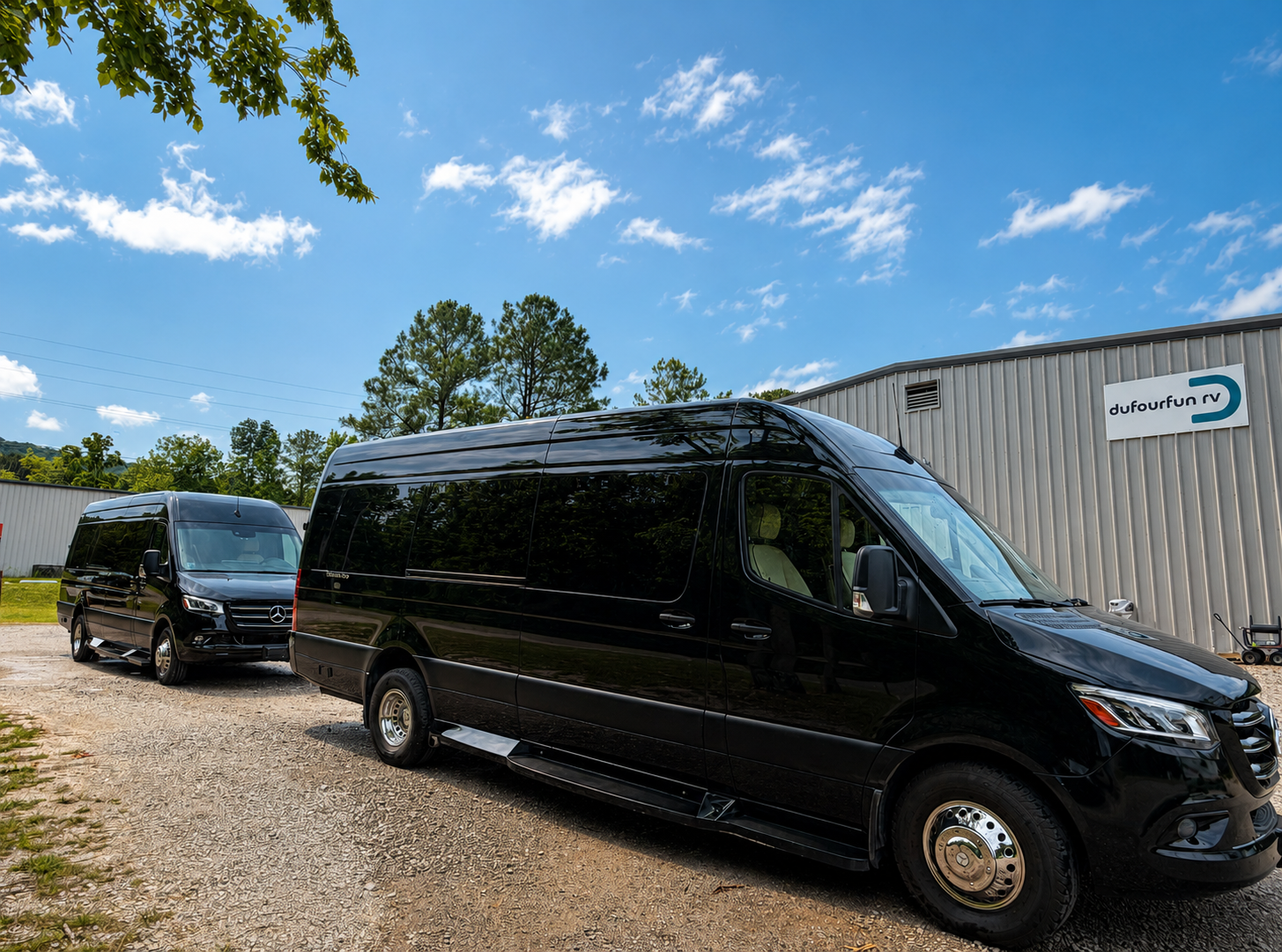
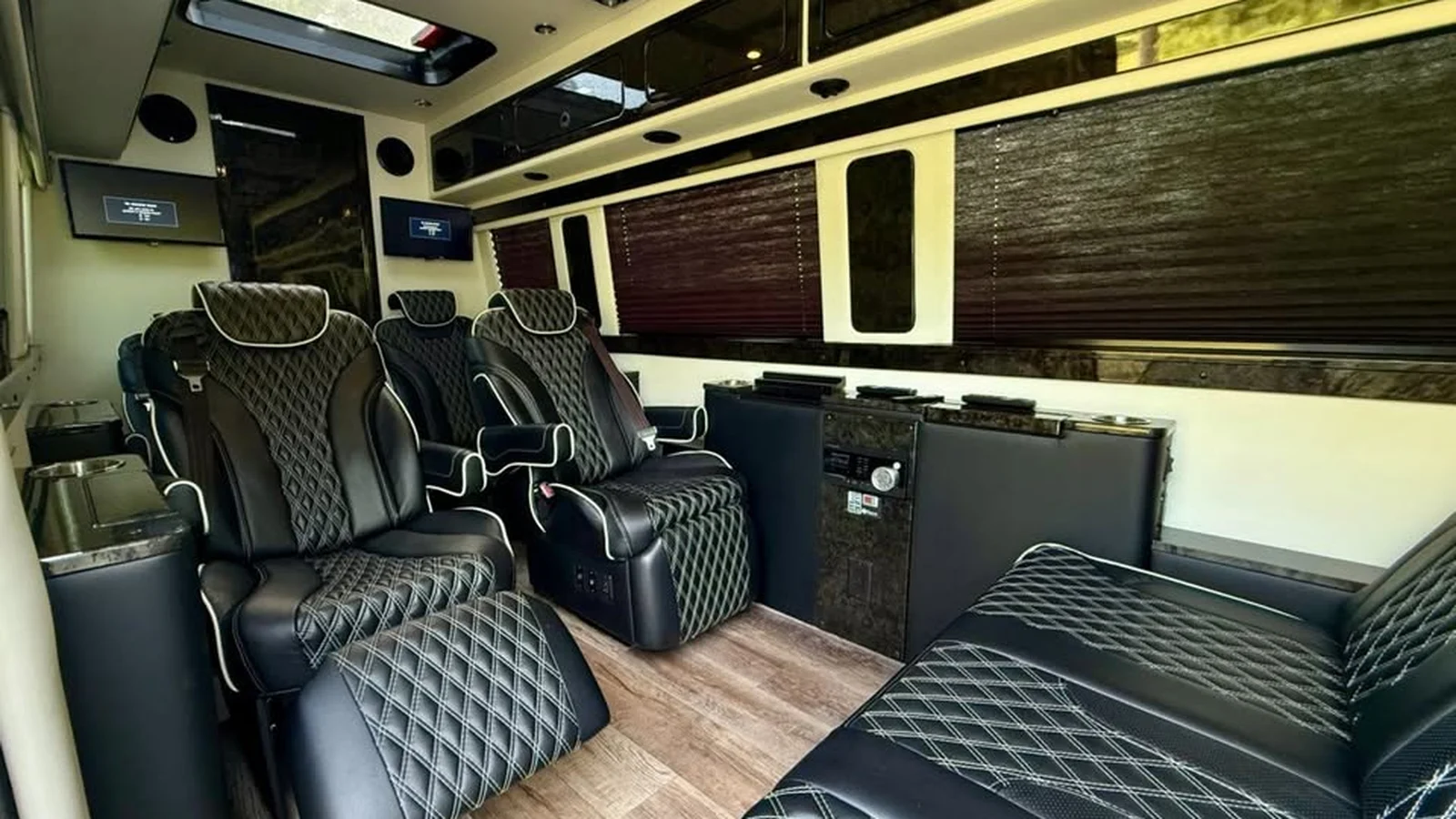
Hero photo: Dufourfun Vans inventory photo from a current public listing; cropped and resized.
Luxury van listings can read like an engineering document: LiFePO4, 3000VA, multiplex, RV-C. The truth is simpler. Most of those lines describe how cool, quiet, powered and pleasant the cabin will feel when your group climbs in. This guide translates the most common items into passenger experience. Where we cite a manufacturer, that is a verified fact about that product; the rest is our editorial guidance from working with these vans.
Rear-cabin HVAC: comfort all the way to the back row
What it means: a separate heating and air-conditioning system for the passenger area, usually with its own vents and controls.
How it feels: the back row stays as comfortable as the front seats on a hot afternoon or a cold morning. In a long, high-roof van, that difference is noticeable. Some builds also offer ways to cool the cabin while parked; our article on air conditioning while parked explains those options in friendly terms.
Editorial note: systems and controls differ by builder, so ask how the specific van you are considering is equipped.
Sound deadening and insulation: the quiet you notice
What it means: materials added behind panels, floors and ceilings to reduce road noise, vibration and heat transfer.
How it feels: conversation at a normal voice, music that sounds clearer, and a cabin that holds its temperature longer. It is the least glamorous line on a spec sheet and often one passengers appreciate most. Our piece on what makes a long ride still feel relaxed goes deeper on quiet comfort.
Lithium house batteries: quiet power for the cabin
What it means: a separate battery bank that runs cabin features, independent of the van's starting battery. Many luxury builds use lithium iron phosphate (LiFePO4). Victron, for example, makes 12.8V and 25.6V lithium iron phosphate batteries that require a compatible battery management system and can be monitored for cell voltage and temperature by Bluetooth app.
How it feels: lights, screens and charging ports that work while you are parked at a tailgate or waiting outside dinner, without listening to a generator. Capacity varies widely from build to build. If you are weighing options, our comparison of generator vs. lithium is a helpful next read.
Inverters: everyday outlets on the road
What it means: a device that converts battery power into household-style AC power for standard plugs.
How it feels: you can plug in a laptop, a coffee maker or a curling iron the way you would at home, depending on the inverter's size. Victron describes its Phoenix Inverter Smart as delivering high-quality sine-wave power with built-in Bluetooth for setup and features such as eco mode; its inverter lineup ranges from compact units to several thousand VA.
Editorial note: a larger rating means more can run at once, but what actually works also depends on battery capacity and how the builder wired the van.
Multiplex controls: one touch instead of a wall of switches
What it means: a networked system that lets lighting, climate, power and other features be controlled from shared panels or touchscreens. Firefly Integrations, a well-known supplier, describes multiplex systems that unite lighting, climate, power and more into one simple platform, with color touchscreens and wired or wireless switches.
How it feels: set an evening lighting mood, adjust the rear climate or turn on the cabin with a tap. Passengers do not need a tour of the switch panel to get comfortable.
Premium audio: the soundtrack of the trip
What it means: upgraded speakers, amplifiers and sometimes subwoofers in the passenger cabin, often paired with screens for entertainment.
How it feels: pregame playlists, a movie on the way home or quiet background music on a client drive. Audio benefits directly from good sound deadening, which is why the two often appear together. For more on cabin entertainment, see luxury van entertainment for family road trips.
Reading a spec sheet without overthinking it
You do not need to master every number. Picture the trips you love most and ask three easy questions:
- Will the back row be comfortable? Look for rear climate and good seating.
- Will it be quiet enough to talk? Insulation and sound deadening are your friends.
- Will the cabin work while parked? House batteries and an inverter make that possible.
Every builder packages these differently, which is why one test sit or ride in a van you are considering usually tells you more than any spec line.
Find the spec that fits your trips
Browse finished vans with their features listed, or design a cabin around exactly the comfort you want.